
Are you struggling to find a PVC compound1 supplier who guarantees batch-to-batch consistency? Poor quality control2 can lead to costly production failures. Let's explore how understanding PVC compound1s solves this.
A PVC compound1 is a versatile thermoplastic3 created by mixing PVC resin with specific additives like plasticizers4, stabilizers5, and fillers6. This process allows us to tailor the material's properties—such as flexibility, strength, and color—to meet the precise technical demands of your products, ensuring optimal performance.
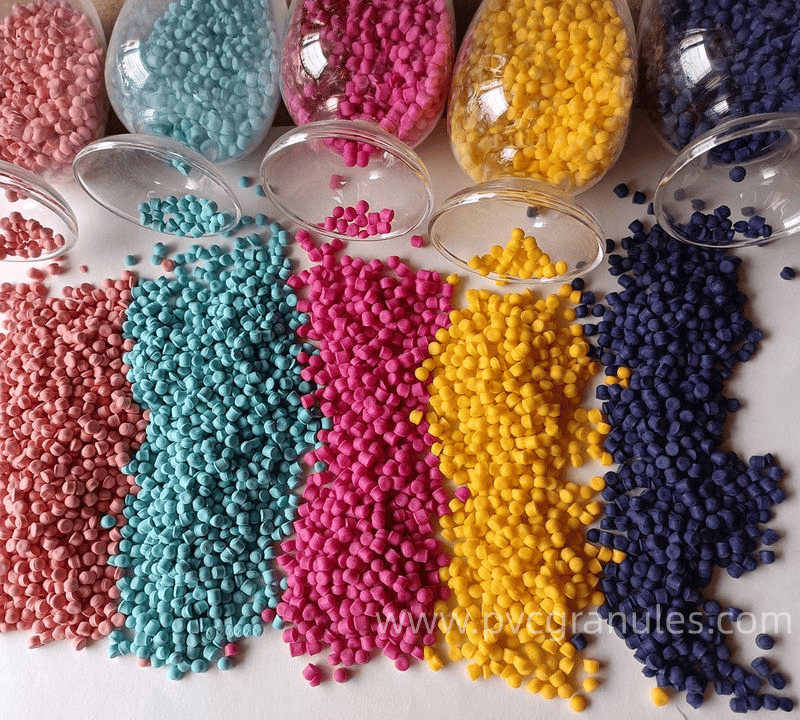
As a company with over 15 years of experience in manufacturing and exporting PVC compound1s, I've seen firsthand how critical the right formulation is for our clients' success. Whether you are a purchasing director for a large manufacturing firm or a technical manager developing a new product line, understanding the fundamentals of PVC compound1s is the first step toward achieving superior results. In this guide, I will walk you through the entire process, from the basic chemistry to the advanced industrial applications we serve daily. We will look at how these materials are made, what makes them perform so well, and where they are used across global industries. My goal is to give you the knowledge to make informed decisions and find a supply partner you can trust for quality and consistency.
What Exactly Are PVC Compounds and Their Basic Chemistry?
The term "PVC compound1" can sound technical and complex. Not understanding the core components makes it difficult to specify your exact needs. Let’s break down the simple ingredients inside.
PVC compound1s are a customized blend of Polyvinyl Chloride (PVC) resin and various additives. The key ingredients include plasticizers4 for flexibility, stabilizers5 for heat resistance, and fillers6 for strength. This combination allows us to create materials perfectly suited for your specific product.

In my experience, getting the "recipe" right is everything. It's the difference between a product that fails and one that exceeds expectations. At our facility, we treat this formulation stage with the utmost importance, because we know our customers rely on us for materials that perform flawlessly. The magic is in the mix, and by adjusting the levels of each component, we can engineer a compound that is rigid enough for a window frame or flexible enough for a garden hose. It’s this adaptability that makes PVC such an incredible material to work with.
The Core Components
The base of every compound is the PVC resin, a thermoplastic3 polymer that provides the fundamental structure. From there, we add several key ingredients to modify its properties:
- Plasticizers: These are essential for creating flexible PVC7. Additives like DOTP or DINP are mixed in to make the material soft and pliable, perfect for applications like cable insulation and medical tubing.
- Stabilizers: PVC can degrade with heat and UV light. Heat stabilizers5, such as Calcium-Zinc or Barium-Zinc systems, are crucial to protect the compound during high-temperature processing and to ensure the final product lasts a long time.
- Fillers: Materials like calcium carbonate are added to enhance certain properties and reduce costs. Fillers can improve stiffness, dimensional stability, and surface finish, which is important for products like pipes and profiles.
Rigid vs. Flexible Compounds
| The type and amount of additives determine whether the compound is rigid or flexible. | Compound Type | Key Additives | Common Applications |
|---|---|---|---|
| Rigid PVC (uPVC) | Low levels of plasticizer, high levels of fillers6 and impact modifiers. | Window profiles, pipes, fittings, flooring. | |
| Flexible PVC | High levels of plasticizers4. | Electrical cables, footwear, hoses, medical bags. |
How Are PVC Compounds Made From Raw Materials to Finished Product?
Do you worry about the consistency of your PVC compound1 supply? Manual errors in the manufacturing process can ruin an entire batch, causing delays and wasting money. Our automated process8 ensures precision every single time.
The manufacturing process starts with precise, computer-controlled mixing of PVC resin and additives. This mixture is heated, melted, and pushed through an extruder. Finally, it is cooled and cut into uniform pellets. Our automated systems and strict quality checks guarantee batch-to-batch consistency.
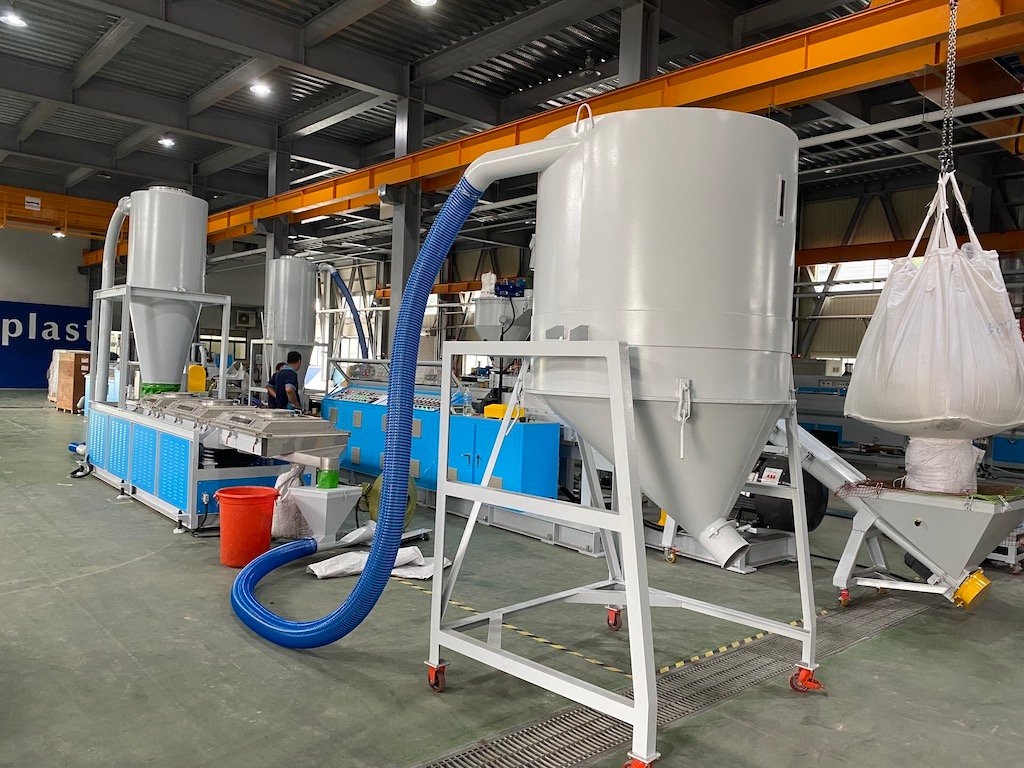
We have invested heavily in automation because I believe it is the only way to deliver the quality our customers demand. I remember the days when mixing was a manual, labor-intensive process. It was nearly impossible to guarantee that every batch was identical. Now, with our 15 modern production lines, each managed by an experienced engineer, we can produce up to 60,000 tons annually with incredible precision. Our computer-controlled systems manage everything from weighing the raw materials to feeding the extruders, which eliminates human error and ensures every single pellet meets our high standards.
The Automated Production Workflow
Our process is designed for maximum efficiency and quality control2.
- Automated Weighing and Mixing: The process begins with our fully automated dosing system. The computer precisely measures PVC resin, additives, and pigments according to the custom formula. These materials are fed into a high-speed mixer that heats them to ensure all components are thoroughly blended.
- Cooling: After hot mixing, the blend is transferred to a low-speed cooling mixer. This step is crucial for stabilizing the material and preparing it for the next stage.
- Extrusion and Pelletizing: The cooled mixture is then fed into a twin-screw extruder. The extruder melts and homogenizes the material under controlled temperature and pressure. It is then forced through a die, creating long strands that are immediately cut into pellets.
Rigorous Quality Control
Quality is not just a final check; it's embedded in our entire process.
- Raw Material Inspection: We only source from trusted suppliers, and every batch of raw materials is tested upon arrival to ensure it meets international standards like RoHS and REACH.
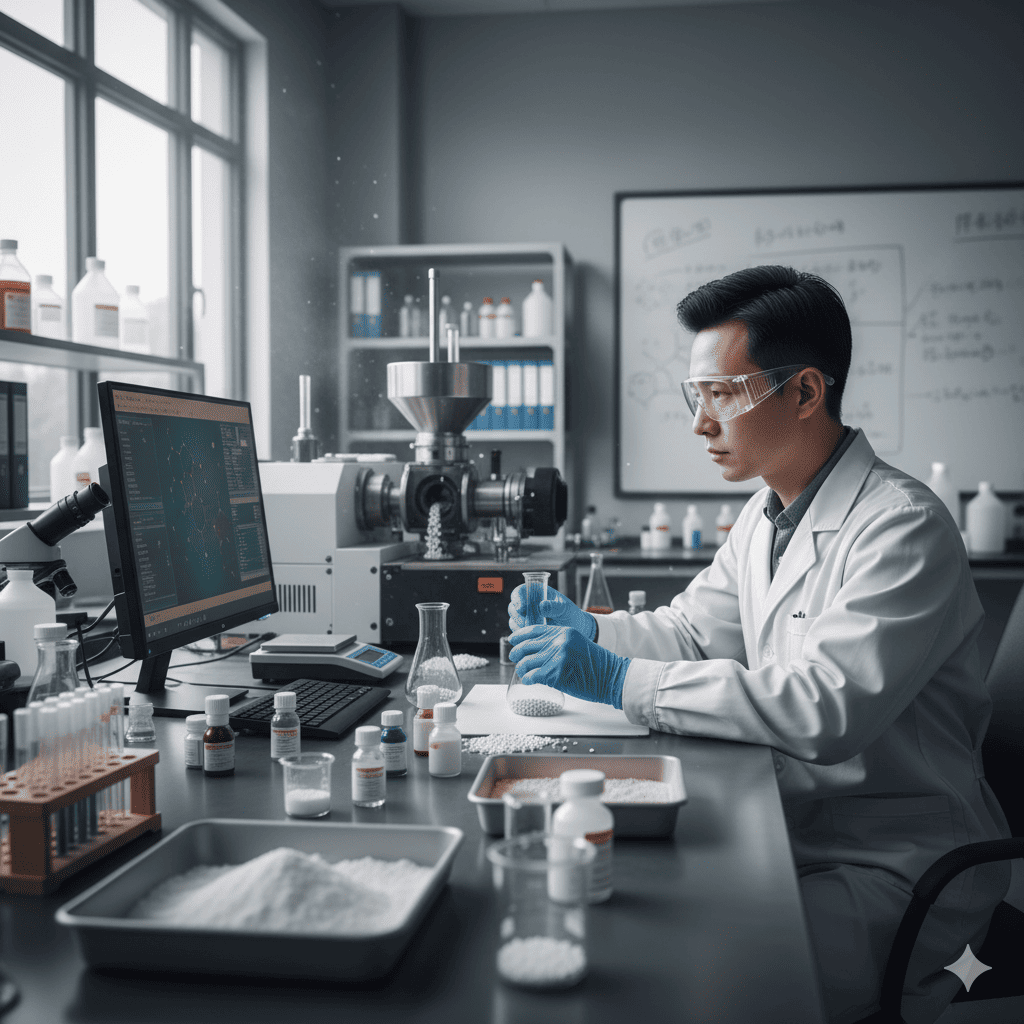
- In-Process Testing: We conduct laboratory tests at multiple stages of production. Samples are taken directly from the line to check for properties like color consistency (ΔE ≤1.0) and moisture content (≤0.3%).
- Final Product Validation: Before packaging, we test the finished pellets on our own injection and extrusion machines. This simulates real-world use and confirms that the compound will perform as expected for our customers. This commitment allows us to achieve an exceptional factory pass rate of over 99.8%.
What Are the Key Performance Characteristics of PVC Compounds?
Are standard, off-the-shelf materials failing to meet your product's specific demands? A product that fails in the field can damage your brand's reputation and lead to costly recalls. We customize properties to match your exact performance needs.
Key properties of PVC compound1s include mechanical strength9, flexibility, and durability. We can enhance specific characteristics like UV resistance10 for outdoor profiles, flame retardancy11 for cables, and electrical insulation12. We tailor these properties to ensure your final product performs perfectly.
I once worked with a client in the construction industry who needed window profiles for a project in a region with extreme sun exposure. Standard PVC would yellow and become brittle within a few years. Our technical team developed a custom formula with an advanced UV stabilizer package. The result was a product that could withstand harsh sunlight for decades. This is what we do best: we listen to our customers' challenges and engineer a solution. Customization is not just a service for us; it is our core strength.
Tailored for Performance
We can modify a wide range of properties to meet very specific application requirements.
- Mechanical Properties: We can adjust tensile strength, impact resistance, and flexibility. For example, by using impact modifiers, we can create rigid compounds for pipes that won't crack under pressure. For shoe soles, we focus on high abrasion resistance.
- Thermal Properties: PVC's performance at different temperatures is critical. We can improve heat stability for automotive parts that are used near the engine or enhance cold-flex performance for cables used in freezing climates. Our precision ensures a Vicat softening point stability of ±2°C.
- Electrical Properties: PVC is an excellent electrical insulator, which is why it is widely used for wire and cable insulation. We can optimize its dielectric strength to meet the safety standards for high-voltage applications.
- Flame Retardancy: For applications where fire safety is a concern, such as in construction materials13 and electrical conduits, we incorporate flame-retardant additives. These compounds are designed to be self-extinguishing and meet strict fire safety codes like UL94.
| Property | How We Customize It | Common Application |
|---|---|---|
| UV Resistance | Add UV stabilizers5 and absorbers. | Window profiles, siding, outdoor furniture. |
| Impact Strength | Incorporate impact modifiers (e.g., CPE, MBS). | Pipes, fittings, protective casings. |
| Flexibility | Adjust plasticizer type and content. | Hoses, gaskets, medical tubing. |
| Flame Retardancy | Add flame retardant chemicals (e.g., antimony trioxide). | Wire & cable insulation, wall panels. |
In Which Industrial Applications Do PVC Compounds Truly Excel?
Choosing the right material for your product is a critical decision. Using the wrong compound can lead to poor performance, product failures, and unnecessarily high costs. Let's discover the wide range of industries where our customized PVC compound1s excel.
PVC compound1s are used in countless applications across many industries. In construction, they are essential for pipes, profiles, and flooring. In the automotive sector, they provide durability for interior parts. They are also vital for electrical cables, medical-grade tubing, and packaging film14s.
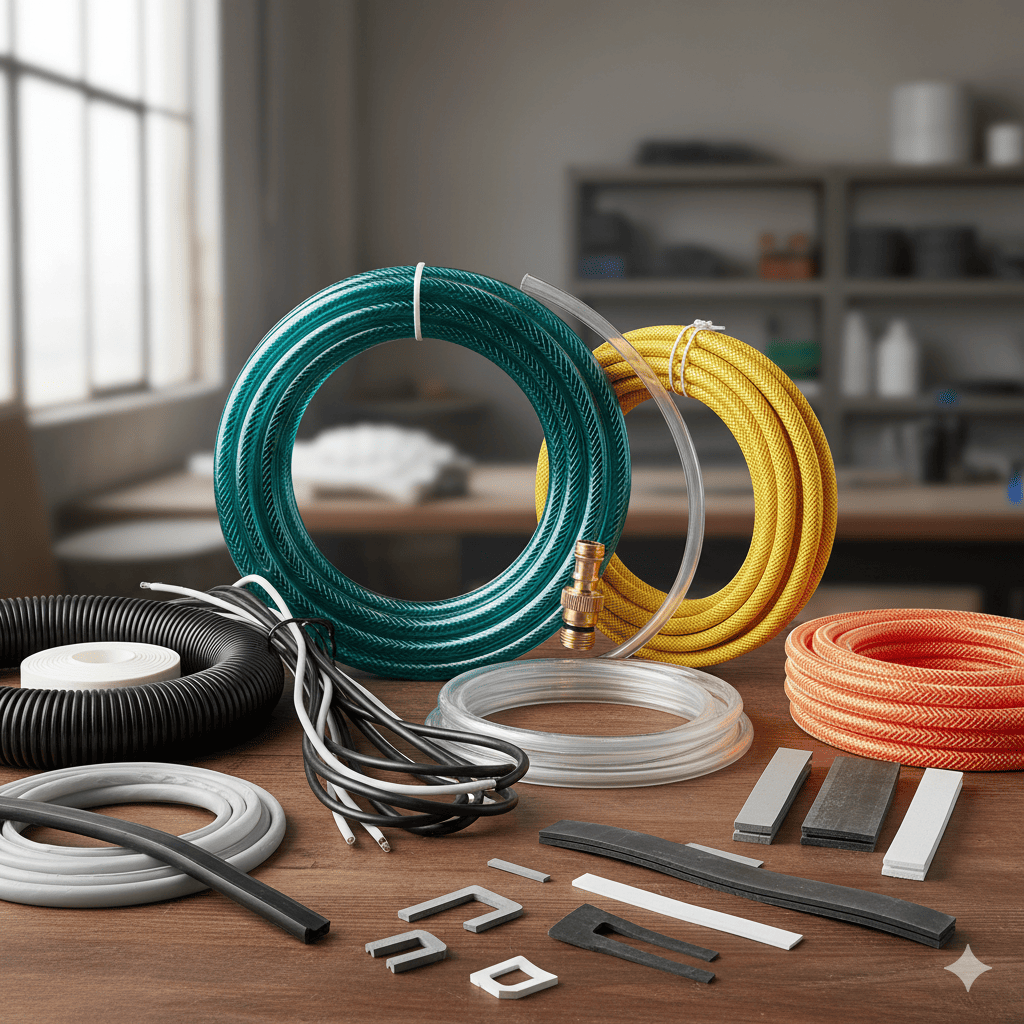
Over the years, I've had the privilege of seeing our PVC compound1s used in some truly innovative ways. We’ve supplied materials for everything from life-saving medical devices to components in high-performance vehicles. This diversity of applications is a testament to PVC's incredible versatility. One day our team might be developing a high-purity, medical-grade compound for blood bags, and the next, we could be formulating a rugged, weather-resistant compound for construction profiles. It’s this variety that makes my work so rewarding. We are not just selling pellets; we are providing the essential building blocks for products that people use every day.
Construction and Building Materials
This is one of the largest markets for PVC, thanks to its durability, corrosion resistance, and cost-effectiveness.
- Pipes and Fittings: Used for water, sewage, and irrigation systems because they don't rust and are easy to install.
- Window Profiles and Siding: Offer excellent insulation and weather resistance, requiring minimal maintenance.
- Flooring and Wall Coverings: Provide a durable, water-resistant, and easy-to-clean surface for both homes and commercial buildings.
Automotive Industry
In the automotive sector, PVC compound1s are valued for their durability, flexibility, and finish.
- Interior Components: Used for dashboards, door panels, and seat covers, offering a blend of aesthetic appeal and strength.
- Wire Harnesses: The excellent electrical insulation12 of PVC makes it perfect for sheathing the complex wiring systems in modern vehicles.
- Underbody Coatings: Provides protection against road debris and corrosion.
Electrical and Electronics
PVC's superior electrical insulation12 properties make it a top choice for this industry.
- Cable Insulation and Sheathing: Protects electrical wires from damage and prevents short circuits, meeting stringent safety standards for flame retardancy11.
- Conduits and Junction Boxes: Offers a safe and durable solution for housing electrical wiring in buildings.
Medical and Packaging
For these sensitive applications, we produce specialized, high-purity grades of PVC.
- Medical Devices: Used for IV bags, blood bags, catheters, and oxygen masks due to its biocompatibility and ease of sterilization. Our medical-grade compounds meet standards like FDA and USP Class VI.
- Packaging Film: Clear, rigid PVC15 is used to create blister packs and clamshells that protect products while keeping them visible to consumers.
Have More Questions About PVC Compounds?
You might still have some specific questions about choosing the right compound for your project. Unanswered questions can lead to uncertainty and delays. We've gathered answers to the most common industry questions right here.
Common questions involve choosing the right grade, typical lead times, performance in extreme conditions, and sustainability16. We offer custom formulations17, a 7-15 day lead time, and enhanced compounds for harsh environments. Plus, PVC is a recyclable material, supporting sustainability16 goals.
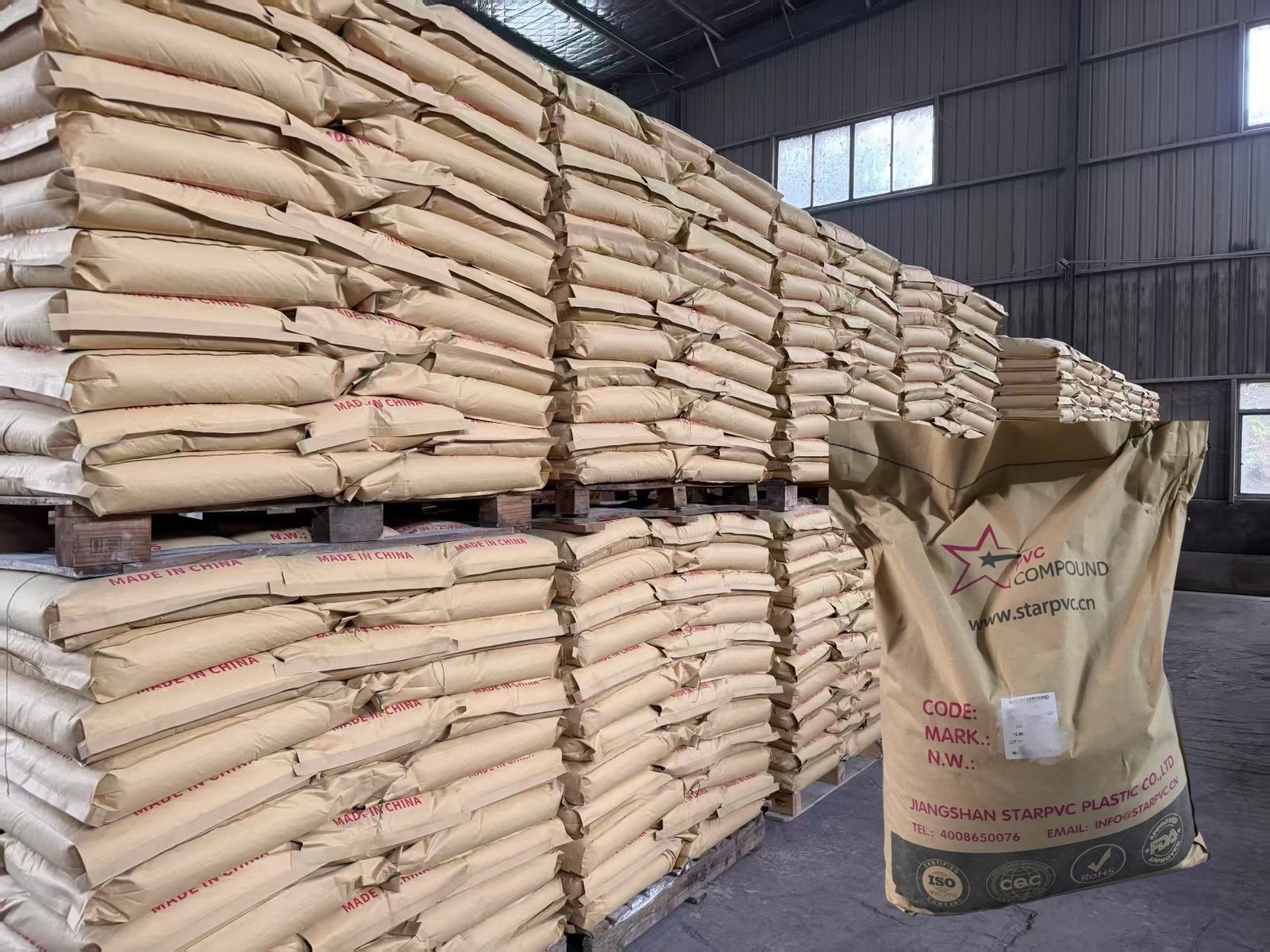
As a supplier to over 50 countries, I answer these kinds of questions every day. A purchasing director from Germany might be focused on REACH compliance and sustainability16, while a technical manager from North America might be more concerned with UV resistance10 and impact strength for a new building product. My team and I are here to provide clear, straightforward answers. We see ourselves as partners, not just suppliers. Our goal is to give you all the information you need to feel confident in your choice of material and in your choice of JIANGSHAN STAR as your long-term partner.
How do I choose the right PVC compound1 for my application?
The best way is to work directly with us. You don't need to be a polymer expert. Just tell us about your end product and its performance requirements. What will it be used for? What environment will it be in? What specific properties are most important? Based on this, our technical engineers will design and recomm
Understanding PVC compounds is crucial for selecting the right materials for your projects. ↩
Explore effective quality control measures to ensure high standards in PVC production. ↩
Explore the unique characteristics of thermoplastics to better understand their applications. ↩
Learn how plasticizers enhance flexibility in PVC compounds, crucial for various applications. ↩
Discover the importance of stabilizers in maintaining the integrity of PVC products. ↩
Understanding fillers can help you optimize the performance and cost of your PVC products. ↩
Learn about the advantages of flexible PVC in applications like medical tubing and cables. ↩
Discover how automation enhances quality and consistency in PVC production. ↩
Understanding mechanical strength is key to ensuring product durability and performance. ↩
Learn about methods to enhance UV resistance for outdoor applications. ↩
Explore flame retardant options to ensure safety in electrical and construction applications. ↩
Learn why PVC is widely used for electrical insulation and its safety benefits. ↩
Explore the benefits of PVC in construction, including durability and cost-effectiveness. ↩
Explore the advantages of using PVC for packaging solutions in various industries. ↩
Explore the various uses of rigid PVC in construction and manufacturing. ↩
Learn about the recycling processes for PVC and their impact on sustainability. ↩
Discover how tailored formulations can meet specific application requirements. ↩
