
Many manufacturers struggle with inconsistent weight in their PVC pipe fittings1. This leads to material waste, failed quality checks2, and frustrated customers who expect precise specifications.
Weight control in PVC pipe fittings1 requires selecting quality PVC compounds and adjusting injection molding parameters3 systematically. The key is controlling melt filling volume4 through precise pressure, time, and temperature adjustments5 during the injection process.

After 15 years in PVC compound manufacturing, I have seen countless production issues that trace back to poor weight control6. The good news is that with the right approach, you can achieve consistent results every time.
Why does PVC compound quality matter for weight control6?
Quality issues with your raw material create headaches that no machine adjustment can fix. Poor PVC compounds lead to unpredictable flow behavior and density variations7.
High-quality PVC compounds provide consistent melt flow properties, stable density, and predictable processing behavior. This creates the foundation for precise weight control6 through machine parameter adjustments8.

The relationship between compound quality and weight control6 goes deeper than most people realize. When I work with clients who struggle with weight variation9s, we often discover the root cause lies in their raw material selection. Poor compounds contain inconsistent filler distribution10, varying moisture content11, or unstable additive ratios. These factors create density fluctuations that make weight control6 nearly impossible.
Think of it this way - trying to control weight with poor compounds is like trying to drive a car with flat tires. You can adjust the steering wheel all you want, but the fundamental problem remains. Quality compounds give you the stable foundation needed for precise parameter adjustments8.
Our testing shows that switching from low-grade to premium PVC compounds can reduce weight variation9 by up to 40%. The initial cost increase pays for itself through reduced waste and improved production efficiency12.
| Compound Quality Factor | Impact on Weight Control | Solution |
|---|---|---|
| Filler Distribution | ±15% weight variation9 | Use compounds with uniform mixing |
| Moisture Content | Inconsistent density | Select compounds with ≤0.3% moisture |
| Additive Stability | Unpredictable flow | Choose stabilized formulations |
How do you increase the weight of PVC pipe fittings1?
Sometimes your fittings come out lighter than specification. This happens when the mold cavity does not fill completely or the material shrinks more than expected.
Increasing PVC fitting weight requires extending injection time13, raising pressure, or increasing shot volume14. These changes force more material into the mold cavity and compensate for cooling shrinkage.

The most effective approach involves a systematic adjustment of five key parameters. Each one affects how much material enters and stays in the mold cavity.
First, extend your injection time13 and holding pressure time. When the mold is not completely filled, longer injection time13 allows more melt to enter the cavity. Extended holding pressure time compensates for the gaps created by cooling shrinkage. This increases both the density and weight of your finished parts.
Second, increase injection pressure and holding pressure. Higher injection pressure overcomes flow resistance in complex geometries. This ensures complete cavity filling even in thin-walled sections. Higher holding pressure provides better shrinkage compensation and prevents weight loss from material pullback.
Third, raise the barrel temperature within safe limits for PVC. Higher temperatures reduce melt viscosity, making the material flow more easily into all areas of the mold. This prevents incomplete filling that leads to underweight parts. Keep temperatures below PVC decomposition limits to avoid material degradation.
Fourth, adjust injection speed for thick-walled fittings. Slightly higher injection speeds in the low-speed phase reduce cooling time during filling. This keeps more material fluid longer, allowing better cavity filling and higher final weight.
Fifth, increase shot size by extending screw travel. This directly adds more material volume per shot. It is the most straightforward way to increase weight, but requires careful monitoring to prevent overpacking and flash formation.
How do you reduce the weight of PVC pipe fittings1?
Overweight fittings waste material and increase costs. They also may not fit properly in assembly applications where precise dimensions matter.
Reducing PVC fitting weight involves shortening injection time13, lowering pressure, or decreasing shot volume14. These adjustments limit material flow into the mold cavity while maintaining acceptable part quality.
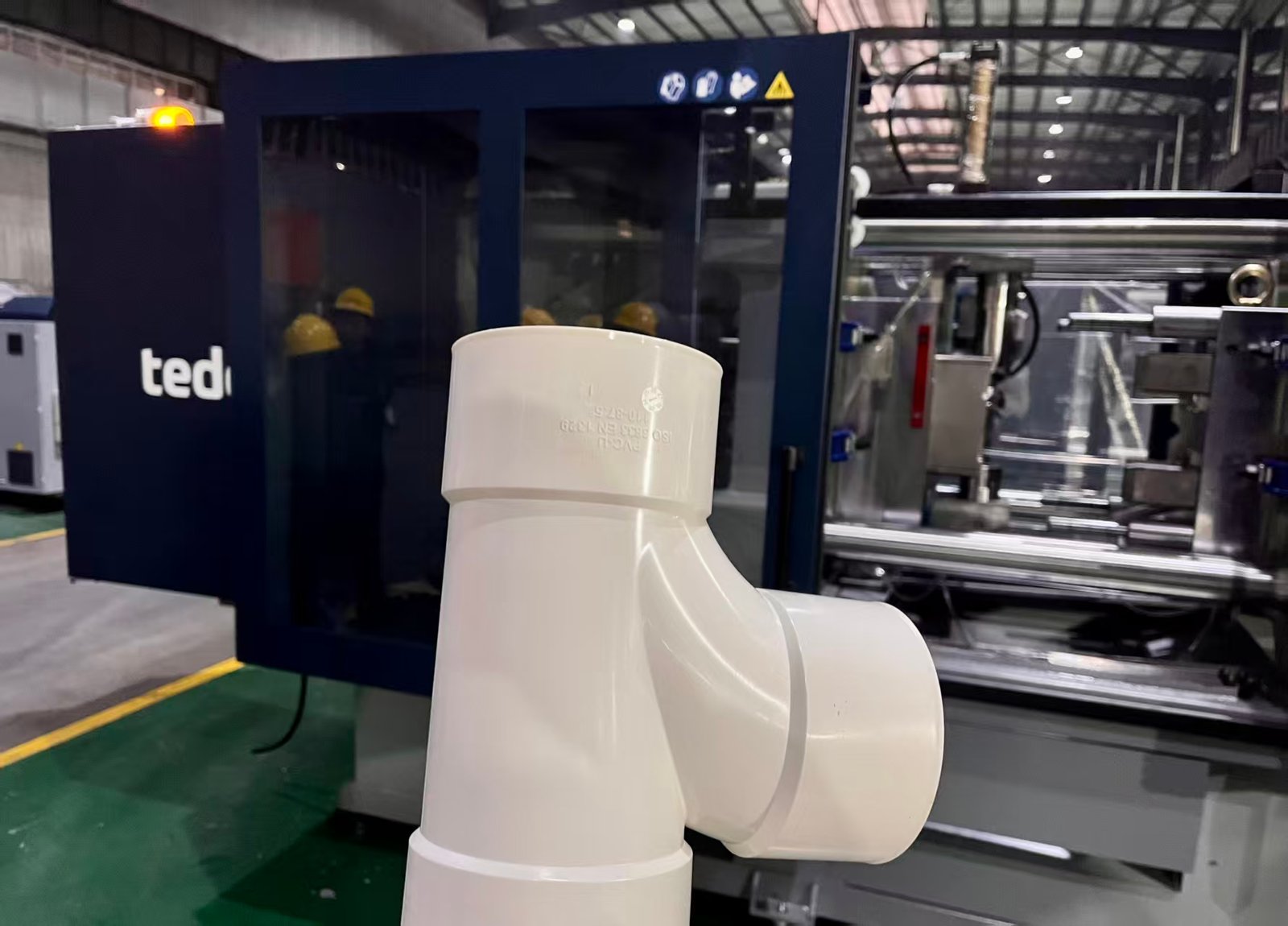
Weight reduction requires more careful attention than weight increase. You must balance material savings with part quality requirements. Too much reduction can cause sink marks, short shots, or structural weakness.
Start by reducing injection time13 and holding pressure time. Shorter times limit the amount of material that flows into the cavity. This directly reduces weight but requires monitoring for incomplete filling or sink marks in thick sections.
Lower injection pressure and holding pressure gradually. Reduced pressure creates less complete filling and reduces the compensation for shrinkage. This naturally decreases part weight. Watch carefully for short shots or surface defects that indicate too much pressure reduction.
Decrease shot size by reducing screw travel distance. This cuts the volume of material injected per cycle. It provides precise weight control6 but requires small incremental adjustments to avoid sudden quality drops.
Lower barrel temperature to increase melt viscosity. Higher viscosity creates more flow resistance, naturally limiting cavity filling. This approach works well but can cause flow marks or incomplete filling if temperatures drop too much.
The key principle is making small, gradual changes while monitoring part quality. Large parameter changes can create defects that are worse than slight weight variation9s.
| Parameter | Weight Increase Action | Weight Decrease Action | Critical Monitoring |
|---|---|---|---|
| Injection Time | Extend | Shorten | Complete filling |
| Pressure | Increase | Decrease | Surface quality |
| Shot Size | Increase travel | Decrease travel | Part dimensions |
| Temperature | Raise (within limits) | Lower carefully | Flow characteristics |
What safety considerations15 apply when adjusting PVC processing parameters?
PVC is a heat-sensitive material that can degrade quickly if processed incorrectly. This creates both quality and safety concerns during parameter adjustments8.
PVC parameter adjustments8 must stay within temperature and pressure limits to prevent material decomposition. Single-parameter changes allow better control and easier troubleshooting than multiple simultaneous adjustments.
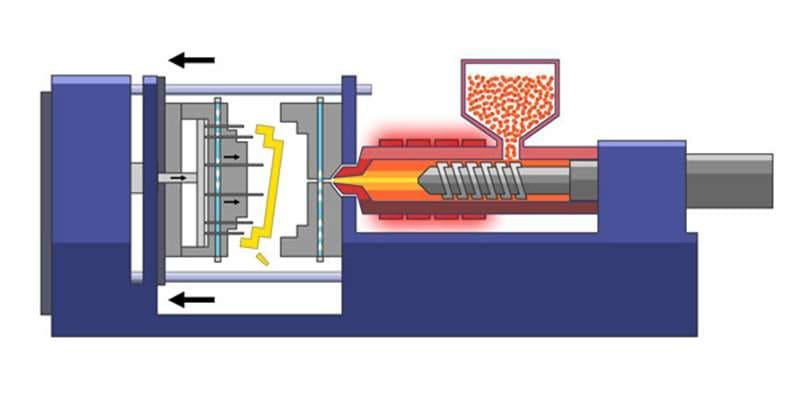
Understanding PVC thermal sensitivity is critical for safe weight control6 adjustments. PVC begins decomposing at temperatures around 200°C, releasing hydrochloric acid that corrodes equipment and creates health hazards. Always keep processing temperatures well below this limit.
Excessive pressure can also cause problems. High pressures combined with high temperatures accelerate PVC degradation. They can also create excessive flash, internal stress, and part warpage. Monitor both pressure and temperature together, not separately.
The single-parameter adjustment rule prevents confusion and allows clear cause-and-effect relationships. When you change injection time13, holding pressure, and temperature simultaneously, you cannot determine which change caused the weight difference. This makes fine-tuning nearly impossible.
Start with the parameter that has the most direct impact on your specific weight issue. For underweight parts with good surface quality, begin with shot size or injection time13. For overweight parts with flash, start with pressure reduction. Document each change and its result before making the next adjustment.
Temperature changes require extra caution because they affect multiple processing characteristics simultaneously. Higher temperatures reduce viscosity, change shrinkage rates, and alter cooling times. Make temperature adjustments5 in small increments and allow several shots for stabilization before evaluating results.
Always verify that your compound supplier provides processing guidelines specific to their formulation. Different PVC compounds have varying temperature and pressure limits based on their stabilizer systems and additive packages.
Conclusion
Controlling PVC fitting weight requires quality compounds and systematic parameter adjustments8. Focus on single-parameter changes while respecting PVC processing limits for consistent results.
Explore this resource to understand the essential practices for producing high-quality PVC pipe fittings. ↩
Discover methods to enhance quality checks and ensure consistent product quality. ↩
This link provides insights into crucial injection molding parameters for optimal results. ↩
Understand the significance of melt filling volume in achieving precise weight control. ↩
Learn about the critical effects of temperature adjustments on PVC processing quality. ↩
Learn how effective weight control can enhance production efficiency and reduce waste. ↩
This resource explains the factors leading to density variations in PVC materials. ↩
Learn how systematic parameter adjustments can enhance the production of PVC fittings. ↩
Explore this resource to identify and address common weight variation issues. ↩
Discover the importance of uniform filler distribution for consistent PVC quality. ↩
Find out the optimal moisture content levels for ensuring high-quality PVC compounds. ↩
Explore effective strategies to boost production efficiency in PVC manufacturing. ↩
Understand the relationship between injection time and the quality of finished products. ↩
Discover how shot volume influences the efficiency and quality of the injection molding process. ↩
This link provides essential safety guidelines for handling PVC during processing. ↩
