
Struggling with inconsistent PVC quality for your products? The secret lies in the formulation, a precise recipe that dictates performance. Getting it wrong leads to failed parts and wasted money.
A PVC compound formulation1 is a specific recipe that combines PVC resin2 with various additives3. This process transforms the raw, brittle polymer into a versatile material tailored for applications like pipes, cables, or window profiles by enhancing its properties.
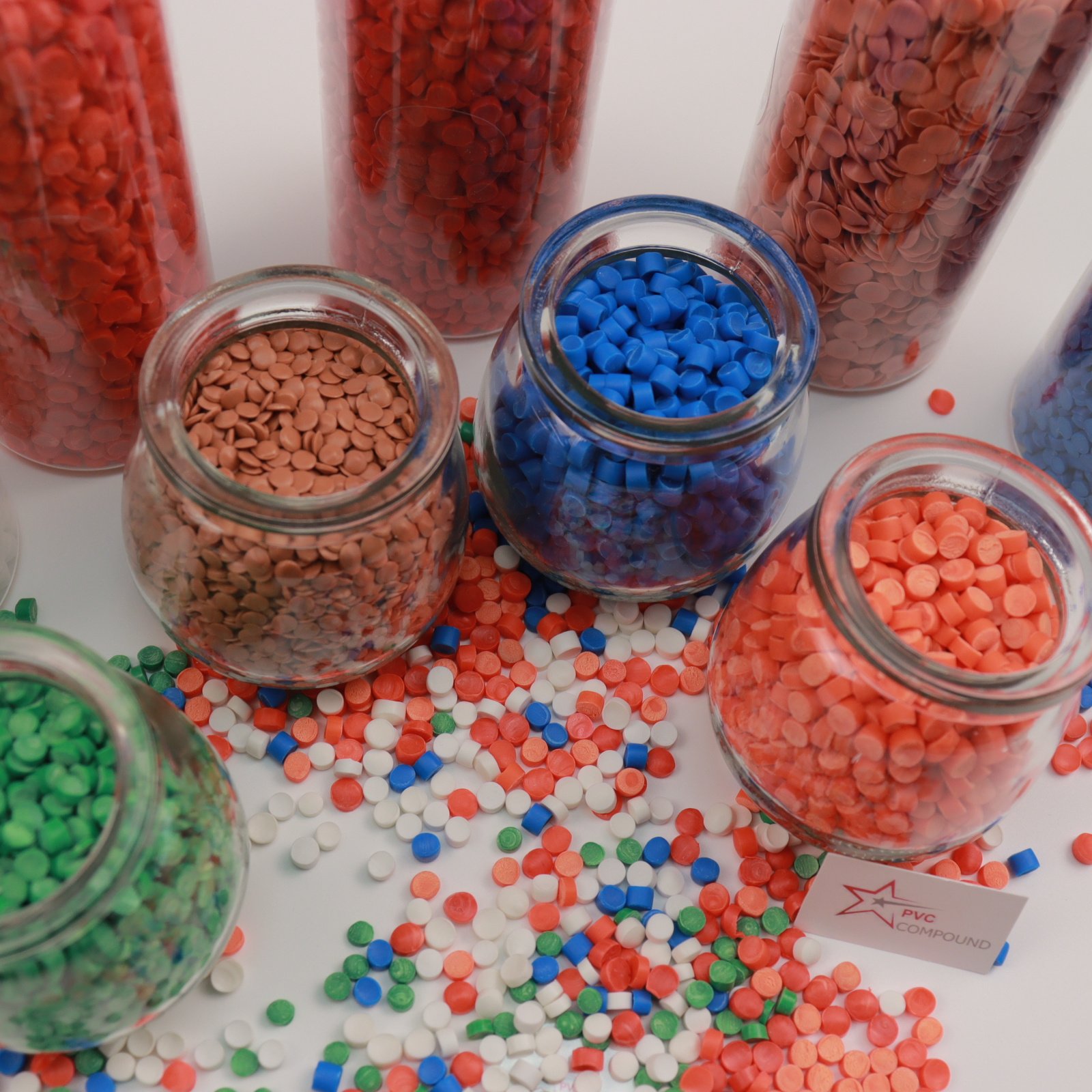
Think of creating a PVC compound like baking a cake. You start with the main ingredient, flour, which in our case is PVC resin2. But the flour alone doesn't make a great cake. You need other ingredients in the right proportions to get the taste and texture you want. It's the same with PVC. The formulation is our recipe, and it's critically important. A good formulation determines the quality of the final PVC granule. We have a strict formulation system in our company to ensure we provide you with the most suitable PVC granules for your specific needs. This meticulous approach is how we've built our reputation over 15 years in the business.
What are the key ingredients in a PVC compound formulation1?
Ever wondered what exactly goes into making PVC so versatile? It's not just one substance but a carefully balanced team of ingredients, each with a special job to do.
A PVC compound's core is the PVC resin2, but its performance is unlocked by additives3. These include plasticizers4 for flexibility, stabilizers5 for heat resistance, fillers6 for strength, and lubricants for smooth processing, all mixed in precise ratios.

The main ingredient is always PVC resin2, the base polymer. But to modify it, we introduce a range of additives3. Think of it as a painter's palette. The resin is the canvas, and the additives3 are the colors we use to create the final masterpiece. Each additive plays a crucial role in tailoring the compound to meet the specific demands of the end product. For instance, some applications require flexibility, while others need rigidity and strength. This is all controlled by the type and amount of additives3 we use. Our 15+ years of experience have taught us how to master this "recipe" to deliver consistent, high-quality results for our clients in over 50 countries.
| Additive | Function | Benefit for the Final Product |
|---|---|---|
| PVC Resin | The base polymer that forms the compound's structure. | Provides the fundamental properties of PVC, such as chemical resistance and durability. |
| Plasticizers | Increases flexibility and softness by reducing intermolecular forces. | Essential for soft PVC applications like cables and hoses, allowing them to bend without breaking. |
| Stabilizers | Protects the PVC from degradation caused by heat and UV light. | Ensures longevity and maintains appearance, especially for outdoor products like window frames. |
| Fillers | Materials like calcium carbonate are added to reduce cost and improve properties. | Can increase stiffness, improve dimensional stability, and enhance strength. |
| Lubricants | Aid in processing by reducing friction and melt viscosity. | Ensures a smoother manufacturing process7 and a better surface finish on the final product. |
How does the formulation differ between rigid and flexible PVC?
You've seen hard PVC pipes and soft, bendable hoses. They are both PVC, but what makes them so different? The distinction comes down to one key ingredient in the formulation.
The primary difference between rigid and flexible PVC formulations is the presence or absence of plasticizers4. Rigid PVC (uPVC) contains little to no plasticizer, making it hard and strong. Flexible PVC includes a significant amount of plasticizer, which makes it soft and pliable.
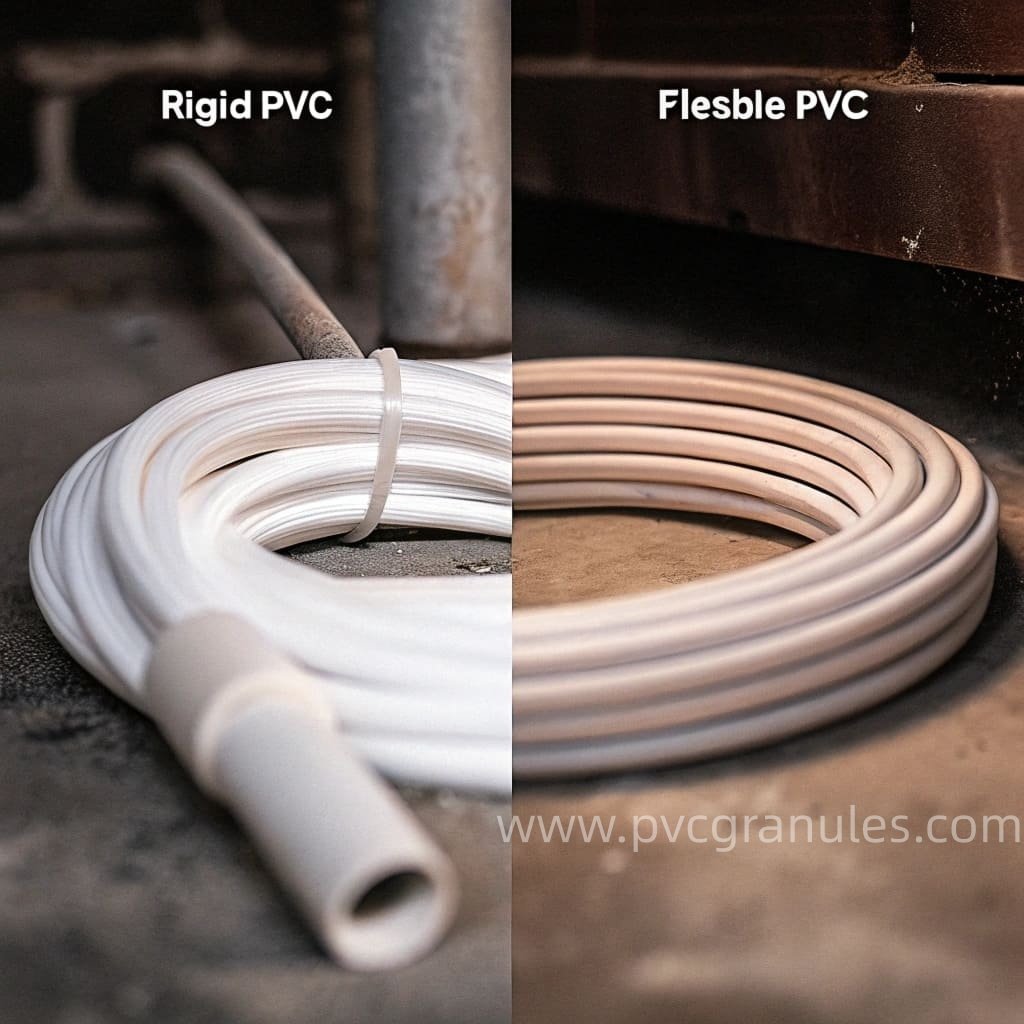
The secret is the plasticizer. In my years of experience, I've seen how manipulating this one component can create a vast range of materials. For rigid applications like window profiles or pipes, we use a formulation with minimal or no plasticizer. This results in a strong, durable material that holds its shape. For flexible products, like shoe soles or electrical cables, we add a specific amount of plasticizer. The more plasticizer we add, the more flexible the PVC becomes. Rigid formulations can be more complex because the type and quantity of other additives3, like impact modifiers8, must be strictly controlled to achieve the desired strength and durability without the softening effect of plasticizers4. This precise control is where our technical expertise really shines.
How do you create a custom PVC formulation9 for specific needs?
-](https://placehold.co/600x400 "Custom PVC Formulation Lab")
This is where our work becomes truly bespoke. A customer in the construction industry once came to me needing a PVC compound for door and window profiles that would be used in a very sunny region. Standard PVC would degrade and yellow over time. Their problem required a custom solution. We went back to the formulation. By adding specific additives3 like UV absorbers10 and other light stabilizers5, we engineered a compound that could resist prolonged sun exposure. This is the essence of modification. We are changing the properties of the plastic by adding different ingredients to the recipe. Whether a client needs flame retardancy for cables, high impact resistance for industrial parts, or food-grade compliance for packaging, we adjust the formulation. Our 15 modern production lines, each managed by an engineer with over 8 years of experience, allow us to turn these custom formulas into high-quality PVC granules at scale.
Conclusion
In short, the PVC formulation is a precise recipe. By expertly adjusting the ingredients, we can customize PVC compounds to meet any performance need, ensuring quality and consistency for your products.
Understanding PVC compound formulation is crucial for achieving high-quality products tailored to specific applications. ↩
PVC resin is the base of all formulations; knowing its role helps in mastering PVC quality. ↩
Additives are essential for enhancing PVC properties; learn about them to improve your formulations. ↩
Plasticizers are key to creating flexible PVC; understanding them can help in product design. ↩
Stabilizers protect PVC from degradation; knowing their importance can enhance product longevity. ↩
Fillers can improve strength and reduce costs; understanding their role can optimize your formulations. ↩
Understanding the manufacturing process can help ensure quality and consistency in your PVC products. ↩
Impact modifiers enhance durability; knowing their effects can lead to better product performance. ↩
Custom formulations can meet unique requirements; learn how to tailor PVC for your applications. ↩
UV absorbers enhance the durability of PVC in sunlight; knowing their benefits can improve product lifespan. ↩
