
The PVC market1 has exploded with a 20% price surge2 in just weeks. Buyers are scrambling. Manufacturers are struggling. What's driving this unprecedented rally that's reshaping the entire industry?
The perfect storm has hit the PVC market1 in 2026. Geopolitical tensions, supply disruptions3, and raw material cost spikes4 have created an unprecedented 20% price surge2 since March. This rally combines cost-push inflation with panic buying5, leaving the market fundamentally transformed.
I've been tracking PVC market1s for over 15 years. I've seen cycles come and go. But nothing prepared me for what happened in March 2026. The speed and magnitude of this price rally caught even seasoned traders off guard.
How Geopolitical Tensions Are Crushing PVC Supply Chains?
The Middle East conflict has sent shockwaves through our industry. Energy costs are through the roof. Supply chains are breaking down. This isn't just another market blip.
Escalating Middle East tensions have pushed Brent crude6 past $110 per barrel, driving ethylene prices7 up 50% in Asia. Shipping disruptions in the Strait of Hormuz have created freight cost spikes8 and supply uncertainty across petrochemical markets.
The ripple effects are devastating. When crude oil prices spike, ethylene costs follow immediately. Ethylene is the backbone of ethylene-based PVC production. Every dollar increase in crude translates to higher production costs for manufacturers worldwide.
The Strait of Hormuz disruptions have created a logistics nightmare. Shipping companies are rerouting vessels around Africa. Transit times have doubled. Freight rates have tripled in some cases. These costs get passed directly to PVC buyers.
Here's what the energy cost breakdown looks like:
| Component | March 2025 Price | March 2026 Price | Increase |
|---|---|---|---|
| Brent Crude | $75/barrel | $110/barrel | 47% |
| Ethylene (Asia) | $800/MT | $1,200/MT | 50% |
| Freight Rates | $2,000/container | $6,000/container | 200% |
Energy security has become the top concern for PVC producers. Many are scrambling to secure alternative supply sources. Some are considering temporary production cuts9. The uncertainty is forcing companies to build larger safety stocks.
Why Coal Shortages Are Devastating China's PVC Production?
China produces over 80% of its PVC through the calcium carbide10 route. This process depends heavily on coal. When coal supplies tighten, PVC production costs explode.
Coal price hikes combined with calcium carbide10 shortages have created a supply crisis in China. Environmental regulations and safety inspections in major coal regions have driven up production costs for the world's largest PVC producer.
The calcium carbide10 route is unique to China. It uses coal and limestone to produce calcium carbide10. Then calcium carbide10 reacts with water to create acetylene. Finally, acetylene becomes PVC through polymerization. Every step depends on stable coal supplies.
Inner Mongolia produces 40% of China's calcium carbide10. Recent environmental crackdowns have shut down dozens of plants. The remaining producers are operating under strict quotas. Supply has dropped by 30% while demand remains strong.
Coal mining regions face their own challenges. Safety inspections have closed unsafe mines. Weather disruptions have affected transportation. Power plant demand competes with chemical industry needs. The result is a perfect storm for PVC producers.
Here's the cost structure impact:
| Raw Material | Cost Share | Price Increase | Impact on PVC |
|---|---|---|---|
| Coal | 45% | 35% | +15.8% |
| Calcium Carbide | 25% | 40% | +10% |
| Power | 15% | 25% | +3.8% |
| Others | 15% | 10% | +1.5% |
Many Chinese PVC plants are operating at losses. Some have reduced production rates to 70%. Others have shut down completely. The industry is facing its worst cost crisis in decades.
How Global Supply Cuts Are Creating Market Panic?
PVC producers worldwide are cutting production. High costs are forcing shutdowns. No new capacity is coming online. The supply deficit11 is growing every day.
Zero major PVC capacity additions in 2026 combined with widespread production cuts9 have created a structural supply deficit11. Plants in China and South Korea are reducing operating rates or shutting down to avoid losses.
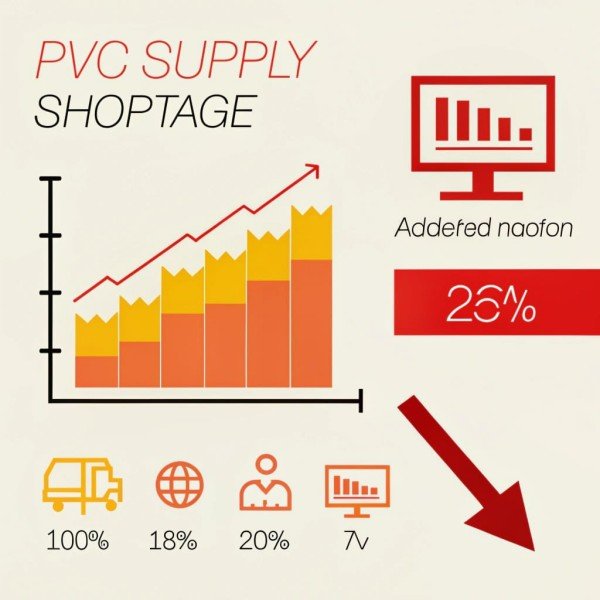
The timing couldn't be worse. 2026 was supposed to be a recovery year for the PVC industry. Instead, we're seeing the most severe supply constraints in recent history. Several factors are converging to create this crisis.
Ethylene-based plants are particularly vulnerable. These facilities require stable ethylene supplies at reasonable costs. With ethylene prices7 up 50%, many plants are bleeding money. Operating rates have dropped to 60% across major producing regions.
The maintenance season has compounded the problem. Spring is traditionally when plants undergo scheduled maintenance. But this year, many are extending shutdowns indefinitely. Why restart when you're guaranteed to lose money on every ton produced?
Here's the global capacity situation:
| Region | Capacity (MT) | Operating Rate | Effective Output |
|---|---|---|---|
| China | 25,000,000 | 70% | 17,500,000 |
| North America | 8,000,000 | 75% | 6,000,000 |
| Europe | 6,500,000 | 65% | 4,225,000 |
| Asia (ex-China) | 4,000,000 | 60% | 2,400,000 |
The lack of new capacity is equally concerning. Environmental regulations have made it nearly impossible to build new PVC plants in developed countries. Developing countries lack the technology and capital. The industry is stuck with aging infrastructure.
Older plants are being retired faster than expected. Environmental compliance costs are too high. Energy efficiency is poor. Many companies are choosing to shut down rather than invest in upgrades.
What's Behind the Export Tax Policy Panic?
China's decision to cancel PVC export tax rebates has triggered a buying frenzy. Everyone wants to ship before April 1st. This artificial demand surge is pushing prices to new highs.
China's cancellation of the 13% VAT export rebate for PVC, effective April 1, 2026, has created panic buying5. International buyers are accelerating purchases while Chinese exporters rush shipments, draining inventory and driving prices higher.
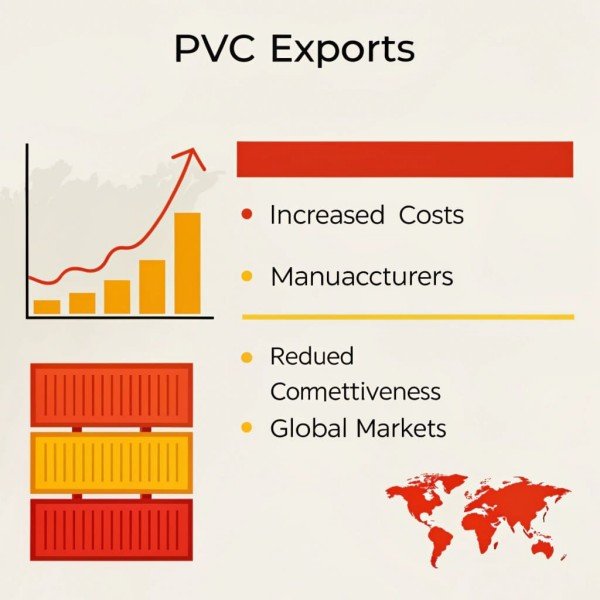
The timing of this policy change is devastating. The 13% rebate has been a cornerstone of China's PVC export competitiveness for years. Removing it essentially adds $150-200 per ton to export costs. Chinese suppliers are scrambling to ship everything possible before the deadline.
International buyers are caught in a bind. They can either buy now at high prices or wait and pay even more after April 1st. Most are choosing to buy now. This front-loading of demand has created artificial scarcity in the spot market.
Chinese ports are experiencing unprecedented congestion. Export terminals are overwhelmed with PVC shipments. Some buyers are chartering vessels weeks in advance just to secure shipping slots. The logistics strain is adding another layer of cost and complexity.
Here's the export impact breakdown:
| Factor | Before Policy | After April 1 | Net Impact |
|---|---|---|---|
| Export Rebate | 13% | 0% | +$180/MT |
| Rush Premium | $0 | $100/MT | +$100/MT |
| Freight Costs | $150/MT | $250/MT | +$100/MT |
| Total Cost Increase | - | - | +$380/MT |
The psychological impact is even greater than the financial impact. Market participants are treating this as a one-way bet. Everyone believes prices will stay high after April 1st. This conviction is creating self-fulfilling prophecy dynamics.
Inventory levels have dropped dramatically. Normally, March inventory builds in preparation for spring demand. Instead, we're seeing the lowest inventory levels12 since 2019. This lack of buffer stock makes the market extremely volatile.
What Should PVC Buyers Expect Next?
The fundamentals suggest prices will stay elevated. Supply remains tight. Costs are still rising. Geopolitical tensions show no signs of easing. Smart buyers are adjusting their strategies accordingly.
High underlying costs and tight supply conditions suggest PVC prices will remain elevated through 2026. While inventory rebuilding may provide temporary relief, geopolitical tensions13 and structural supply deficit11s point to sustained higher price levels.
Conclusion
The 2026 PVC price surge reflects a perfect storm of geopolitical tensions13, supply disruptions3, and policy changes that have fundamentally reshaped market dynamics for the foreseeable future.
Explore the latest trends and insights in the PVC market to understand its dynamics better. ↩
Learn about the factors driving the recent 20% price surge in PVC and its implications. ↩
Understand the broader effects of supply disruptions on industries and economies. ↩
Find out what factors lead to raw material cost spikes and their impact on production. ↩
Understand the phenomenon of panic buying and its effects on market stability. ↩
Learn about the importance of Brent crude prices and their influence on various sectors. ↩
Explore the factors that affect ethylene prices and their implications for the PVC industry. ↩
Discover how spikes in freight costs affect global trade and supply chains. ↩
Explore the reasons for production cuts in various industries and their consequences. ↩
Understand the role of calcium carbide in PVC production and its market significance. ↩
Explore the concept of supply deficit and how it influences pricing strategies. ↩
Discover the relationship between inventory levels and market stability. ↩
Discover how geopolitical tensions impact various global markets, including PVC. ↩
