
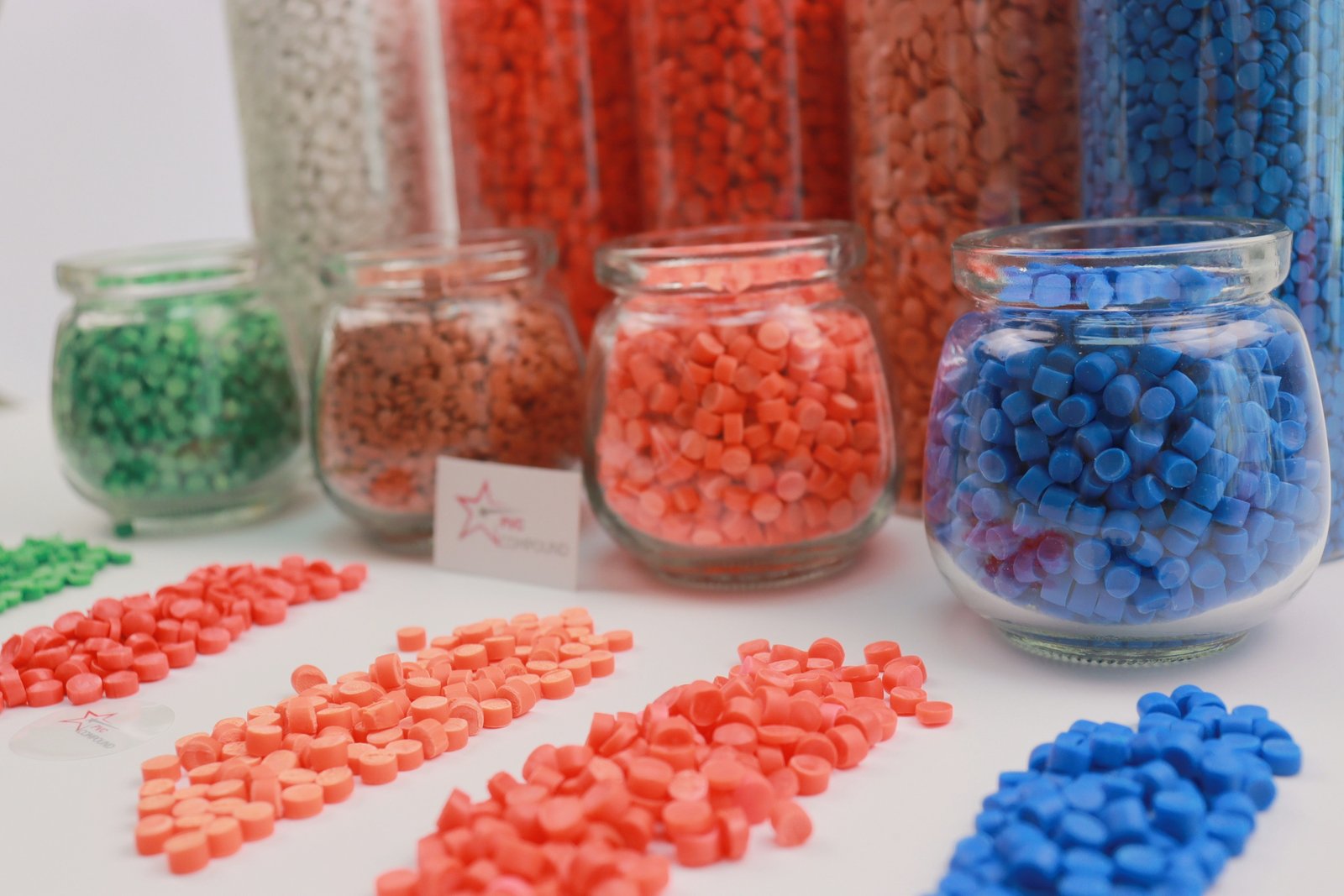
Are you confused about which PVC type to choose for your project? Many engineers and procurement managers struggle with this decision daily.
UPVC is rigid and cost-effective for cold water systems, SPVC offers flexibility for soft applications, while CPVC provides superior heat resistance for hot water and industrial use. Each serves distinct purposes based on temperature requirements, flexibility needs, and application demands.
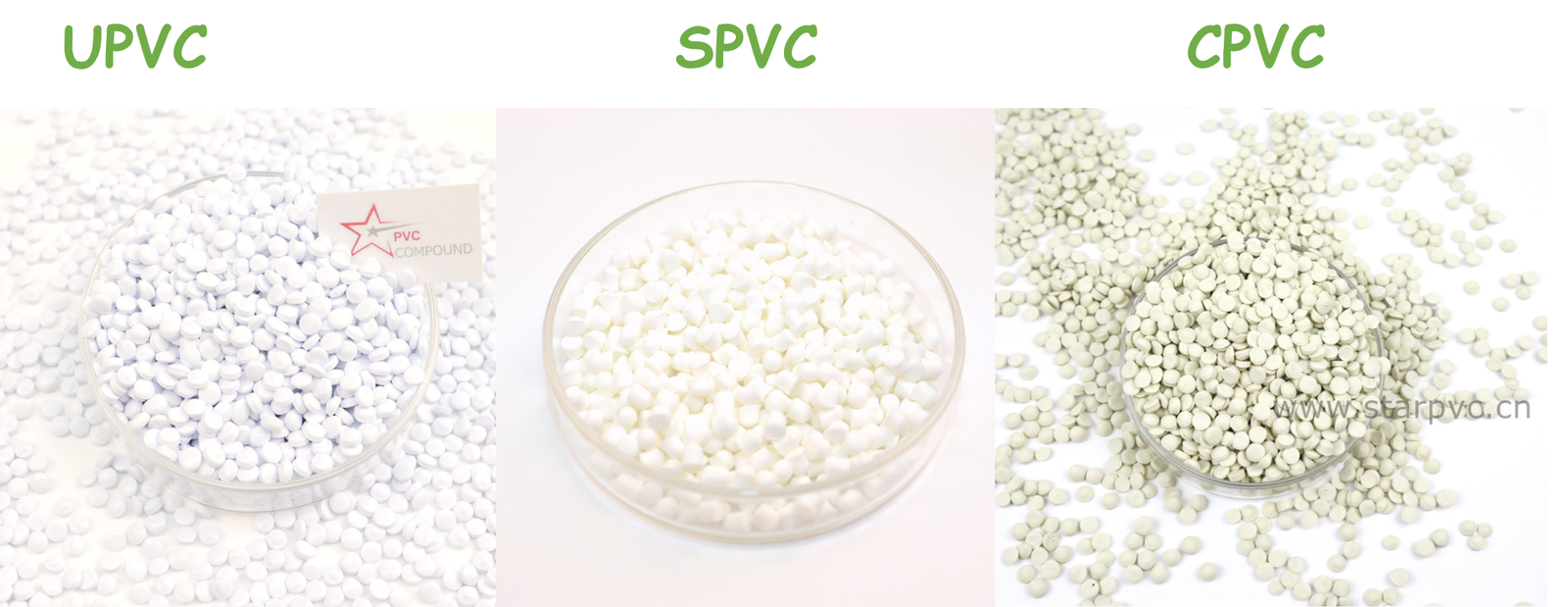
Understanding these three PVC variants can save you thousands of dollars and prevent costly project failures. Let me share what I've learned from 15 years of manufacturing PVC compounds for global clients.
What Makes UPVC Different from Other PVC Types?
UPVC confuses many buyers because it sounds like a complex material. Actually, it's quite simple once you understand the basics.
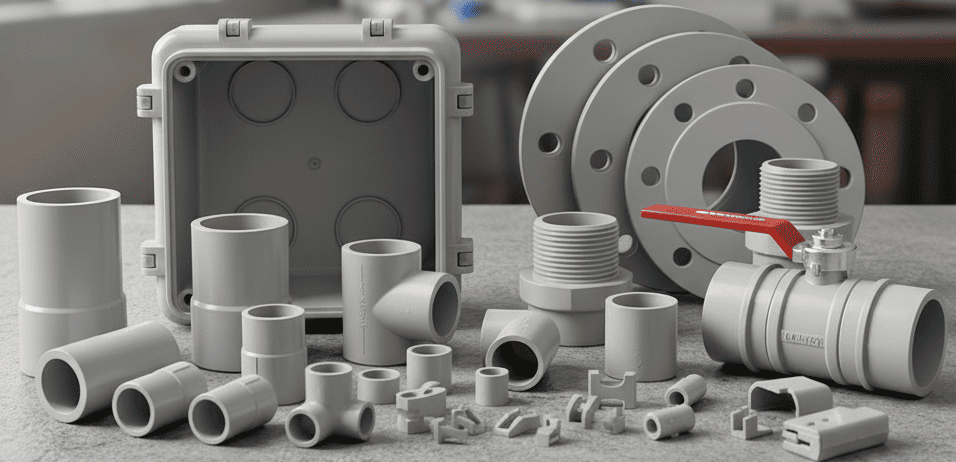
UPVC (Unplasticized Polyvinyl Chloride) contains no plasticizers, making it rigid, durable, and ideal for structural applications like pipes, window frames, and drainage systems.1 It maintains shape under pressure and offers excellent chemical resistance.
I remember when a European client needed 500 tons of UPVC compound for water supply pipes. They initially considered regular PVC but realized UPVC's rigidity was essential for their underground installation. The key difference lies in the absence of plasticizers - those chemical additives that make plastic flexible.
UPVC offers several distinct characteristics that set it apart. First, its mechanical strength surpasses flexible PVC variants significantly. The material maintains structural integrity under continuous pressure, making it perfect for water distribution networks. Second, its temperature resistance reaches 60°C for continuous operation, suitable for most cold water applications.
The manufacturing process involves mixing PVC resin with heat stabilizers, impact modifiers, and processing aids - but no plasticizers. This creates a hard, durable material that won't soften or deform under normal conditions. Chemical resistance remains excellent against acids, alkalis, and most industrial chemicals.2
| Property | UPVC Performance | Typical Applications |
|---|---|---|
| Tensile Strength | 45-55 MPa | Pressure pipes |
| Temperature Range | 0-60°C | Cold water systems |
| Flexibility | Rigid | Structural components |
| Chemical Resistance | Excellent | Industrial piping |
How Does SPVC Provide Flexibility That UPVC Cannot?
SPVC represents the opposite approach to UPVC manufacturing. Where UPVC eliminates plasticizers, SPVC embraces them fully.
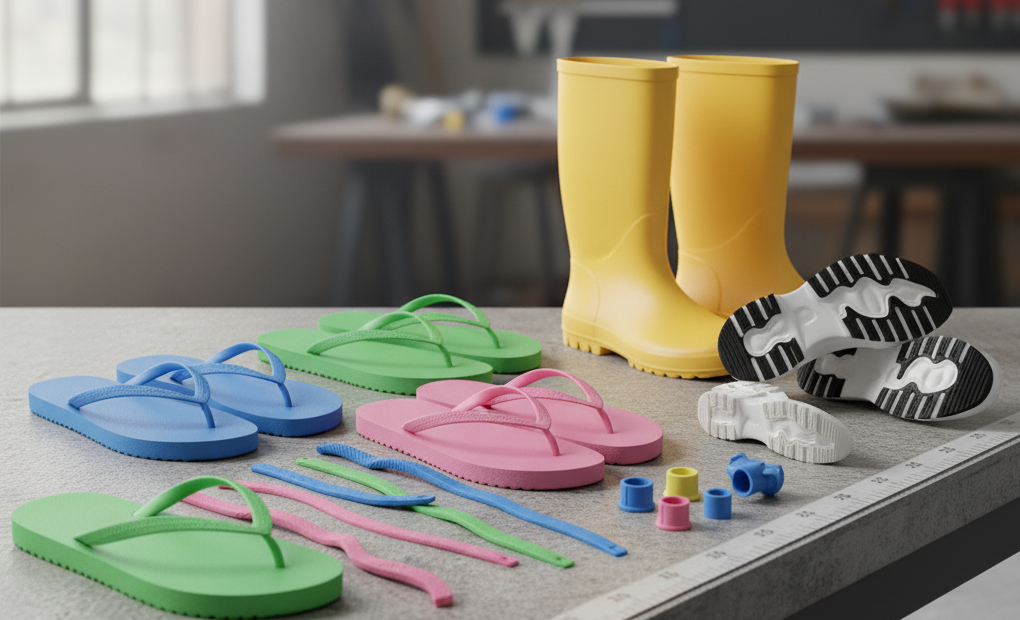
SPVC (Soft Polyvinyl Chloride) contains high levels of plasticizers, creating a flexible, bendable material perfect for hoses, cable insulation, and soft gaskets.3 It can bend without breaking but sacrifices temperature resistance and pressure capability.
The transformation happens during compounding when we add 30-50% plasticizers by weight4. These molecules insert between PVC polymer chains, allowing them to slide past each other.5 The result feels almost rubbery compared to rigid UPVC.
A Middle Eastern client once ordered SPVC compounds for garden hoses. They needed material that could coil tightly for storage but remain functional in desert heat up to 45°C. Regular UPVC would crack immediately if bent, while SPVC maintained flexibility even after months of use.
However, SPVC has significant limitations. Temperature resistance drops dramatically - continuous use above 45°C causes plasticizer migration and material degradation6. The plasticizers can leach out over time, especially in contact with oils or certain chemicals. This makes SPVC unsuitable for drinking water applications7 or high-temperature environments.
The manufacturing process requires careful plasticizer selection. Phthalate-based plasticizers offer excellent flexibility but raise environmental concerns.8 We often recommend bio-based alternatives for food-contact applications, though they cost 20-30% more.
| SPVC Characteristic | Performance Range | Limitation |
|---|---|---|
| Flexibility | Highly bendable | Cannot handle pressure |
| Temperature | Max 45°C continuous | Degrades at higher temps |
| Plasticizer Content | 30-50% by weight | May migrate over time |
| Applications | Hoses, cables, seals | Not for potable water |
Why Is CPVC the Premium Choice for High-Temperature Applications?
CPVC represents advanced PVC technology through post-chlorination processing. This isn't just adding chemicals - it's fundamentally changing the polymer structure.
CPVC (Chlorinated Polyvinyl Chloride) undergoes chlorination to increase chlorine content from 57% to 67%, dramatically improving heat resistance up to 95°C continuous operation.9 This makes it ideal for hot water systems, industrial processes, and fire sprinkler installations.
The chlorination process happens in specialized reactors where PVC resin reacts with chlorine gas at controlled temperatures. Additional chlorine atoms attach randomly along the polymer backbone, disrupting crystallinity and raising the glass transition temperature.10 This chemical modification explains CPVC's superior thermal performance.
I've supplied CPVC compounds to pharmaceutical companies requiring 90°C process water circulation. Regular PVC would soften and fail within days, but CPVC maintains structural integrity for decades. The material also shows improved chemical resistance against oxidizing agents that would attack standard PVC.
Manufacturing CPVC compounds requires precise temperature control and specialized equipment. The chlorination level must be consistent - too little chlorine won't improve heat resistance, while excess chlorine makes processing difficult. We monitor chlorine content through titration methods, maintaining 66-68% for optimal performance.
Installation differs significantly from UPVC. CPVC requires special primers and cements formulated for the chlorinated polymer. Thermal expansion rates are higher, requiring expansion joints in long runs. However, the material's ability to handle both hot and cold water in the same system makes it invaluable for complete plumbing solutions.
The cost premium over UPVC ranges from 40-60%, but lifecycle benefits often justify the investment. Reduced maintenance, longer service life, and elimination of separate hot water piping systems provide substantial savings over 20-30 year periods.
| CPVC Advantage | Performance Metric | Cost Impact |
|---|---|---|
| Temperature Rating | Up to 95°C continuous | 40-60% premium over UPVC |
| Pressure Rating | Higher than UPVC at temperature | Reduced system complexity |
| Chemical Resistance | Superior oxidation resistance | Lower maintenance costs |
| Installation | Requires special techniques | Higher labor requirements |
Which PVC Type Should You Choose for Your Specific Application?
Selection depends on three critical factors: temperature requirements, mechanical demands, and budget constraints. Wrong choices lead to expensive failures and safety risks.
Choose UPVC for cost-effective rigid applications under 60°C, SPVC for flexible connections under 45°C, and CPVC for high-temperature systems up to 95°C. Temperature requirements typically determine the optimal choice, followed by mechanical property needs.

Temperature stands as the primary selection criterion. If your system operates above 60°C, CPVC becomes mandatory - UPVC will soften and SPVC will degrade rapidly. For applications between 45-60°C, UPVC works adequately for rigid installations, while CPVC provides additional safety margin.
Pressure requirements eliminate SPVC from most piping applications. The plasticizers that provide flexibility also reduce strength significantly. SPVC cannot handle pressures above 2-3 bar reliably, making it suitable only for low-pressure flexible connections.
Budget considerations often drive initial decisions, but lifecycle costs tell the complete story. A hospital project I worked on initially specified UPVC for all piping to save costs. However, hot water sections required replacement within three years, while CPVC sections installed later remained trouble-free for over a decade.
Application environment affects material selection significantly. Outdoor installations need UV stabilization regardless of PVC type. Chemical exposure requires compatibility testing - some industrial chemicals attack specific PVC variants differently. Food contact applications limit plasticizer choices in SPVC formulations.
Regional building codes increasingly specify CPVC for hot water systems. North American plumbing codes generally require CPVC or metal for water above 60°C. European standards vary by country but trend toward higher performance materials for safety reasons.
Conclusion
Choose UPVC for rigid, cost-effective cold water systems, SPVC for flexible applications under 45°C, and CPVC for high-temperature performance up to 95°C.
"Polyvinyl chloride - Wikipedia", https://en.wikipedia.org/wiki/Polyvinyl_chloride. A polymer reference or encyclopedia source can support that unplasticized PVC is PVC formulated without added plasticizers and is commonly used in rigid construction products such as pipes and profiles; this establishes the material definition and typical uses rather than proving suitability for every project. Evidence role: definition; source type: encyclopedia. Supports: UPVC is PVC without plasticizers and is used in rigid applications such as pipes, window frames, and drainage systems.. Scope note: Contextual support only; application suitability still depends on formulation, standards, and service conditions. ↩
"Chemical Resistance and Chemical Applications for CPVC ...", https://www.nrc.gov/docs/ML1820/ML18207A604.pdf. A technical reference from an engineering institution or government materials guide can document that rigid PVC generally has good resistance to many acids and alkalis; the source should be cited as general compatibility evidence, since chemical resistance varies by concentration, temperature, and exposure time. Evidence role: general_support; source type: institution. Supports: UPVC has broad chemical resistance to many acids, alkalis, and industrial chemicals.. Scope note: Resistance is not universal and must be checked against specific chemicals and service conditions. ↩
"PVC | Definition, Synthesis, & Uses", https://www.britannica.com/science/polyvinyl-chloride. A polymer science source can support that flexible PVC is produced by adding plasticizers to PVC, making it suitable for flexible products such as tubing, cable insulation, and gaskets; the source supports the material mechanism and common applications, not the term “perfect” as an absolute judgment. Evidence role: mechanism; source type: education. Supports: Soft or flexible PVC contains plasticizers that make it flexible and suitable for hoses, cable insulation, and gaskets.. Scope note: The wording should be understood as typical-use support, because performance depends on plasticizer type and formulation. ↩
"Recent Attempts in the Design of Efficient PVC Plasticizers with ...", https://pmc.ncbi.nlm.nih.gov/articles/PMC7916570/. A polymer compounding handbook or peer-reviewed source can show that flexible PVC formulations often contain substantial plasticizer loadings, sometimes in the range of tens of parts per hundred resin; this can contextualize the stated 30–50% figure, though formulation percentages vary by product and reporting basis. Evidence role: statistic; source type: paper. Supports: Flexible PVC may use plasticizer contents around 30–50% by weight in some formulations.. Scope note: The exact percentage depends on whether the basis is total compound weight or parts per hundred resin and on the required flexibility. ↩
"CORRELATION OF THE GLASS TRANSITION TEMPERATURE OF ...", https://hero.epa.gov/reference/1312998/. A polymer science text or educational source can explain that plasticizers reduce intermolecular forces and increase chain mobility in PVC, producing lower stiffness and greater flexibility; this supports the mechanism in simplified terms. Evidence role: mechanism; source type: education. Supports: Plasticizers increase PVC flexibility by increasing polymer-chain mobility and reducing intermolecular interactions.. Scope note: The molecular description is simplified and may differ among plasticizer chemistries and PVC morphologies. ↩
"Rapid Detection of Plasticizer Migration From UV‐Aged PVC ...", https://pmc.ncbi.nlm.nih.gov/articles/PMC12911472/. A peer-reviewed article or institutional materials guide can support that plasticized PVC can lose plasticizer through migration or volatilization and that elevated temperature accelerates such processes; this supports the risk mechanism but may not confirm a universal 45°C threshold. Evidence role: mechanism; source type: paper. Supports: Elevated temperatures can promote plasticizer migration and degradation in flexible PVC, with the article using 45°C as an operating limit.. Scope note: The 45°C threshold is formulation-specific; sources may support temperature-accelerated migration without validating that exact cutoff for all SPVC. ↩
"Rapid Detection of Plasticizer Migration From UV‐Aged PVC Films ...", https://pmc.ncbi.nlm.nih.gov/articles/PMC12911472/. A drinking-water standards source or public-health agency document can support that materials in contact with potable water must meet specific extraction and safety standards, and that plasticized PVC formulations may be restricted because additives can migrate; this supports the caution generally rather than all possible certified formulations. Evidence role: expert_consensus; source type: government. Supports: General SPVC formulations are not suitable for drinking water applications because additives such as plasticizers may migrate unless certified for potable-water contact.. Scope note: Some specially certified flexible materials may be permitted for limited potable-water uses; the claim should be tied to uncertified or general SPVC formulations. ↩
"Socio‑economic assessment of phthalates - OECD", https://www.oecd.org/en/publications/socio-economic-assessment-of-phthalates_a38a0e34-en.html. A regulatory agency or international institution source can support that several phthalate plasticizers have been restricted or evaluated because of health and environmental concerns, while polymer references document their historical use in flexible PVC; this supports the concern but not the comparative performance claim unless paired with a technical source. Evidence role: expert_consensus; source type: government. Supports: Phthalate plasticizers are widely used for flexible PVC but have raised health or environmental concerns.. Scope note: Concerns differ by specific phthalate, exposure route, jurisdiction, and regulatory classification. ↩
"Chlorinated polyvinyl chloride - Wikipedia", https://en.wikipedia.org/wiki/Chlorinated_polyvinyl_chloride. A polymer encyclopedia, standards source, or technical paper can support that CPVC is produced by post-chlorinating PVC, increasing chlorine content from roughly 56–57% to about 63–69%, and that this raises its heat resistance for hot-water service; the exact 95°C rating should be verified against piping standards or product class. Evidence role: definition; source type: encyclopedia. Supports: CPVC is chlorinated PVC with higher chlorine content than PVC, resulting in improved heat resistance and hot-water applicability.. Scope note: The chlorine-content range and maximum continuous temperature vary by CPVC grade and piping standard. ↩
"Review of Recent Developments of Glass Transition in PVC ... - PMC", https://pmc.ncbi.nlm.nih.gov/articles/PMC8708294/. A polymer chemistry source can support that chlorination modifies the PVC chain and increases the glass-transition temperature of CPVC, contributing to improved thermal performance; this supports the mechanism in general terms, while the exact structural distribution may be source-specific. Evidence role: mechanism; source type: paper. Supports: Chlorination changes PVC molecular structure and raises glass-transition temperature, improving CPVC thermal performance.. Scope note: The detailed placement of chlorine atoms and its effect on crystallinity can vary with chlorination process and analytical interpretation. ↩
