
You spent weeks perfecting your production settings, yet your PVC compound still fails randomly across different lines. The frustration builds as quality issues emerge without warning, disrupting your entire manufacturing schedule.
PVC compound can run flawlessly on one line, yet become unstable on another within hours. The root cause lies not in the material itself, but in how the PVC compound interacts with your specific processing conditions.
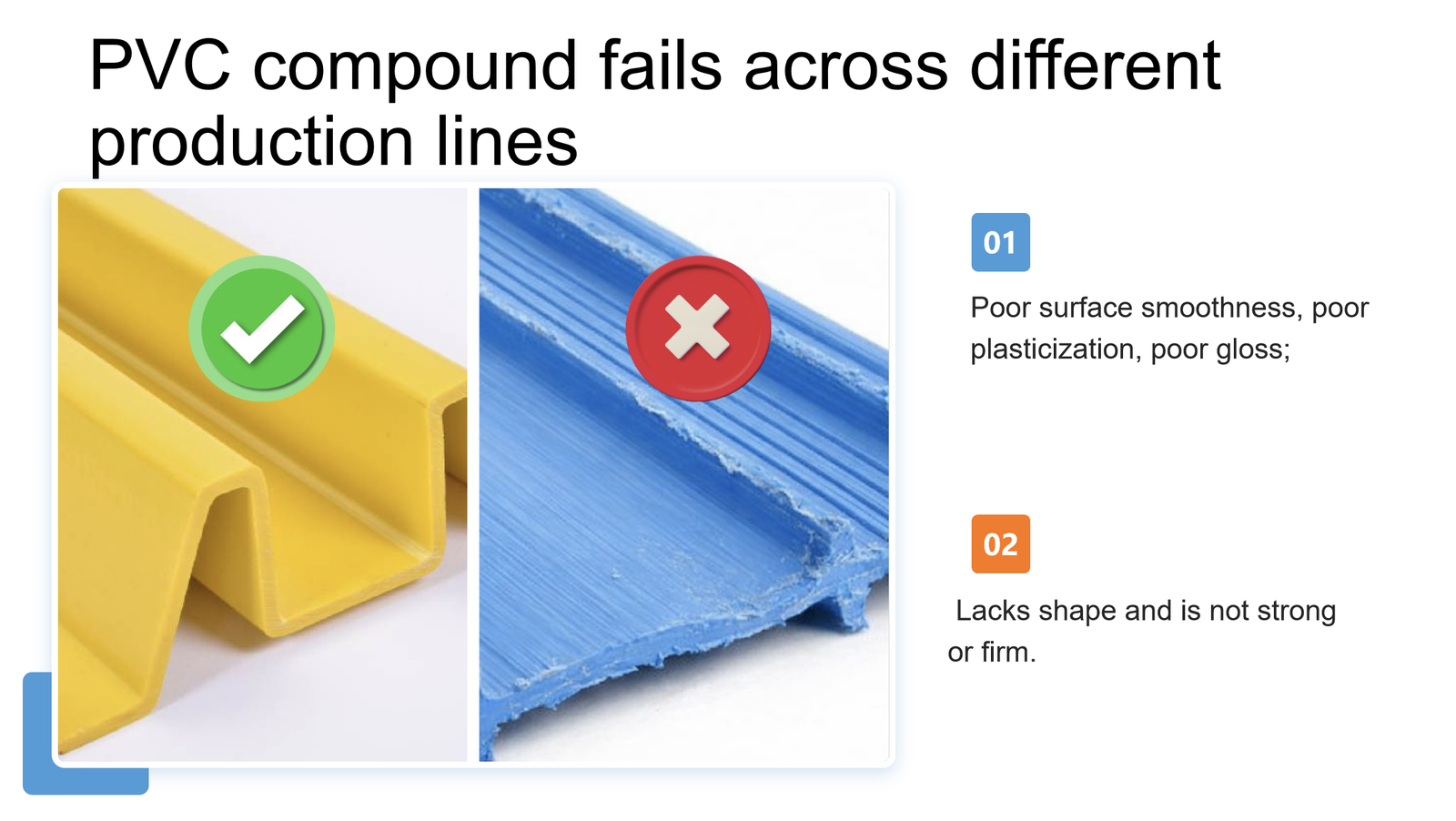
I've seen this scenario countless times in my 15 years working with PVC manufacturers. One day everything runs smoothly, the next day you're dealing with surface defects, inconsistent hardness, or processing instability. The problem isn't your equipment or your team's skills.
What Makes PVC Compound Behavior So Unpredictable Across Lines?
Your production lines look identical on paper, but each one creates a unique processing environment. Temperature zones vary by 5-10°C1, screw speeds differ slightly, and residence times fluctuate based on throughput demands.
Each production line creates distinct thermal and mechanical stress patterns2 that directly affect PVC compound performance. Standard formulations cannot adapt to these micro-variations, leading to inconsistent output quality and processing instability.
The real issue runs deeper than surface-level variations. Your PVC compound contains multiple components - PVC resin, stabilizers, plasticizers, fillers, and processing aids. Each component responds differently to temperature changes, shear rates, and residence times3. When these variables shift between lines, the entire formulation balance gets disrupted.
Consider what happens during a typical production day. Line A operates at 180°C with a 12-minute residence time, while Line B runs at 185°C with a 10-minute cycle. These small differences create different thermal histories for your PVC compound4. The stabilizer system that works perfectly on Line A may start degrading on Line B5, leading to color shifts or reduced mechanical properties.
Processing variations also affect filler dispersion and plasticizer distribution. Higher shear rates on one line can improve mixing but may also cause thermal degradation of sensitive additives6. Lower temperatures on another line might preserve additive integrity but result in poor dispersion, creating weak spots in your final product.
| Processing Variable | Line A | Line B | Impact on PVC Compound |
|---|---|---|---|
| Temperature | 180°C | 185°C | Affects stabilizer performance |
| Residence Time | 12 min | 10 min | Changes thermal history |
| Screw Speed | 45 RPM | 50 RPM | Alters shear and mixing |
| Pressure | 150 bar | 160 bar | Influences filler dispersion |
Why Standard PVC Formulations Cannot Handle Processing Variations?
-
How Application Requirements Drive PVC Compound Performance Limits?
Each application creates specific performance demands that directly influence how your PVC compound behaves during processing. Cable applications require controlled thermal stability and dielectric properties, while medical applications prioritize clarity and extractable levels7.
Understanding these application-driven requirements helps explain why the same PVC compound fails differently across various production scenarios. Cable insulation compounds contain flame retardant systems that can interfere with processing stability at higher temperatures. The aluminum trihydrate or magnesium hydroxide used for flame retardancy can cause abrasive wear on screws8 and create processing instability if not properly formulated.
Medical-grade PVC compounds face completely different challenges9. They require low levels of extractable plasticizers and additives, which limits the stabilizer systems you can use. Traditional lead-based or tin-based stabilizers are prohibited, forcing the use of calcium-zinc or organic stabilizer systems that behave differently under thermal stress.
Hose and tubing applications demand high flexibility and kink resistance, requiring higher plasticizer levels. These high-plasticizer formulations are more sensitive to temperature variations because plasticizer migration and volatilization increase exponentially with temperature. A 10°C temperature increase can double the rate of plasticizer loss10, dramatically affecting long-term performance.
Rigid applications like pipe and profile create their own processing challenges. These compounds contain high levels of impact modifiers and processing aids to maintain toughness while enabling smooth processing. The impact modifier systems can cause fish-eye defects or surface roughness if processing temperatures exceed their thermal stability limits.
| Application Type | Key Requirements | Processing Challenges | Critical Control Points |
|---|---|---|---|
| Cable Insulation | Flame retardancy, dielectric properties | Thermal stability of FR additives | Temperature uniformity |
| Medical Tubing | Low extractables, clarity | Limited stabilizer options | Residence time control |
| Flexible Hose | High elongation, kink resistance | Plasticizer migration | Temperature precision |
| Rigid Pipe | Impact resistance, smooth flow | Impact modifier stability | Shear rate optimization |
What Processing Variables Actually Control PVC Compound Stability?
Temperature control extends far beyond your controller settings. The actual melt temperature in your barrel varies based on screw design, throughput rate, and ambient conditions11. Your compound experiences different thermal histories depending on these variables.
Melt temperature uniformity, residence time consistency, and shear rate stability determine PVC compound performance more than absolute processing parameters. Small variations in these factors create cascading effects that amplify across your entire production system.

Residence time variations create the most significant processing instability. When throughput changes, your PVC compound spends different amounts of time under thermal stress. Shorter residence times can result in incomplete mixing and poor additive dispersion. Longer residence times increase the risk of thermal degradation and color development.
Shear rate control affects both mixing quality and thermal generation. Higher shear rates improve dispersion but generate more frictional heat. This additional heat can push your compound beyond its thermal stability limits, especially in temperature-sensitive formulations. The relationship between shear rate and temperature is not linear, making it difficult to predict optimal processing windows.
Pressure variations throughout your system affect filler dispersion and void formation. Inconsistent pressure can cause incomplete wetting of fillers, leading to weak spots in your final product. Pressure fluctuations also affect die swell and dimensional stability of your extruded products.
Cooling rate variations after extrusion create internal stresses that affect long-term performance. Rapid cooling can lock in processing stresses, while slow cooling might allow continued thermal degradation. The cooling profile must match your compound's thermal characteristics to optimize final properties.
Moisture content in your compound creates processing instability through steam formation and hydrolytic degradation. Even small amounts of moisture can cause surface defects, dimensional variations, and reduced mechanical properties. Moisture sensitivity varies significantly between different PVC compound formulations.
How Star PVC Engineers Application-Specific Solutions?
We develop each PVC compound formulation based on your specific application requirements and processing conditions. Instead of modifying existing formulations, we start with your end-use performance targets and work backward to create optimized solutions.
Star PVC translates application requirements into controlled formulation design and consistent production performance. Each solution is engineered to match specific processing conditions while delivering targeted end-use properties through optimized additive systems.
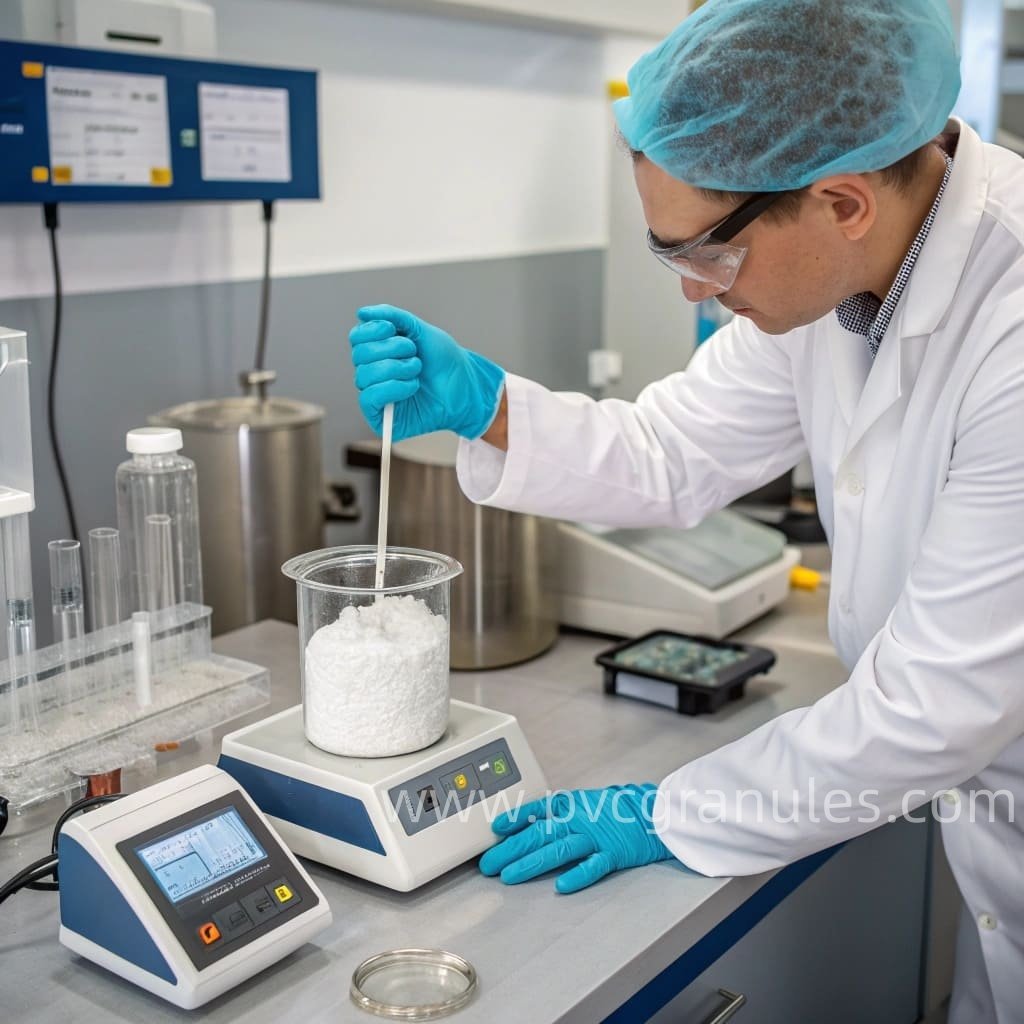
Our formulation development process begins with detailed analysis of your processing environment. We map temperature profiles, measure actual residence times, and characterize shear rate distributions across your production lines. This data drives our additive selection and optimization process.
| Engineering Phase | Focus Areas | Validation Methods | Success Metrics |
|---|---|---|---|
| Processing Analysis | Temperature, shear, residence time | On-site measurement | Processing window mapping |
| Formulation Design | Stabilizer, plasticizer, filler optimization | Laboratory testing | Target property achievement |
| Production Validation | Line-specific optimization | Pilot production runs | Consistency across lines |
| Quality Systems | Real-time monitoring | Statistical process control | Defect rate reduction |
Conclusion
PVC compound failures across production lines stem from formulation inflexibility rather than processing problems. Application-specific engineering and processing optimization eliminate these inconsistencies, ensuring reliable performance across all your production systems.
"(PDF) Melt temperature consistency during polymer extrusion", https://www.academia.edu/44503143/Melt_temperature_consistency_during_polymer_extrusion. A technical source on extrusion temperature control should document that barrel-zone setpoints and actual melt temperatures can deviate by several degrees across extruders or operating conditions. Evidence role: mechanism; source type: education. Supports: Production lines that appear similar can still differ in temperature by several degrees.. Scope note: The source may verify typical temperature variability but not the exact 5–10°C range in this specific facility. ↩
"The Modelling of Extrusion Processes for Polymers—A Review", https://pmc.ncbi.nlm.nih.gov/articles/PMC7361957/. A polymer extrusion reference should explain that screw geometry, speed, throughput, die resistance, and barrel heating determine the thermal and mechanical history experienced by a compound. Evidence role: mechanism; source type: education. Supports: Different production lines impose different thermal and mechanical stresses on PVC compounds.. Scope note: This would establish the principle of line-specific stress patterns rather than quantify the differences for the article’s example lines. ↩
"Thermal Stability of Nanosilica-Modified Poly(vinyl chloride)", https://pmc.ncbi.nlm.nih.gov/articles/PMC8271553/. A PVC formulation or polymer-processing source should show that resin, stabilizers, plasticizers, fillers, and processing aids have different sensitivities to heat, shear, and residence time during compounding or extrusion. Evidence role: mechanism; source type: paper. Supports: PVC compound constituents respond differently to processing variables such as temperature, shear rate, and residence time.. Scope note: The evidence would support component-specific sensitivity in general, not every additive package used commercially. ↩
"Thermal History-Dependent Deformation of Polycarbonate", https://pmc.ncbi.nlm.nih.gov/articles/PMC12349233/. A polymer-processing reference should support that residence time and melt temperature together define a material’s thermal history, which can influence degradation and final properties. Evidence role: mechanism; source type: education. Supports: Small differences in temperature and residence time create different thermal histories for PVC compounds.. Scope note: The source would support the relationship between processing conditions and thermal history, not the specific Line A and Line B values in the article. ↩
"Thermal Stability of Nanosilica-Modified Poly(vinyl chloride) - PMC", https://pmc.ncbi.nlm.nih.gov/articles/PMC8271553/. A PVC thermal-stabilization source should explain that PVC stabilizer performance depends on processing temperature, time at temperature, and formulation chemistry, and that inadequate stabilization can lead to degradation. Evidence role: mechanism; source type: paper. Supports: A PVC stabilizer system can perform differently under different temperature and residence-time conditions.. Scope note: The source would support the thermal-degradation mechanism, not the specific performance of the hypothetical Line A and Line B stabilizer system. ↩
"[PDF] MODELING OF THERMO-MECHANICAL DEGRADATION OF ...", https://repository.arizona.edu/bitstream/handle/10150/668426/azu_etd_20257_sip1_m.pdf?sequence=1. A polymer-processing source should support that increased shear can improve dispersive mixing while also increasing viscous heating, which may accelerate thermal degradation in heat-sensitive polymers or additives. Evidence role: mechanism; source type: paper. Supports: Higher shear rates can improve mixing while increasing the risk of thermal degradation in PVC compounds.. Scope note: The source may address polymer extrusion generally; direct PVC-specific evidence would be preferable if available. ↩
"Controlled Extraction Studies Applied to Polyvinyl Chloride and ...", https://pmc.ncbi.nlm.nih.gov/articles/PMC4444625/. Application standards or institutional material references should support that cable insulation compounds are specified for electrical and thermal performance, while medical PVC is evaluated for optical clarity, biocompatibility, and extractables/leachables. Evidence role: expert_consensus; source type: institution. Supports: Different PVC applications impose different performance requirements, such as dielectric behavior for cables and extractables control for medical uses.. Scope note: The evidence may come from separate cable and medical-material standards rather than one source comparing both applications directly. ↩
"Magnesium hydroxide - Huber Advanced Materials", https://www.huberadvancedmaterials.com/products/magnesium-hydroxide-flame-retardants-mdh. A materials or polymer-compounding source should support that mineral flame retardants such as aluminum trihydrate and magnesium hydroxide are particulate fillers and can contribute to abrasive wear in polymer-processing equipment. Evidence role: mechanism; source type: paper. Supports: Mineral flame-retardant fillers in PVC compounds can increase abrasive wear on screws.. Scope note: The degree of wear depends on filler loading, particle morphology, screw metallurgy, and processing conditions. ↩
"Draft Guidance; Medical Devices Made With Polyvinylchloride Using ...", https://www.federalregister.gov/documents/2002/09/06/02-22687/medical-devices-draft-guidance-medical-devices-made-with-polyvinylchloride-using-the-plasticizer. A medical-device materials source should support that PVC used in medical applications is subject to distinct requirements related to biocompatibility, sterilization, extractables/leachables, and plasticizer selection. Evidence role: expert_consensus; source type: government. Supports: Medical-grade PVC compounds have distinct formulation and compliance constraints compared with non-medical PVC applications.. Scope note: Requirements vary by device type, jurisdiction, and patient-contact category. ↩
"Rapid Detection of Plasticizer Migration From UV‐Aged PVC Films ...", https://pmc.ncbi.nlm.nih.gov/articles/PMC12911472/. A diffusion, migration, or Arrhenius-kinetics source should support that temperature increases can substantially accelerate plasticizer migration or volatilization in flexible PVC, often approximated by temperature-dependent rate laws. Evidence role: mechanism; source type: paper. Supports: Plasticizer loss from flexible PVC increases strongly with temperature, and a 10°C rise may approximately double the loss rate under some conditions.. Scope note: The “doubling per 10°C” relationship is a rule-of-thumb and may vary with plasticizer type, PVC formulation, geometry, and exposure environment. ↩
"Predicting Throughput and Melt Temperature in ... - PMC", https://pmc.ncbi.nlm.nih.gov/articles/PMC9502425/. An extrusion engineering source should support that melt temperature is determined not only by heater setpoints but also by screw design, screw speed, throughput, viscous dissipation, and heat transfer conditions. Evidence role: mechanism; source type: education. Supports: Actual melt temperature can differ from controller settings because it depends on screw design, throughput, and heat generation during extrusion.. Scope note: Ambient conditions may be a secondary factor compared with screw design, speed, and throughput, depending on the extrusion setup. ↩
