
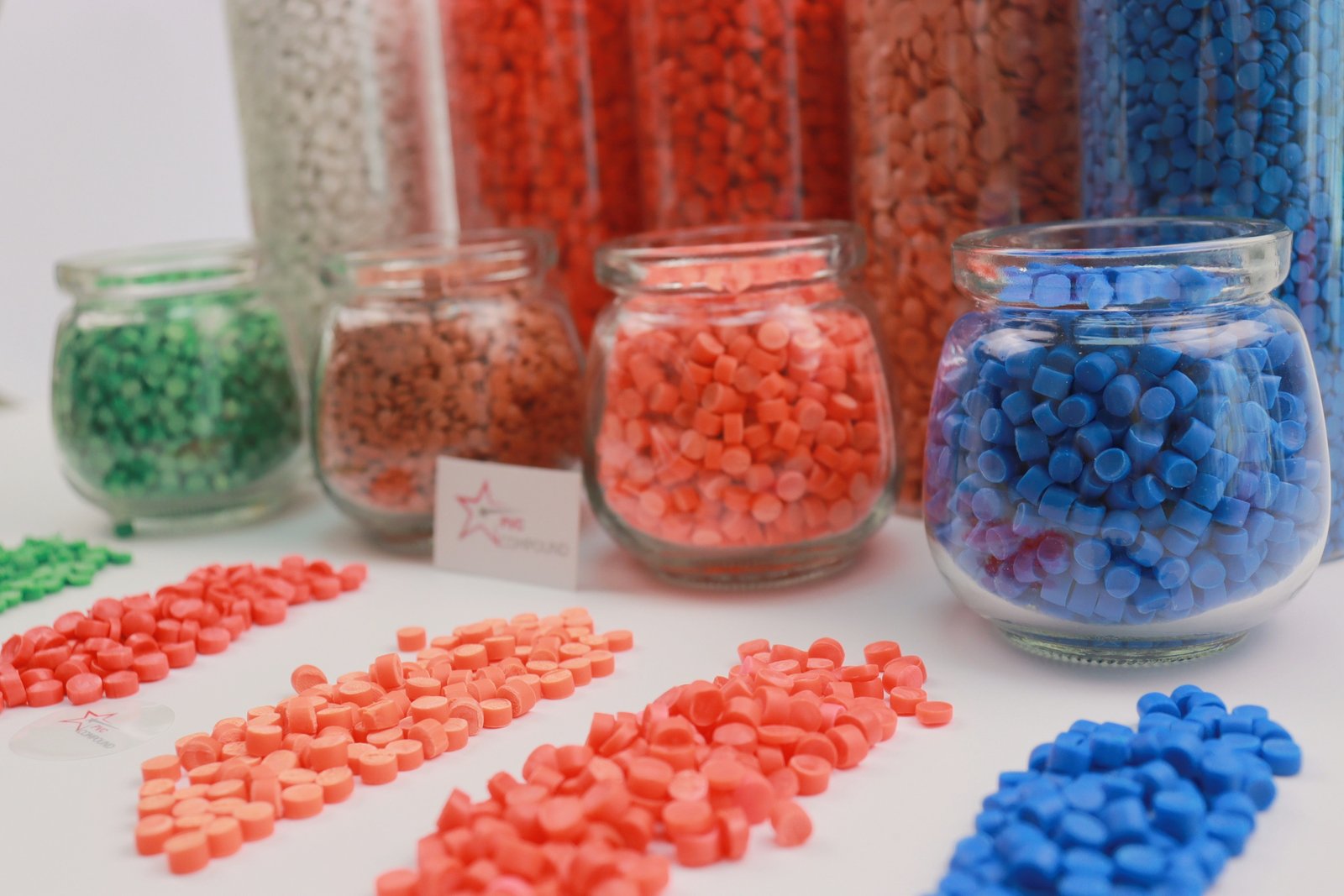
When I look at PVC shrink film wrapping around bottles in supermarkets, I see crystal-clear materials that seem almost magical in how they conform perfectly to product shapes.
PVC shrink film and bottle granules possess unique characteristics: transparency with high gloss, controlled shrinkage rates (48±3% horizontally, 12±3% vertically at 100℃), excellent printability, and food-grade safety requirements1. These properties depend on specialized formulations using high-stability stabilizers, fine-particle materials, and migration-resistant plasticizers2.
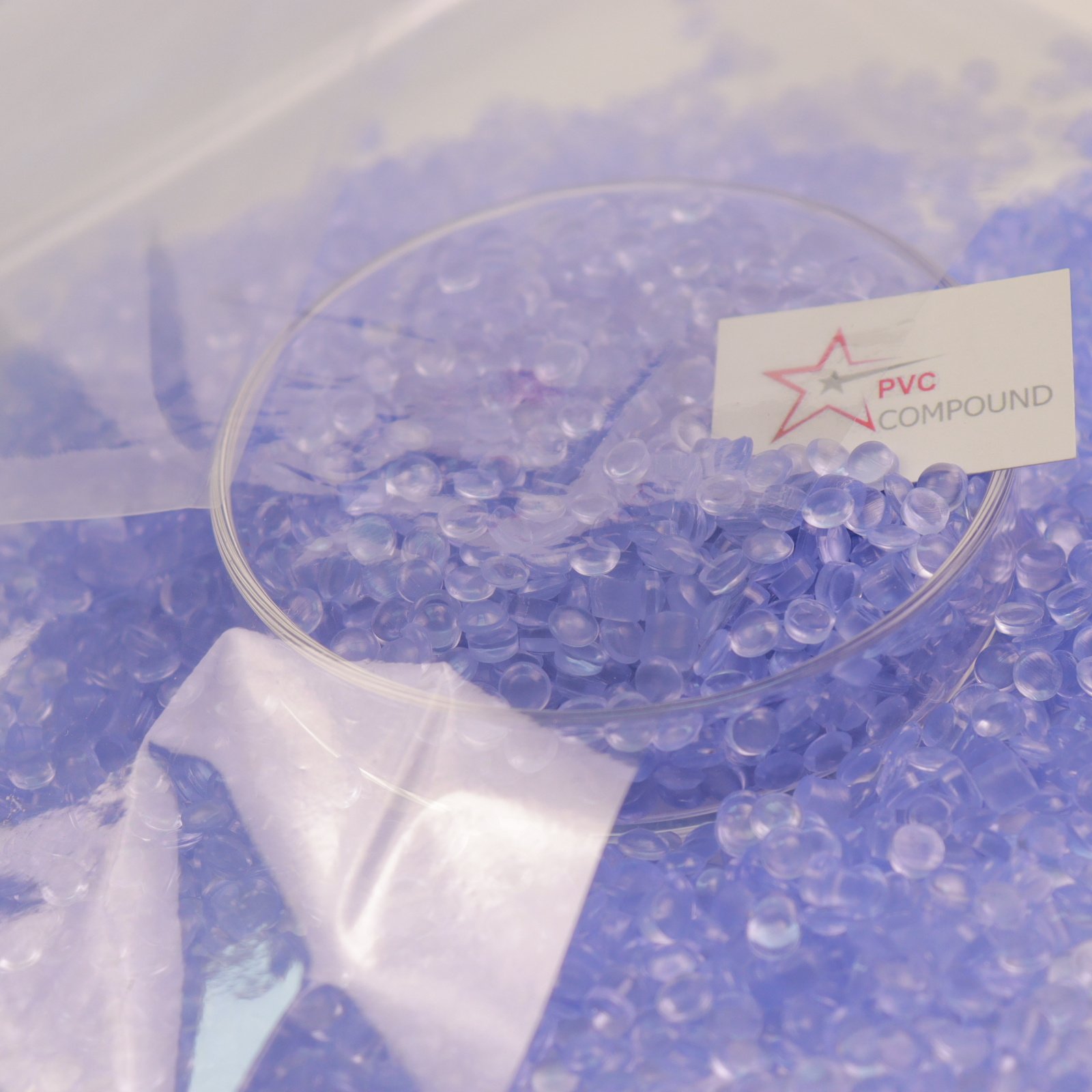
After working with PVC compounds for nearly two decades, I've seen how these seemingly simple plastic granules create products we use every day. Let me share what makes PVC shrink film and bottle granules so special.
What Makes PVC Shrink Film Granules Transparent and Glossy?
The transparency you see in shrink films doesn't happen by accident - it requires precise material selection and formulation expertise.
PVC shrink film granules achieve transparency through fine-particle raw materials, high-stability organic tin stabilizers, and careful processing3. The surface remains smooth without crystal points, impurities, or oil spots, sometimes showing a slight blue tint.
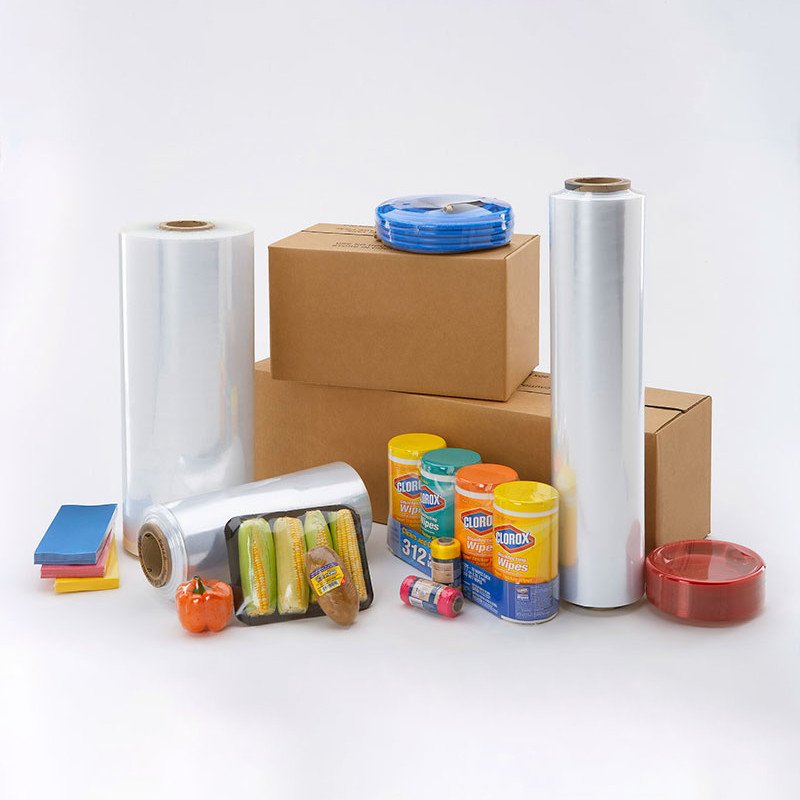
When I examine high-quality PVC shrink film granules under our laboratory conditions, several factors contribute to their crystal-clear appearance. First, we select raw materials with extremely fine particle sizes. Large particles create visible defects that ruin transparency. Every component - from PVC resin to additives - must pass through strict mesh screening.
The choice of stabilizer plays a crucial role. We use high-stability organic tin stabilizers rather than cheaper alternatives. These stabilizers prevent thermal degradation during processing while maintaining optical clarity. Lead-based stabilizers, once common, are now banned in food-contact applications4 and create opacity issues.
Processing temperature control becomes critical. Too high temperatures cause thermal degradation, creating yellow discoloration and opacity5. Too low temperatures result in poor melt flow and surface defects. Our production lines maintain precise temperature profiles across all heating zones.
| Property | Requirement | Impact on Quality |
|---|---|---|
| Particle size | Ultra-fine | Prevents visible defects |
| Stabilizer type | Organic tin | Maintains transparency |
| Processing temp | Controlled range | Prevents degradation |
| Surface finish | Mirror-smooth | Eliminates light scattering |
The slight blue tint sometimes visible comes from specific UV absorbers added to protect the film from sunlight degradation6. This blue tint actually enhances visual appeal for certain applications like beverage labels.
How Do PVC Granules Achieve Controlled Shrinkage Rates?
The magic happens when heat transforms rigid film into perfectly fitted packaging - but this requires engineered shrinkage properties.
Controlled shrinkage rates (horizontal 48±3%, vertical 12±3% at 100℃/60s) result from using high molecular weight, loose-type resins like SG-3 or SG-4, combined with carefully balanced internal and external lubricant ratios.
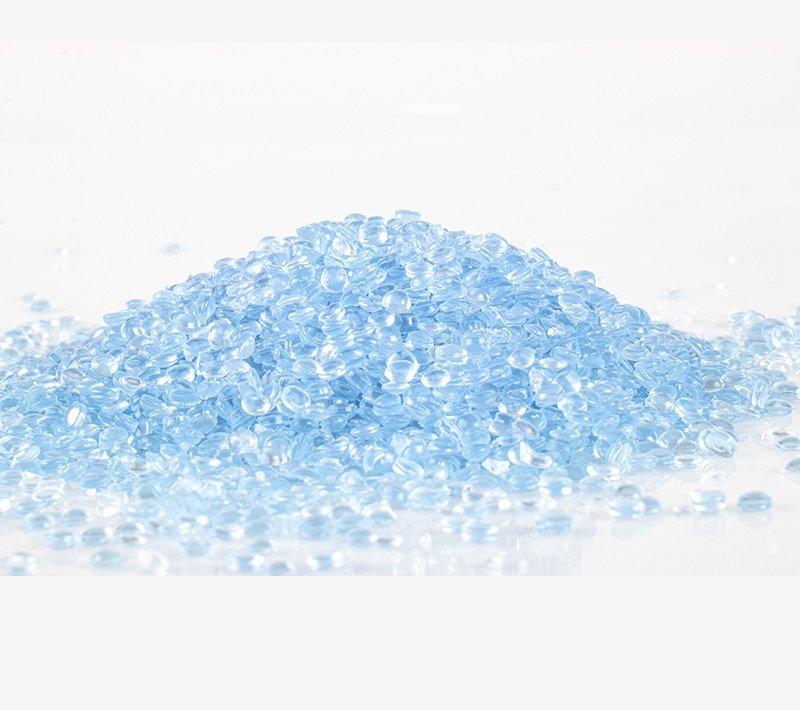
During my years formulating PVC compounds, I've learned that shrinkage control requires understanding polymer chain orientation. When PVC film gets stretched during production, polymer chains align in specific directions7. Heat application allows these chains to relax back to their original state - this creates shrinkage8.
The horizontal shrinkage rate must be high (48±3%) to ensure tight wrapping around bottle bodies. Vertical shrinkage stays low (12±3%) to prevent excessive length reduction that could cause label distortion. This directional difference comes from controlling the stretching ratios during film production9.
Resin selection proves critical. High molecular weight resins like SG-3 and SG-4 provide the necessary chain entanglement for controlled shrinkage10. Lower molecular weight resins shrink too rapidly and unpredictably. The "loose-type" structure allows easier chain movement during heat activation.
Lubricant balance affects shrinkage uniformity. Internal lubricants reduce friction between polymer chains, allowing smooth shrinkage. External lubricants prevent sticking to processing equipment but can interfere with shrinkage if used excessively. We adjust these ratios based on specific application requirements.
Natural shrinkage rate stays below 0.5% during long-term storage at 30℃. This prevents premature shrinking during transportation and storage before actual use.
Why Do PVC Bottle Granules Require Different Formulations?
Unlike shrink films, PVC bottles serve as rigid containers that must withstand various stresses and chemical exposures.
PVC bottle granules need impact modifiers for strength, minimal filler content for surface smoothness, and chemical resistance for food/pharmaceutical applications. Unlike transparent films, bottles can be white or colored while maintaining food-grade safety.
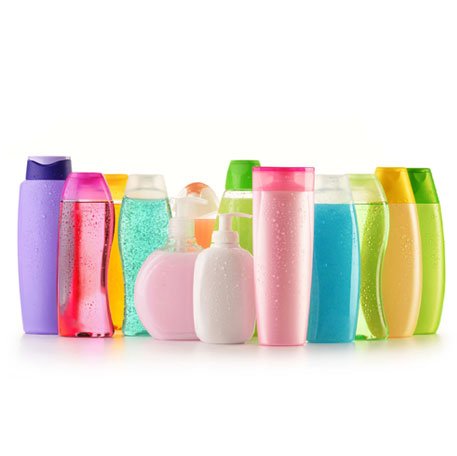
When I work with clients in South America and the Middle East who manufacture bottles, their requirements differ significantly from film producers. Bottles must maintain structural integrity under filling pressure, temperature changes, and handling stress. This demands impact modification that films don't need.
Impact modifiers like CPE (Chlorinated Polyethylene) or ACR (Acrylic) improve toughness without sacrificing processability11. These additives create a rubber-like phase within the PVC matrix that absorbs impact energy. The amount varies based on bottle wall thickness and intended use.
Filler content requires careful control. While calcium carbonate reduces costs in many PVC applications, excessive amounts create surface roughness in bottles. Smooth surfaces are essential for label adhesion and consumer appeal. We typically limit calcium carbonate to maintain surface quality while achieving cost targets.
Chemical resistance becomes paramount for beverage and daily chemical packaging. The formulation must resist acids, alkalis, oils, and solvents without leaching harmful substances. This requires selecting stabilizers and plasticizers that won't migrate into contents.
| Application | Key Requirements | Formulation Focus |
|---|---|---|
| Beverage bottles | Food safety, clarity | Migration-resistant additives |
| Cosmetic containers | Chemical resistance | Alkali/solvent resistance |
| Pharmaceutical bottles | Medical grade purity | Ultra-low extractables |
| Industrial containers | Strength, durability | High impact modification |
Color flexibility allows brand differentiation. White bottles use titanium dioxide for opacity and brightness. Colored bottles require lightfast pigments that won't fade or bleed. All colorants must comply with food contact regulations.
Many of our pharmaceutical-grade bottle compounds meet stringent medical device standards. These formulations undergo extensive testing for extractables, leachables, and biocompatibility12 to ensure patient safety.
Conclusion
PVC shrink film and bottle granules showcase how specialized formulations create everyday products with precise performance characteristics, from controlled shrinkage to chemical resistance.
"[PDF] A study of the conditions and variables that affect the printing of ...", https://repository.rit.edu/cgi/viewcontent.cgi?article=4785&context=theses. A technical standard or polymer-packaging reference can support that PVC shrink labels are specified by optical clarity, gloss, directional shrinkage, printability, and food-contact compliance; the stated numerical shrinkage values should be treated as formulation- or product-specific unless the source reports the same test conditions. Evidence role: general_support; source type: institution. Supports: PVC shrink film and bottle granules are evaluated by transparency, gloss, controlled shrinkage, printability, and food-grade requirements.. Scope note: The exact shrinkage percentages may not be universal across all PVC shrink films. ↩
"Recent Attempts in the Design of Efficient PVC Plasticizers ... - PMC", https://pmc.ncbi.nlm.nih.gov/articles/PMC7916570/. Polymer-additives literature can document that PVC optical quality and food-contact suitability depend on stabilizer selection, additive dispersion, and migration behavior of plasticizers; this supports the formulation logic rather than proving any individual commercial formulation. Evidence role: mechanism; source type: paper. Supports: PVC shrink film and bottle properties depend on stabilizers, fine particles, and migration-resistant plasticizers.. Scope note: Contextual support only; exact additive packages vary by manufacturer and regulation. ↩
"Thermal stabilisation of poly(vinyl chloride) by organotin ...", https://hero.epa.gov/reference/5494012/. PVC processing references describe how additive dispersion, thermal stabilizers such as organotin compounds, and controlled processing conditions help preserve clarity by limiting defects and thermal discoloration; the source would not necessarily verify the article’s specific production recipe. Evidence role: mechanism; source type: research. Supports: PVC shrink film granules achieve transparency through fine-particle raw materials, organotin stabilizers, and careful processing.. Scope note: Supports the mechanism generally, not a particular granule formulation. ↩
"Legacy and Emerging Plasticizers and Stabilizers in PVC Floorings ...", https://pmc.ncbi.nlm.nih.gov/articles/PMC10832040/. Food-contact and chemical-safety regulations can show that lead compounds are restricted or prohibited in many food-contact plastic applications because of toxicity concerns; jurisdictional scope should be specified because bans differ by country and regulation. Evidence role: historical_context; source type: government. Supports: Lead-based stabilizers were historically used in PVC but are now restricted or banned for many food-contact applications.. Scope note: Regulatory status varies by jurisdiction and by application. ↩
"[PDF] Kinetic Study of Polyvinyl Chloride Pyrolysis with Characterization of ...", https://www.osti.gov/servlets/purl/2352421. Polymer-degradation literature reports that PVC undergoes thermal dehydrochlorination, producing conjugated polyene sequences associated with yellowing and darkening; this supports the discoloration mechanism but not a specific processing temperature limit. Evidence role: mechanism; source type: paper. Supports: Excessive processing temperature can thermally degrade PVC and cause yellow discoloration and opacity.. Scope note: Does not establish the exact threshold temperature for the article’s process. ↩
"Photodegradation and photostabilization of polymers, especially ...", https://pmc.ncbi.nlm.nih.gov/articles/PMC4320144/. Photostabilization studies and additive references describe UV absorbers as additives used to reduce polymer photo-oxidation and sunlight-induced degradation; this supports the protective function, though not the claimed visual blue tint. Evidence role: mechanism; source type: paper. Supports: UV absorbers are added to PVC films to reduce sunlight-related degradation.. Scope note: Supports UV protection generally, not necessarily the color effect described. ↩
"Shrink wrap - Wikipedia", https://en.wikipedia.org/wiki/Shrink_wrap. Polymer-orientation references explain that stretching thermoplastic films aligns molecular chains along the draw direction, creating anisotropic mechanical and thermal behavior; this supports the general mechanism behind directional shrinkage. Evidence role: mechanism; source type: education. Supports: Stretching PVC film during production orients polymer chains in specific directions.. Scope note: General polymer-film mechanism; not limited to PVC shrink labels. ↩
"The memory of thin polymer films generated by spin coating - PMC", https://pmc.ncbi.nlm.nih.gov/articles/PMC9132827/. Materials-science sources on oriented shrink films state that heat permits oriented polymer chains to relax toward a lower-energy state, producing dimensional shrinkage; this supports the mechanism but not the article’s exact shrinkage percentages. Evidence role: mechanism; source type: education. Supports: Heat-induced relaxation of oriented polymer chains causes shrinkage in shrink films.. Scope note: Does not validate the numerical shrinkage rates stated elsewhere in the article. ↩
"Heat Treatment Impacts on Film Morphology in Biaxially Oriented ...", https://pmc.ncbi.nlm.nih.gov/articles/PMC12174661/. Research on biaxially oriented and heat-shrink films shows that draw ratios in machine and transverse directions influence anisotropic shrinkage; this supports the relationship between stretching ratios and directional shrink behavior. Evidence role: mechanism; source type: paper. Supports: Directional shrinkage differences are controlled by stretching ratios during film production.. Scope note: The source may discuss oriented polymer films broadly rather than PVC sleeve film specifically. ↩
"Stretchability and Melt Strength Enhancement of Biodegradable ...", https://pmc.ncbi.nlm.nih.gov/articles/PMC12348934/. PVC resin references associate higher molecular weight or K-value grades with greater chain entanglement and melt strength, properties relevant to film orientation and dimensional response; the link to SG-3/SG-4 shrinkage performance may be indirect unless grade-specific data are found. Evidence role: mechanism; source type: research. Supports: Higher molecular weight PVC grades can improve chain entanglement and controlled shrinkage behavior.. Scope note: May support molecular-weight effects generally rather than proving SG-3/SG-4 are required. ↩
"Super-tough PVC/CPE composites: an efficient CPE network by an ...", https://pmc.ncbi.nlm.nih.gov/articles/PMC9058450/. PVC impact-modification literature documents that chlorinated polyethylene and acrylic modifiers are used to increase toughness and impact strength in rigid PVC by forming dispersed elastomeric phases; processability effects depend on modifier type and loading. Evidence role: mechanism; source type: paper. Supports: CPE and acrylic impact modifiers improve the toughness of PVC compounds.. Scope note: Processability may vary with formulation and processing conditions. ↩
"[PDF] Q3E Guideline for Extractables and Leachables - FDA", https://www.fda.gov/media/189890/download. Medical-device and pharmaceutical-packaging guidance identifies extractables, leachables, and biocompatibility evaluation as standard safety considerations for materials that contact drugs or patients; this supports the testing categories, though not the compliance of any specific PVC compound. Evidence role: expert_consensus; source type: government. Supports: Pharmaceutical-grade bottle compounds may require testing for extractables, leachables, and biocompatibility.. Scope note: Does not verify that the article’s compounds meet a particular medical or pharmaceutical standard. ↩
