
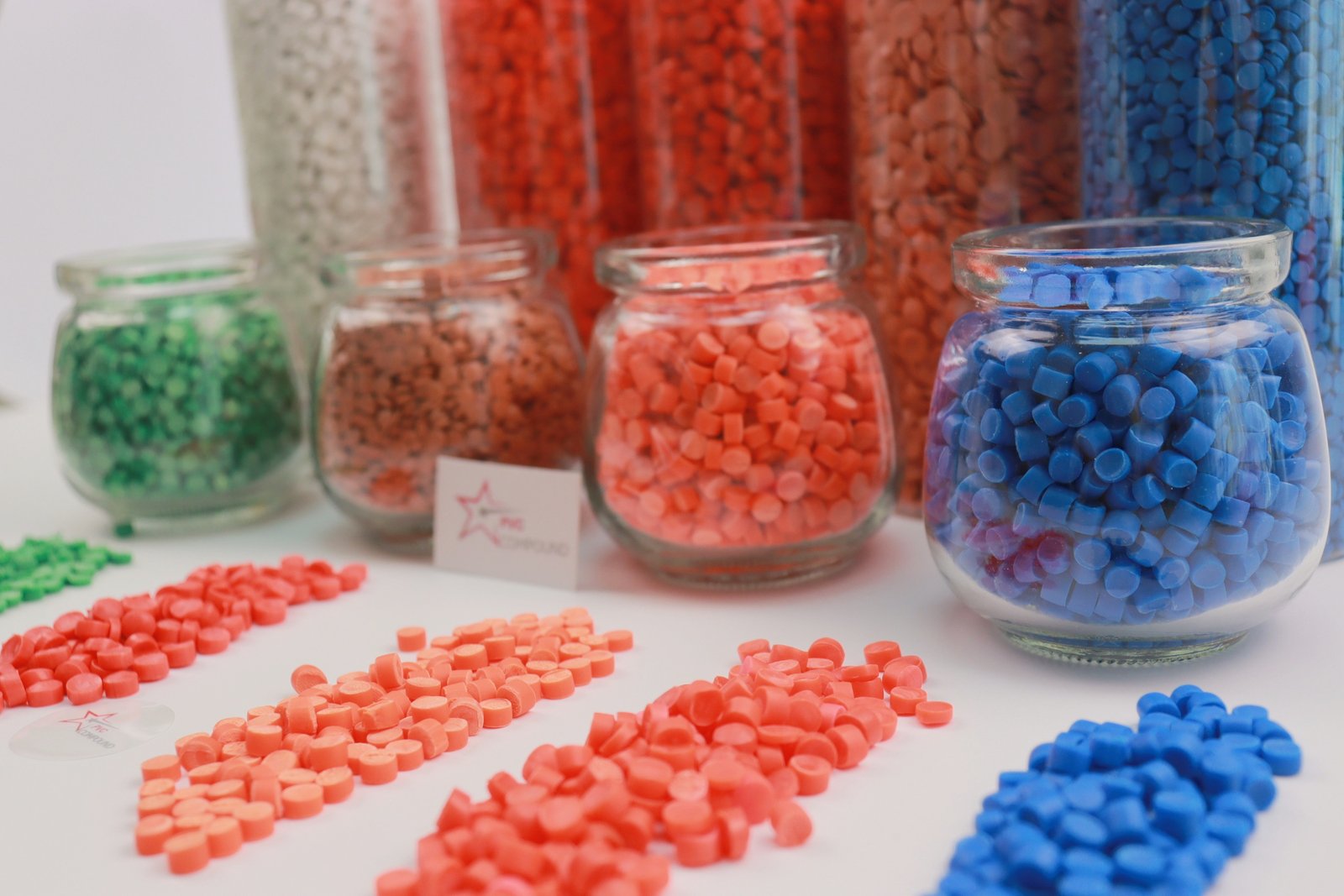
You've spent weeks perfecting your shoe production line, but suddenly you notice ugly dents appearing on every sole. Your customers are complaining, and you're losing money fast.
PVC shoe sole dents happen due to two main causes: vacuum shrinkage from insufficient holding pressure or gas bubble formation from trapped air and moisture.1 The solution requires adjusting injection parameters and using properly formulated PVC compounds.
Last month, a client from Africa contacted me about this exact problem. Their shoe soles had visible dents, and they needed a solution fast. After 15 years in PVC compound manufacturing, I've seen this issue countless times. Let me share what really works.
What Causes Vacuum Shrinkage Dents in PVC Shoe Soles?
Vacuum shrinkage creates the most frustrating type of dent. You see a depression that caves inward, but when you cut the sole open, the inside looks solid with no air pockets.
Vacuum shrinkage occurs when thick sections of the shoe sole cool and contract faster than the injection molding machine can supply additional material.2 The result is an inward collapse that creates permanent dents.
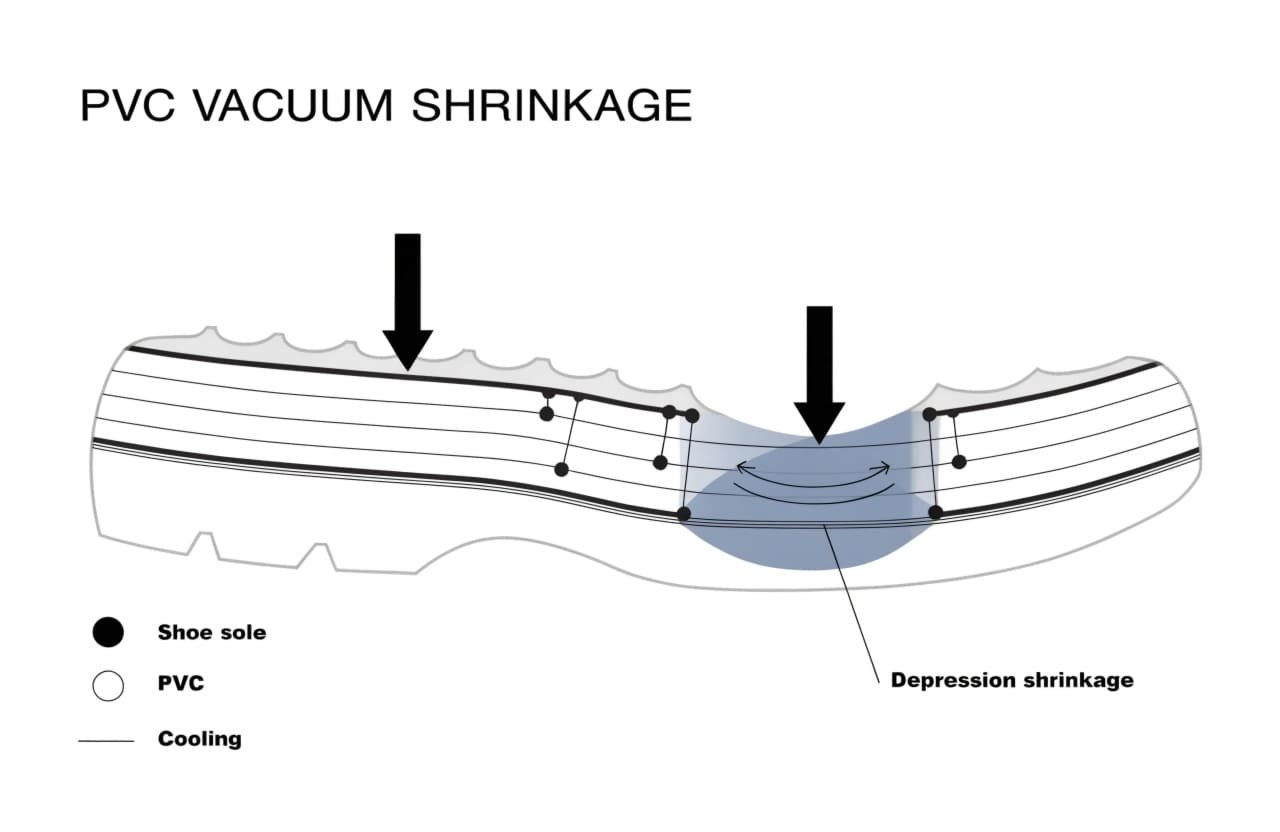
I remember working with a European manufacturer who had this problem for months. Their thick-soled boots kept developing dents near the heel area. We discovered their holding pressure was too low, and the gate froze before the thick sections finished cooling.
Here's what we changed to fix vacuum shrinkage:
| Parameter | Adjustment | Reason |
|---|---|---|
| Holding Pressure | Increase 10-15% | Maintains material flow until gate freezes3 |
| Holding Time | Extend 2-3 seconds | Ensures complete solidification |
| Mold Temperature | Raise to 45-60°C | Prevents surface skin formation |
| Injection Speed | Multi-stage profile | Reduces air entrapment |
The key is understanding that PVC needs time to pack properly. When you increase holding pressure, you're essentially forcing more material into the cavity as it shrinks. But timing matters. If you hold too long after the gate freezes, you're wasting cycle time.
Temperature control makes a huge difference too. I've seen manufacturers run molds too cold, thinking it speeds up production. Wrong approach. When the mold is too cold, the surface hardens quickly while the core is still hot and liquid.4 As the core cools, it shrinks but can't pull in more material because the surface is already solid.
How Do Gas Bubbles Create Surface Defects?
Gas bubble dents look different from shrinkage dents. When you cut into these defects, you'll find hollow spaces and small holes scattered randomly across the surface.
Gas bubble defects form when air, moisture, or volatile additives get trapped during injection.5 These create hollow cavities that collapse inward, leaving crater-like depressions on the shoe sole surface.
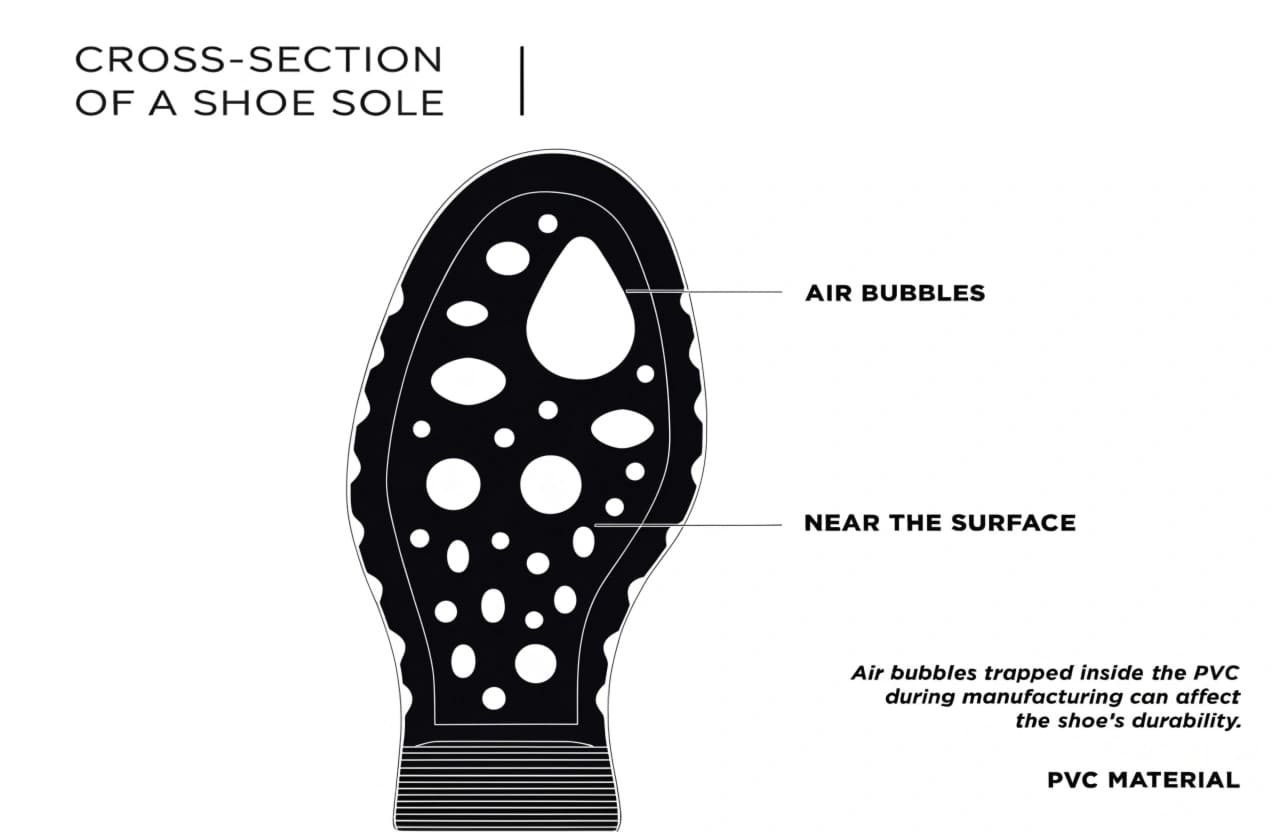
I worked with a client in Southeast Asia who couldn't figure out why their soles had tiny pockmarks everywhere. After investigating their process, we found three problems: their injection speed was too high, their material wasn't dried properly, and their mold venting was blocked.
The solution involved systematic changes:
Injection Speed Reduction: High-speed injection creates turbulence that traps air.6 We reduced their injection speed by 30% and used a multi-stage profile. Fast filling at the beginning, then slower as the cavity fills. This prevents the violent mixing that creates air pockets.
Back Pressure Optimization: We increased screw back pressure to 8-12 bar. Higher back pressure compacts the melt better and forces out dissolved gases before injection.7 Think of it like squeezing air out of a sponge.
Temperature Management: Their barrel temperature was too high at 190°C. PVC starts decomposing above 185°C, releasing HCl gas that creates bubbles.8 We dropped it to 170°C and got better results immediately.
Venting Improvements: This was the biggest issue. Their mold vents were clogged with PVC residue. We cleaned them and adjusted the depth to 0.02mm. Proper venting lets trapped air escape instead of forming bubbles.9
Why Does Material Quality Matter for Defect Prevention?
Even perfect machine settings can't fix problems caused by poor material quality. I've seen customers struggle for weeks with processing issues, only to discover their PVC compound was the real culprit.
High-quality PVC compounds with proper formulation prevent most dent-related defects by maintaining consistent flow properties, controlled shrinkage rates, and minimal gas generation during processing.
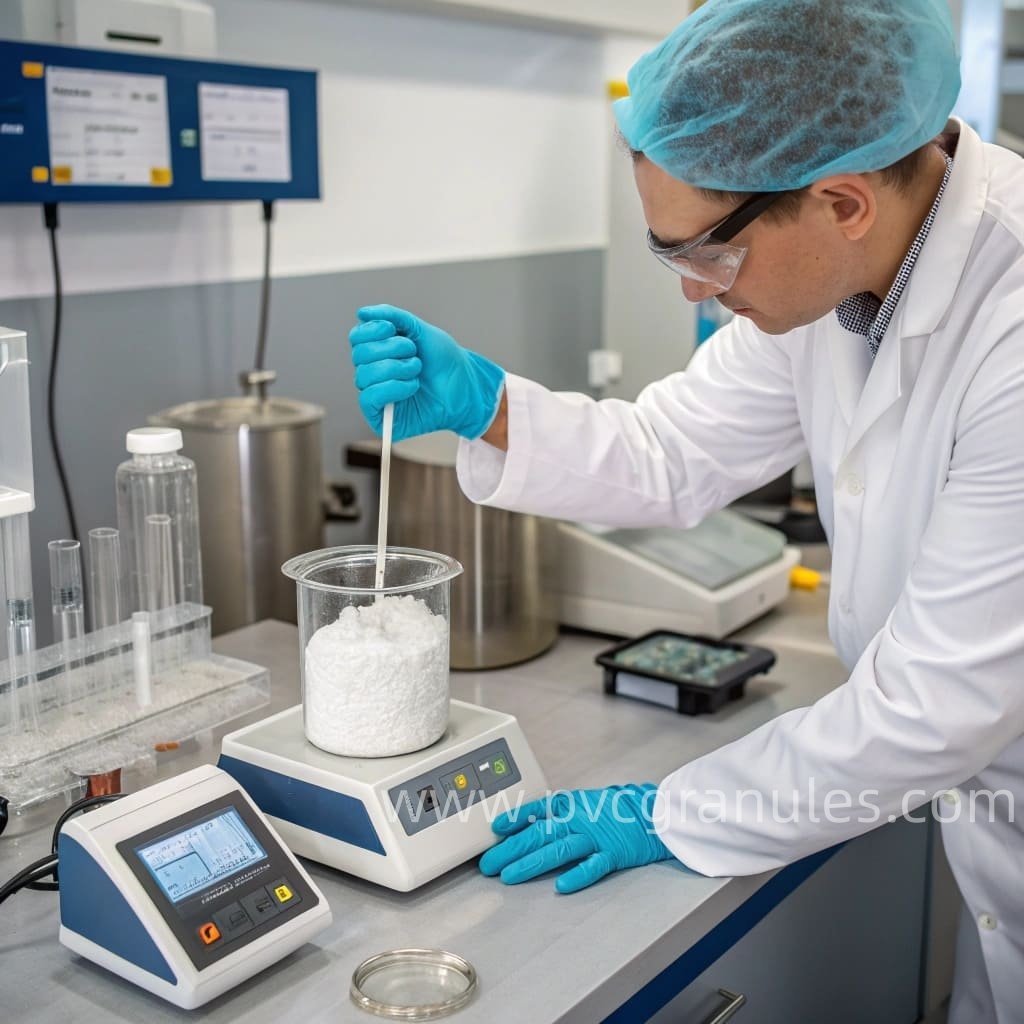
Our African client's original supplier provided material with inconsistent moisture content. PVC absorbs water easily during cooling and shipping. Even 0.1% moisture creates steam during processing, leading to bubble formation and surface defects.
We always recommend drying PVC compounds before use. Our standard procedure involves 80°C for 4 hours in a dehumidifying dryer. This removes surface moisture and any absorbed water from shipping containers.
Formulation matters just as much as drying. Internal and external lubricants need precise balance.10 Too much external lubricant causes surface defects. Too little internal lubricant creates high shear heat that decomposes the PVC. Our technical team adjusts these ratios based on your specific processing conditions.
Here's what we analyze in every batch:
| Property | Target Range | Impact on Defects |
|---|---|---|
| Moisture Content | <0.05% | Prevents steam formation |
| Melt Flow Index | 8-12 g/10min | Ensures proper flow |
| Thermal Stability | >180°C | Prevents decomposition |
| Bulk Density | 1.35-1.45 g/cm³ | Consistent feeding |
We also include specific stabilizers that prevent thermal degradation during the extended heating cycles needed for thick shoe soles. Standard PVC might work for thin films, but shoe soles need enhanced thermal stability.
What Processing Parameters Eliminate Dent Formation?
Getting the right processing window requires understanding how PVC behaves differently from other thermoplastics. PVC has a narrow processing temperature range and specific pressure requirements.11
Optimal PVC shoe sole processing uses 165-175°C barrel temperature, 45-60°C mold temperature, multi-stage injection with 80% fast fill followed by 20% slow pack, and holding pressure 70-80% of injection pressure.
I always start troubleshooting with temperature settings. PVC processing temperature directly affects both shrinkage and gas formation. Too low, and you get incomplete filling and high internal stress. Too high, and you get decomposition gases and excessive shrinkage.
The multi-stage injection profile makes the biggest difference. We use 80% cavity fill at medium speed, then drop to 20% speed for the final fill. This reduces shear heating and air entrapment while maintaining good surface finish.
Cooling time calculations matter more than most people realize. Thick shoe soles need longer cooling than thin parts. We use this formula: cooling time = (wall thickness)² × material factor. For PVC, the material factor is 1.2-1.5 seconds per mm².
Clamping force needs careful attention too. Insufficient clamping lets gas escape through parting lines, which sounds good but actually creates flash and inconsistent part dimensions. We typically use 3-4 tons per square inch of projected area.
Our engineering team provides complete processing guidelines with every shipment. This includes recommended temperature profiles, injection speeds, and cooling times based on your specific part geometry.
Conclusion
PVC shoe sole dents result from either vacuum shrinkage or gas entrapment, both preventable through proper processing parameters and quality materials.
"Reduction of sink marks in wire insert molded parts", https://open.clemson.edu/cgi/viewcontent.cgi?article=1427&context=all_theses. A neutral polymer-processing source should document that common injection-molded part depressions can arise from volumetric shrinkage caused by inadequate packing pressure and from voids or gas entrapment associated with air or moisture. Evidence role: general_support; source type: education. Supports: PVC shoe sole dents happen due to two main causes: vacuum shrinkage from insufficient holding pressure or gas bubble formation from trapped air and moisture.. Scope note: This would support the general defect mechanisms, not prove they are the only causes in every PVC shoe-sole case. ↩
"Geometry-based index for predicting sink mark in plastic ...", https://etd.ohiolink.edu/acprod/odb_etd/ws/send_file/send?accession=osu1756293560727793&disposition=inline. A plastics-processing reference should support that thick injection-molded sections are prone to sink marks or internal shrinkage when cooling contraction is not offset by adequate packing before gate freeze-off. Evidence role: mechanism; source type: education. Supports: Vacuum shrinkage occurs when thick sections of the shoe sole cool and contract faster than the injection molding machine can supply additional material.. Scope note: The source may describe injection-molded polymers generally rather than PVC shoe soles specifically. ↩
"Analysis of gate freeze‑off time in injection molding - ADS", https://ui.adsabs.harvard.edu/abs/2004PESci..44....1P/abstract. A source on injection molding packing should state that holding pressure maintains melt flow into the cavity until the gate freezes, reducing shrinkage-related sink marks and voids. Evidence role: mechanism; source type: education. Supports: Increasing holding pressure maintains material flow until the gate freezes.. Scope note: The source would justify the mechanism, but not necessarily the article’s specific 10–15% pressure adjustment. ↩
"Effect of shrinkage on the design and manufacture ...", https://digitalcommons.njit.edu/cgi/viewcontent.cgi?article=2301&context=theses. A polymer-molding reference should explain that low mold temperature can accelerate surface solidification while the interior remains hot, contributing to differential cooling and shrinkage defects. Evidence role: mechanism; source type: education. Supports: When the mold is too cold, the surface hardens quickly while the core is still hot and liquid.. Scope note: The relationship depends on part geometry, polymer formulation, and cooling design, so the evidence is contextual rather than a direct diagnosis of this production line. ↩
"Injection Molding Problems and Troubleshooting", https://books.byui.edu/plastics_materials_a/injection_molding_pr. A plastics-defect or polymer-processing source should support that entrapped air, moisture vapor, and volatile degradation products can create bubbles, voids, or surface defects in injection-molded parts. Evidence role: mechanism; source type: education. Supports: Gas bubble defects form when air, moisture, or volatile additives get trapped during injection.. Scope note: The source may discuss molded plastics generally and may not isolate PVC shoe soles as the sole application. ↩
"(PDF) An integrated approach for modeling the injection ...", https://www.academia.edu/76565888/An_integrated_approach_for_modeling_the_injection_compression_and_resin_transfer_molding_processes_for_polymers. An injection-molding reference should support that excessive injection speed can increase turbulent or unstable flow fronts and promote air entrapment, causing burn marks, voids, or bubbles. Evidence role: mechanism; source type: education. Supports: High-speed injection creates turbulence that traps air.. Scope note: The degree of air entrapment depends on mold geometry, venting, melt viscosity, and injection profile. ↩
"G Sample (PDF)", https://www.academia.edu/38228255/G_Sample. A source on screw plasticization in injection molding should explain that back pressure affects melt homogenization, density, and degassing during plasticizing. Evidence role: mechanism; source type: education. Supports: Higher back pressure compacts the melt better and forces out dissolved gases before injection.. Scope note: The evidence may support improved homogenization and gas removal generally, but not confirm the specific 8–12 bar setting for all PVC sole compounds. ↩
"Thermal degradation of PVC: A review - ADS", https://ui.adsabs.harvard.edu/abs/2016WaMan..48..300Y. A polymer chemistry or materials reference should establish that PVC undergoes thermal dehydrochlorination when overheated, releasing hydrogen chloride; this mechanism can contextualize gas-related molding defects. Evidence role: mechanism; source type: paper. Supports: PVC starts decomposing above 185°C, releasing HCl gas that creates bubbles.. Scope note: The precise decomposition temperature varies with stabilizers, residence time, shear heating, and formulation, so 185°C should be treated as a processing threshold rather than a universal decomposition point. ↩
"Performance Evaluation of Overfl ow Desings on Cold Shut ...", https://www.academia.edu/67938217/Performance_Evaluation_of_Overfl_ow_Desings_on_Cold_Shut_and_Blister_Defects_on_Aluminum_Die_Casting. A mold-design or injection-molding reference should support that venting allows displaced air and gases to leave the cavity, reducing air traps, burns, and void-like defects. Evidence role: mechanism; source type: education. Supports: Proper venting lets trapped air escape instead of forming bubbles.. Scope note: Venting is one of several controls; it does not by itself rule out moisture, melt temperature, or material causes of bubbles. ↩
"Internal vs External Lubricants in PVC: A Processing Guide", https://mkqchem.com/blog/internal-vs-external-lubricants-in-pvc-processing-guide/. A PVC formulation reference should describe how internal and external lubricants affect fusion, melt viscosity, release, and processing stability, supporting the need to balance lubricant types. Evidence role: expert_consensus; source type: education. Supports: Internal and external lubricants need precise balance.. Scope note: The source may not define a universal optimal balance because lubricant requirements vary by resin, plasticizer, filler, stabilizer, and equipment. ↩
"Studies on the injection molding of polyvinyl chloride", https://ui.adsabs.harvard.edu/abs/2000PhDT.......160G/abstract. A polymer-processing source should document that PVC is heat-sensitive and requires controlled processing temperatures and pressures because overheating can cause degradation while underheating can impair fusion and flow. Evidence role: expert_consensus; source type: education. Supports: PVC has a narrow processing temperature range and specific pressure requirements.. Scope note: The exact processing window varies by PVC grade, plasticizer level, stabilizer package, and molding equipment. ↩
