
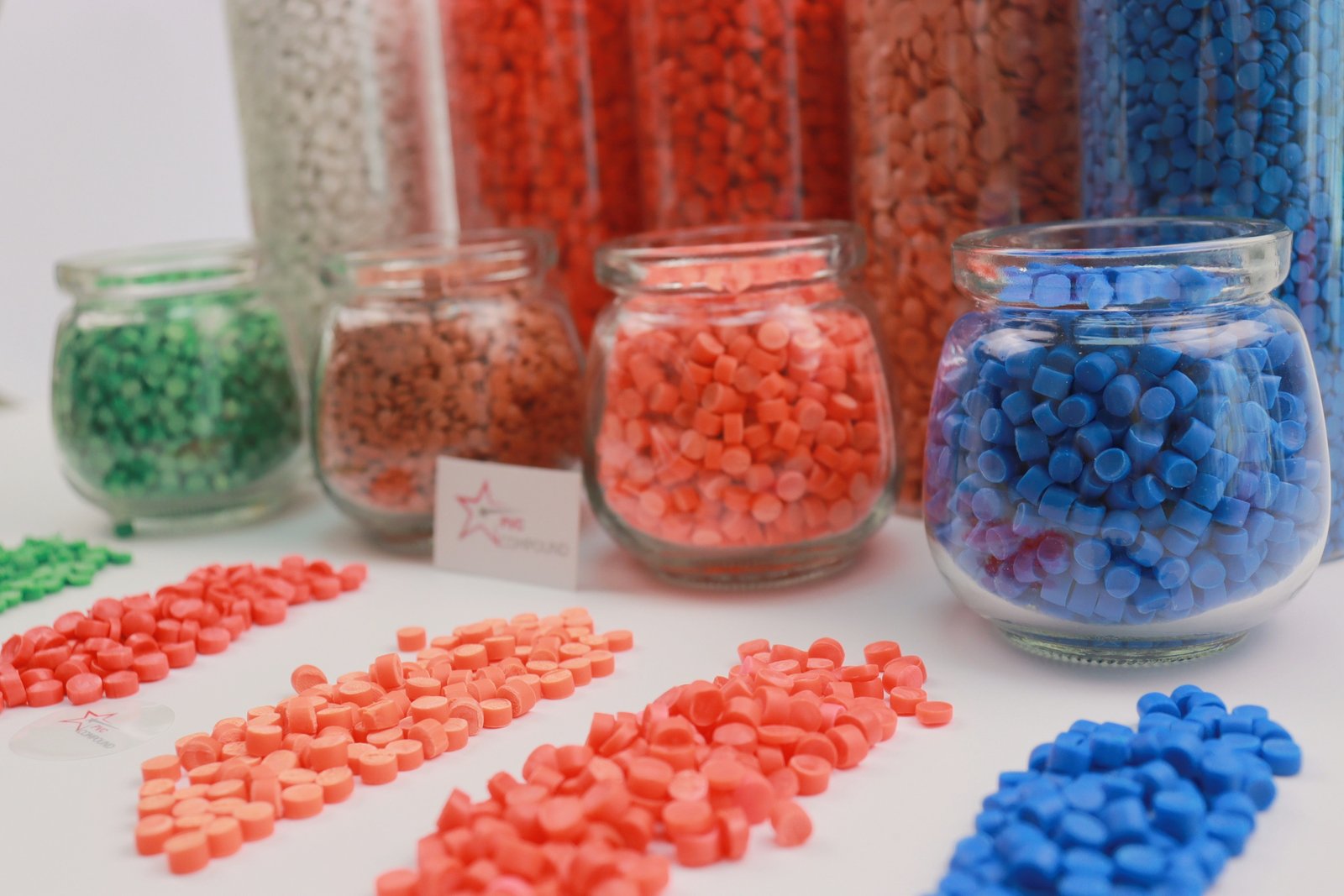
You need sealing strips that last for years without failing. Poor quality PVC compounds lead to cracking, blooming, and seal failure.1 This costs you money and damages your reputation.
Choosing the right PVC compound for sealing strips requires evaluating physical properties, processing performance, and application requirements2. Focus on Shore A hardness consistency, low-temperature flexibility, UV resistance, and low migration properties rather than just price.
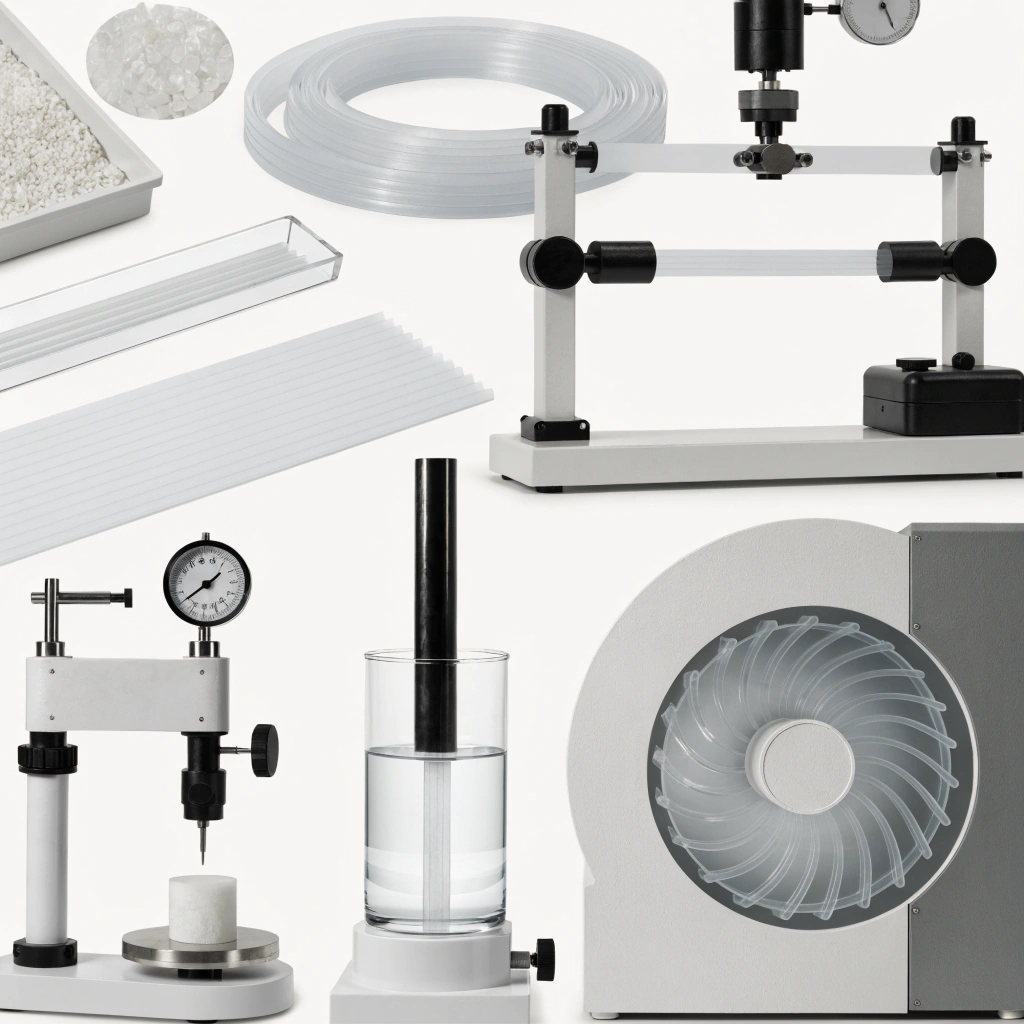
I learned this lesson the hard way 10 years ago. A customer chose our competitor's cheaper material. Six months later, their sealing strips were covered in white bloom and cracking in cold weather. They came back to us, but the damage to their brand was already done.
What Application Requirements Should You Define First?
You cannot choose good PVC compound without knowing your exact needs. Different applications have completely different performance priorities. This mistake costs manufacturers thousands in failed products.
Define your sealing strip's operating environment, temperature range, UV exposure, and chemical contact before selecting PVC compound.3 Indoor applications need low odor and migration control, while outdoor strips require UV stability and low-temperature flexibility.
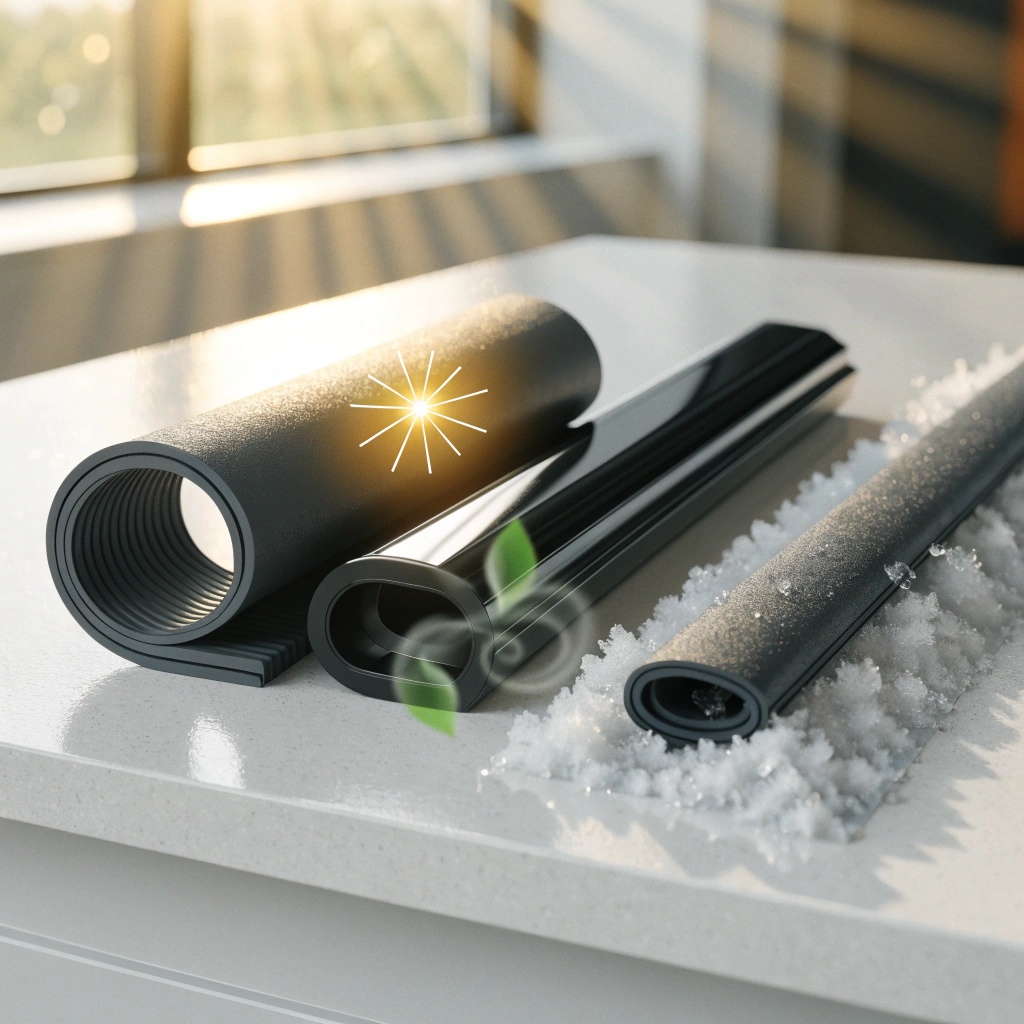
Building window seals face harsh outdoor conditions. They need UV resistance, weathering stability, and low-temperature toughness. Rain, sun, and temperature cycles test these strips every day. Poor UV stabilizers cause chalking and surface degradation within months.4
Indoor door seals and appliance gaskets have different priorities. Low odor matters for consumer acceptance. Migration resistance prevents plasticizer bleeding onto adjacent surfaces.5 Surface smoothness affects appearance and cleaning.
Automotive seals need the highest performance. They must handle engine heat, winter cold, and oil contact. Some require flame retardancy for safety regulations. Temperature cycling from -40°C to +120°C6 tests every aspect of the compound.
| Application Type | Key Requirements | Critical Tests |
|---|---|---|
| Building Exterior | UV resistance, weathering, low-temp flexibility | QUV aging, cold brittleness |
| Indoor/Appliance | Low odor, migration resistance, surface quality | VOC emission, migration test |
| Automotive | Temperature cycling, oil resistance, flame retardancy | Heat aging, oil immersion |
| Cold Climate | Low-temperature performance, freeze-thaw cycling | Brittleness point, flex testing |
Which Physical Properties Matter Most for Sealing Performance?
Physical properties directly determine how long your sealing strips work. Many buyers focus on tensile strength but ignore the properties that actually cause seal failure. This leads to warranty claims and customer complaints.
Shore A hardness consistency, compression set resistance, and low-temperature flexibility are the most critical properties for sealing strip durability.7 Batch-to-batch hardness variation should not exceed ±3 Shore A points.8

Shore A hardness controls seal compression and sealing force. Sealing strips typically use 55-85 Shore A range.9 Harder compounds seal better but need more compression force. Softer materials compress easily but may not spring back.
Hardness consistency matters more than absolute value. When hardness varies between batches, your sealing strips behave differently. Some seal too tight, others leak. We maintain ±2 Shore A variation across all batches.
Compression set resistance determines long-term sealing.10 This measures how well the material recovers after being compressed. Low compression set means the seal maintains contact pressure over years. High compression set leads to permanent deformation and leakage.
Low-temperature flexibility prevents winter failures. Cold weather makes PVC brittle.11 The brittleness point should be at least 10°C below your lowest service temperature.12 For northern climates, we recommend brittleness points of -25°C to -40°C.
Elongation at break indicates flexibility and tear resistance. Higher elongation allows more bending without cracking. This helps during installation and prevents stress cracking at corners and joints.
| Property | Typical Range | Quality Control | Impact on Performance |
|---|---|---|---|
| Shore A Hardness | 55-85 | ±2 points | Sealing force and compression |
| Compression Set | <25% (70°C, 22h) | <20% preferred | Long-term seal integrity |
| Brittleness Point | -25°C to -40°C | Depends on climate | Cold weather flexibility |
| Elongation at Break | >200% | >250% preferred | Flexibility and tear resistance |
How Does Processing Performance Affect Your Production Costs?
Great material properties mean nothing if you cannot process the compound efficiently. Poor processing leads to high scrap rates, frequent downtime, and inconsistent products. These hidden costs often exceed material savings from cheaper compounds.
Processing stability, low migration tendency, and consistent melt flow are essential for efficient sealing strip production. Poor compounds cause die buildup, surface defects, and dimensional variation that increase total manufacturing costs.
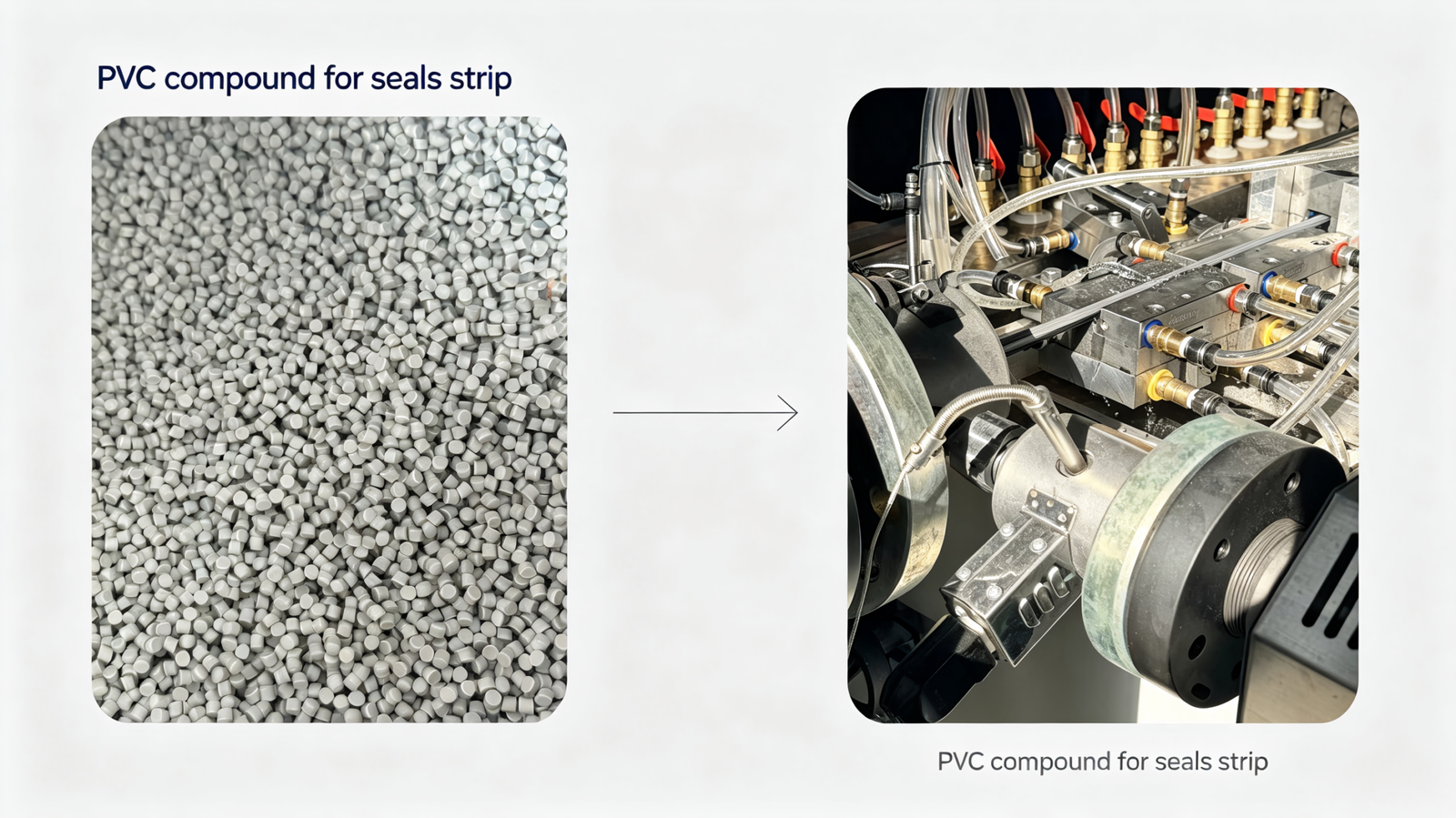
Melt flow consistency affects extrusion stability. The compound must flow smoothly through your die without pressure fluctuations. Inconsistent flow causes dimensional variation and surface defects. Our compounds maintain stable viscosity across the entire processing window.
Thermal stability prevents degradation during processing. Poor heat stability causes discoloration, brittleness, and toxic gas formation. We use advanced stabilizer systems that protect the polymer at processing temperatures up to 200°C.
Migration and blooming cause the most production problems. Low-quality compounds release plasticizers and lubricants during processing. This creates die buildup that requires frequent cleaning. Surface migration causes white bloom on finished products.
Die buildup forces production stops every few hours for cleaning. Each cleaning cycle wastes 30-60 minutes plus material. Quality compounds with balanced formulations minimize migration and keep dies clean for days of continuous operation.
Shrinkage consistency affects dimensional accuracy. Sealing strips need precise cross-sectional dimensions for proper fit. Inconsistent shrinkage makes some strips too loose and others too tight. We control longitudinal shrinkage to ±0.3% for consistent dimensions.
Surface quality depends on compound purity and processing stability. Black specks from contamination or degradation create appearance defects. Smooth, uniform surfaces improve customer acceptance and reduce finishing operations.
Conclusion
Choose PVC compounds based on application requirements, critical physical properties, and processing performance rather than price alone. This approach ensures long-term success and customer satisfaction.
"Rapid Detection of Plasticizer Migration From UV‐Aged PVC ...", https://pmc.ncbi.nlm.nih.gov/articles/PMC12911472/. A polymer-degradation or plasticized-PVC study can document that PVC formulations may fail through weathering-related embrittlement, cracking, plasticizer migration, and surface exudation; this supports the stated failure modes in general terms. Evidence role: mechanism; source type: paper. Supports: Poor quality PVC compounds can crack, bloom, and lose sealing performance.. Scope note: The source may explain the mechanisms rather than prove that every low-quality compound will fail in this way. ↩
"6.3 Materials selection - Introduction to polymers - The Open University", https://www.open.edu/openlearn/science-maths-technology/chemistry/introduction-polymers/content-section-6.3. A materials-selection reference for polymers can support that polymer compounds are selected by matching service conditions, mechanical properties, and processing constraints; this provides a methodological basis for the article’s selection criteria. Evidence role: expert_consensus; source type: education. Supports: Choosing a PVC compound should involve physical properties, processing performance, and application requirements.. Scope note: The source is likely to describe general polymer selection principles rather than PVC sealing strips specifically. ↩
"Effects of UV radiation on natural and synthetic materials - PMC - NIH", https://pmc.ncbi.nlm.nih.gov/articles/PMC10088630/. A polymer materials-selection guide can support that operating temperature, radiation exposure, and chemical environment are primary criteria in selecting polymer materials for service applications. Evidence role: expert_consensus; source type: education. Supports: Operating environment, temperature, UV exposure, and chemical contact should be defined before selecting a PVC compound.. Scope note: The support is contextual unless the source specifically addresses PVC sealing strips. ↩
"Surface Chalking upon Weathering of Dark-Colored PVC Articles and ...", https://pmc.ncbi.nlm.nih.gov/articles/PMC11053820/. A weathering study of PVC can show that ultraviolet exposure accelerates surface oxidation, discoloration, chalking, or embrittlement and that stabilizers are used to reduce these effects. Evidence role: mechanism; source type: paper. Supports: Insufficient UV stabilization in PVC can lead to chalking and surface degradation.. Scope note: The time frame of “within months” depends on formulation, climate, and exposure intensity and may not be directly established by a general weathering source. ↩
"Rapid Detection of Plasticizer Migration From UV‐Aged PVC ...", https://pmc.ncbi.nlm.nih.gov/articles/PMC12911472/. A study on plasticized PVC can support that plasticizers may migrate from PVC into contacting materials or to surfaces, causing bleeding or exudation. Evidence role: mechanism; source type: paper. Supports: Migration resistance helps prevent plasticizer bleeding from PVC sealing strips onto adjacent surfaces.. Scope note: The source may describe migration behavior broadly rather than quantify migration for sealing-strip formulations. ↩
"Power cycling | Alpitronic", https://www.alpitronic.it/us/power-cycling/. An automotive materials or environmental-testing standard can document that vehicle components may be qualified under severe thermal ranges that include approximately −40°C and elevated temperatures near or above 100°C. Evidence role: case_reference; source type: institution. Supports: Automotive sealing materials may be exposed to severe temperature cycling, including about −40°C to +120°C in some applications.. Scope note: The exact upper temperature depends on vehicle location and component specification, so the source may support the range as a representative test condition rather than a universal requirement. ↩
"Everything You Need to Know About Compression Set ...", https://www.rogerscorp.com/blog/2024/everything-you-need-to-know-about-compression-set-for-elastomeric-foam-materials. A technical standard or elastomer-seal design reference can support that hardness, compression set, and low-temperature behavior are central performance measures for flexible sealing materials. Evidence role: expert_consensus; source type: institution. Supports: Hardness, compression set, and low-temperature flexibility are key properties affecting sealing-strip durability.. Scope note: The word “most” is evaluative and may not be directly ranked by the source; evidence will more likely show these as key properties. ↩
"Shore durometer - Wikipedia", https://en.wikipedia.org/wiki/Shore_durometer. A durometer-testing standard or quality-control reference can provide context on Shore A measurement precision and tolerances, helping frame whether a ±3 Shore A variation is a meaningful specification. Evidence role: general_support; source type: institution. Supports: A ±3 Shore A hardness tolerance is presented as a quality-control limit for sealing-strip compounds.. Scope note: A testing standard may not prescribe this exact batch-to-batch manufacturing limit for PVC sealing strips. ↩
"Durometer Shore Hardness Scale - Smooth-On", https://www.smooth-on.com/page/durometer-shore-hardness-scale/. A materials data reference or sealing-profile specification can support that flexible PVC or elastomer sealing profiles commonly fall within a mid-to-high Shore A hardness range, including values around 55–85 Shore A. Evidence role: general_support; source type: institution. Supports: PVC sealing strips commonly use compounds in approximately the 55–85 Shore A hardness range.. Scope note: Hardness ranges vary by profile design, compression geometry, and application, so the source may support the range as typical rather than mandatory. ↩
"Compression set - Wikipedia", https://en.wikipedia.org/wiki/Compression_set. A seal-design reference or compression-set standard can support that compression set measures permanent deformation after compression and is used to assess whether a seal can maintain contact force over time. Evidence role: mechanism; source type: institution. Supports: Compression set resistance affects a seal’s ability to maintain long-term sealing pressure.. Scope note: Compression set is one important predictor of sealing durability, but actual service life also depends on design, temperature, chemicals, and load history. ↩
"Review of Recent Developments of Glass Transition in PVC ... - PMC", https://pmc.ncbi.nlm.nih.gov/articles/PMC8708294/. A polymer science source can support that PVC’s flexibility is temperature-dependent and that plasticized PVC can become stiffer and more brittle as temperature decreases. Evidence role: mechanism; source type: education. Supports: PVC can become brittle in cold weather, especially when formulation and plasticizer selection are inadequate for low temperatures.. Scope note: The degree of brittleness depends on plasticizer type, formulation, and service temperature. ↩
"Brittleness Temperature ASTM D746 ISO 974 - Intertek", https://www.intertek.com/polymers-plastics/testing-astm/brittleness-temperature-astm-d746-iso974/. A low-temperature plastics testing reference can support that brittleness temperature is used to judge whether a plastic can withstand service below a specified temperature; it may also discuss safety margins between test values and service conditions. Evidence role: general_support; source type: institution. Supports: Brittleness point should be lower than the expected minimum service temperature, with a margin for reliability.. Scope note: The specific 10°C margin may be an engineering rule of thumb rather than a universal standard requirement. ↩
