
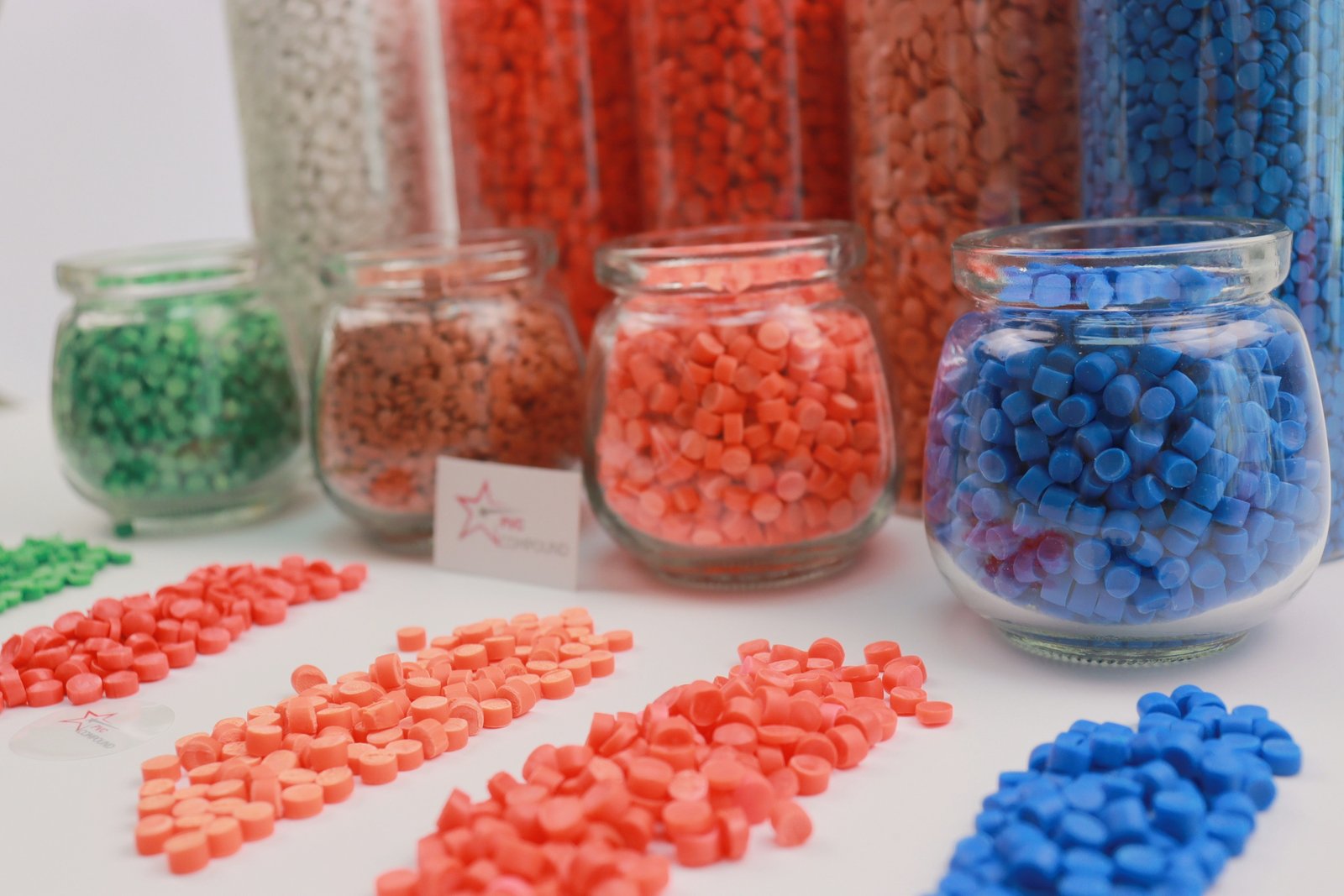
Are you confused about PVC materials and their different forms? You're not alone in this struggle.
PVC resin is the pure, unmodified polymer in white powder form, while PVC compound is PVC resin mixed with additives like plasticizers, stabilizers, and fillers1 to create granules with enhanced properties for specific applications.
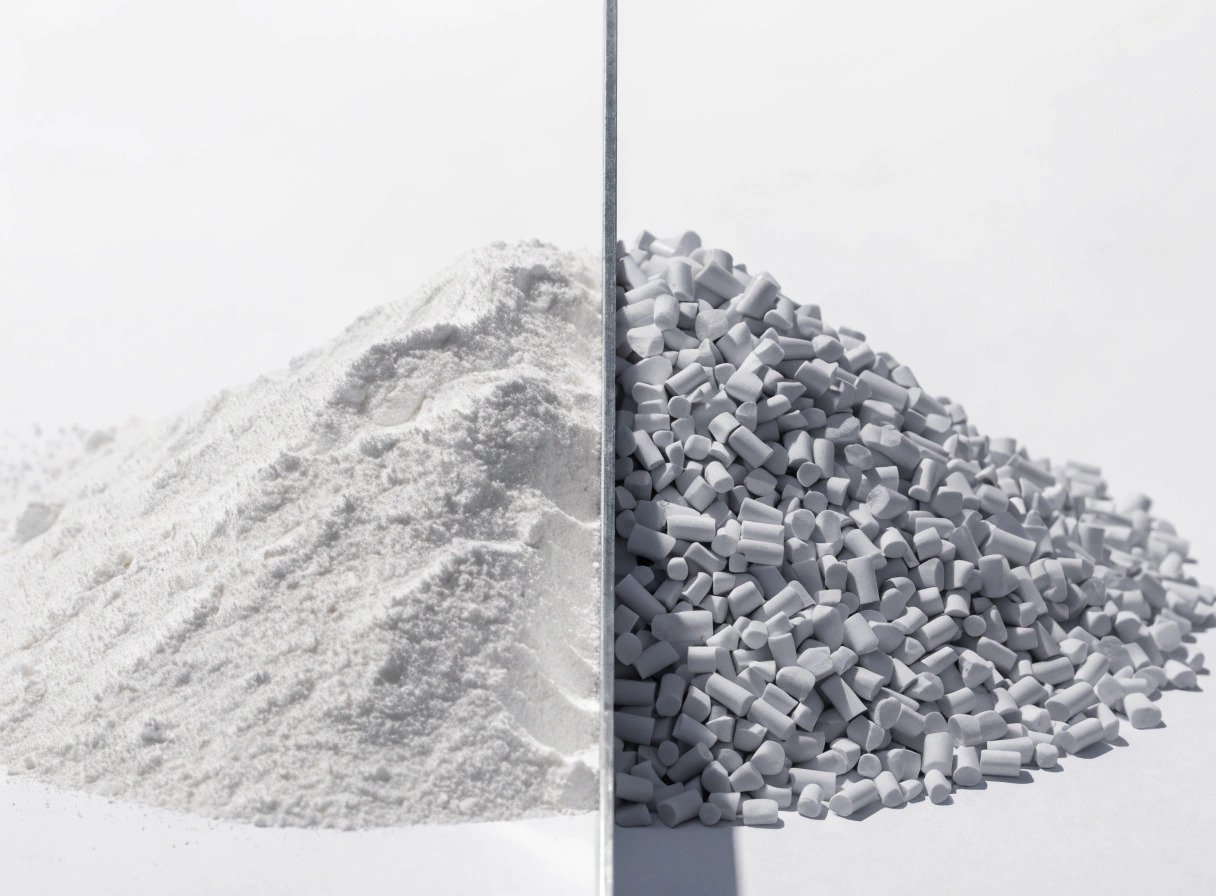
Understanding these differences is crucial for making the right material choice for your manufacturing needs. Let me walk you through everything you need to know about these two essential PVC forms.
What Makes PVC Resin Different from Regular Plastics?
Most people think all PVC materials are the same. This assumption costs manufacturers thousands in wrong material choices.
PVC resin is the raw, unprocessed form of polyvinyl chloride - a white powder obtained through suspension polymerization of vinyl chloride monomers in water with catalysts2, containing no additives or modifiers.
I've worked with PVC materials for over 15 years at STAR PVC COMPOUND. During this time, I've seen countless clients struggle with understanding PVC resin properties. The key thing to remember is that PVC resin serves as the foundation for all other PVC products.
PVC resin production involves a carefully controlled process. Vinyl chloride monomers get suspended in water. Catalysts then trigger the polymerization reaction. The result is high molecular weight PVC resin with fine particle size. This pure form has no plasticizers, stabilizers, or other additives.
The manufacturing process determines the resin's final properties. Temperature control during polymerization affects molecular weight distribution.3 Particle size depends on agitation speed and catalyst concentration.4 These factors directly impact how the resin performs in downstream applications.
How Do PVC Compounds Transform Manufacturing Capabilities?
Raw PVC resin alone cannot meet most industrial requirements. This is where PVC compounds change everything.
PVC compound is modified PVC resin mixed with plasticizers, stabilizers, fillers, and other additives to create granules with specific properties tailored for particular applications and improved processing characteristics.
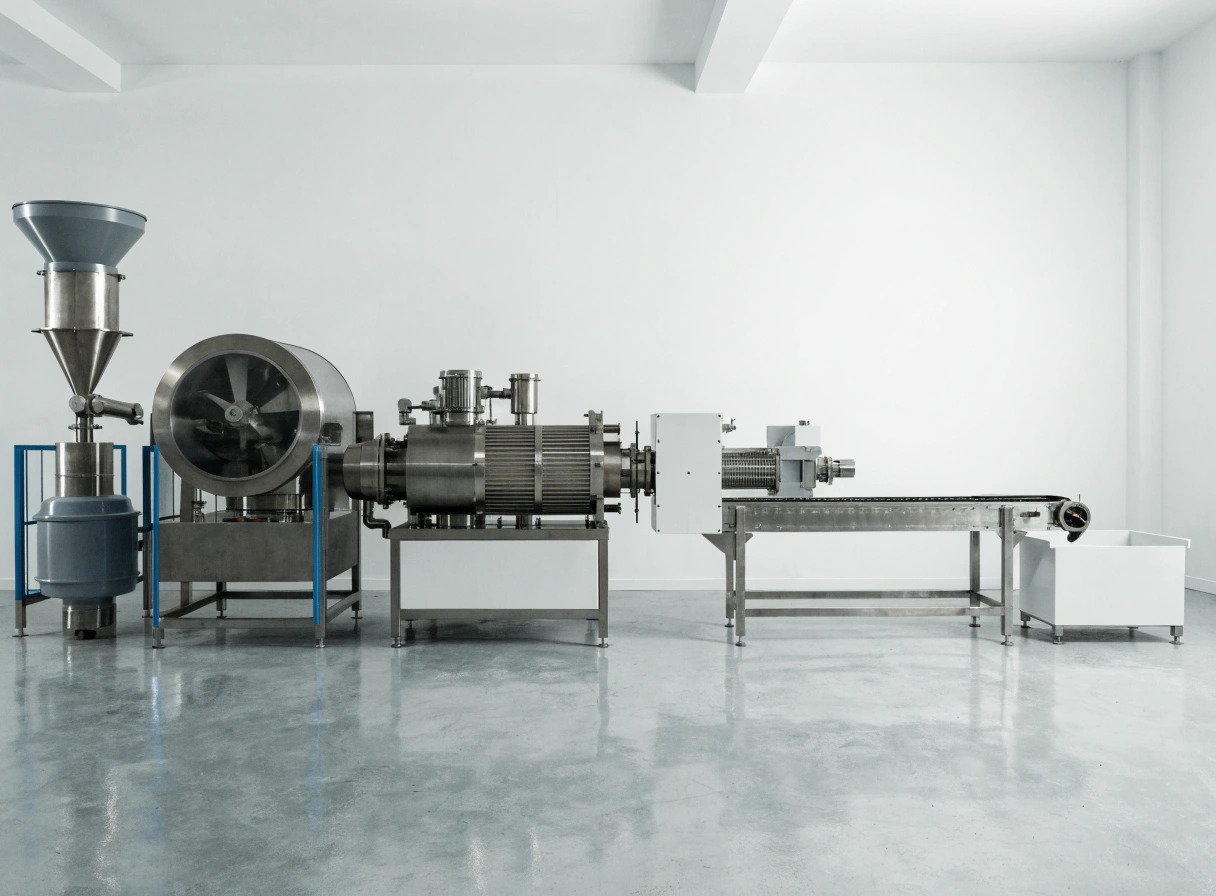
At our facility, we transform basic PVC resin into specialized compounds daily. The process involves precise formulation based on end-use requirements. Each additive serves a specific purpose in the final compound.
Plasticizers make the compound flexible and improve impact resistance.5 We carefully select these based on the intended application. For medical tubing, we use different plasticizers than for cable insulation. The choice affects flexibility, durability, and regulatory compliance.
Stabilizers enhance thermal stability and weather resistance.6 Heat stabilizers prevent degradation during processing. UV stabilizers protect against sunlight exposure. We've developed proprietary stabilizer systems for outdoor applications that last decades without significant degradation.
Fillers improve physical properties while reducing costs. Calcium carbonate is the most common filler. It increases stiffness and reduces material costs. Other fillers like titanium dioxide provide opacity and whiteness. The filler type and loading level significantly impact final product properties.
| Additive Type | Function | Typical Loading |
|---|---|---|
| Plasticizers | Flexibility, impact resistance | 10-50 phr |
| Stabilizers | Heat/UV protection | 1-5 phr |
| Fillers | Property enhancement, cost reduction | 5-100 phr |
| Lubricants | Processing aid | 0.5-2 phr |
What Are the Main Applications for PVC Compounds vs PVC Resin?
Different PVC forms serve different manufacturing needs. Choosing the wrong type can derail your entire production process.
PVC compounds are ready-to-use granules for injection molding and extrusion7, while PVC resin requires on-site mixing with additives before processing, making compounds more convenient but resin more customizable.
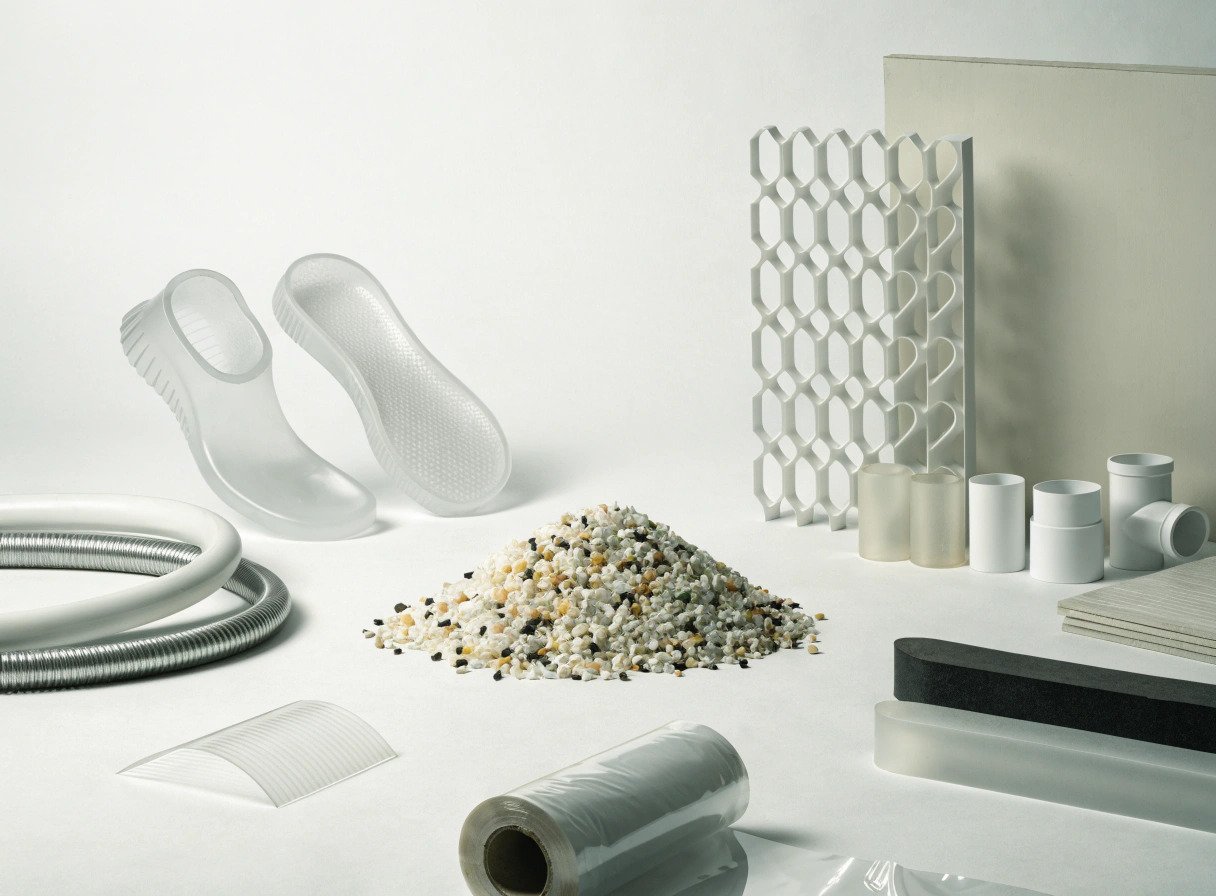
In my experience working with global manufacturers, I've seen how application requirements drive material selection. PVC compounds offer convenience and consistency. You receive pre-formulated granules ready for your processing equipment. This eliminates mixing equipment needs and ensures batch-to-batch consistency.
For flexible injection molding applications, we supply specialized compounds. Footwear manufacturers use our compounds for shoe soles, sandals, and rain boots. Our ultra-light foamed PVC granules meet the growing demand for fashionable sports shoes. The high flowability of our compounds provides advantages for large injection molded parts like flooring tiles.
Automotive applications require specific compound formulations. Door panels, dashboard covers, seals, gaskets, and interior trim components all use different PVC compounds. The flexibility, easy processing, and resistance to chemicals and UV radiation make PVC compounds ideal for automotive applications.
For extrusion applications, we provide compounds for cable insulation and sheathing. Flexible PVC compounds offer excellent electrical insulation properties.8 They protect cables from moisture, chemicals, and wear. Our UV and chemical-resistant PVC granules produce high-quality hoses and sealing strips with smooth surfaces and long-term stability.
Rigid PVC compounds serve construction and infrastructure needs. Pipe fittings and electrical boxes benefit from PVC's chemical resistance, durability, and flame retardancy. Window profiles, drainage pipes, and other building applications use our weather-resistant compounds with thermal insulation properties.
| Application Category | PVC Compound Uses | Key Properties |
|---|---|---|
| Flexible Injection | Footwear, automotive parts, flooring | Flexibility, impact resistance |
| Flexible Extrusion | Cables, hoses, sealing strips | Electrical insulation, chemical resistance |
| Rigid Injection | Pipe fittings, electrical boxes | Chemical resistance, flame retardancy |
| Rigid Extrusion | Window profiles, pipes, conduits | Weather resistance, structural integrity |
How Does PVC Resin Processing Differ from Compound Processing?
Processing methods significantly impact final product quality and manufacturing efficiency. Understanding these differences helps optimize your production setup.
PVC resin requires dry blending with additives before processing9, while PVC compounds can be directly fed into injection molding or extrusion equipment, offering better processing consistency and reduced contamination risks.
Our PVC compounds eliminate these complications. The granular form reduces dust exposure and handling issues. Direct feeding into processing equipment simplifies operations. Consistent additive distribution in each granule ensures uniform properties throughout the final product.
The granulation process we use creates uniform particle size and shape. This improves flow characteristics in processing equipment. Better flow leads to more consistent part weights and dimensions. It also reduces processing temperatures and cycle times.
Quality control differs between resin and compound processing. With resin, you must test the dry blend before processing. With compounds, incoming material testing is simpler. We provide certificates of analysis with each shipment, documenting key properties.
| Processing Aspect | PVC Resin | PVC Compound |
|---|---|---|
| Equipment Needs | Mixers, storage systems | Standard processing only |
| Dust Control | Critical requirement | Minimal concern |
| Consistency | Variable, requires control | Built-in uniformity |
| Flexibility | Maximum customization | Pre-formulated options |
| Technical Expertise | High requirement | Standard processing knowledge |
What Quality Standards Apply to PVC Materials?
Quality standards ensure PVC materials meet safety and performance requirements across different markets and applications.
Both PVC resin and compounds must comply with international standards like ISO 9001, RoHS, REACH, FDA, and NSF, but compounds require additional testing for additive interactions and long-term stability.
At STAR PVC COMPOUND, we maintain certifications for ISO 9001, ISO 14001, and OHSAS 18001. These standards cover quality management, environmental management, and occupational health and safety. Third-party SGS certification validates our compliance with international requirements. Raw material testing forms the foundation of quality control. We strictly screen suppliers to ensure materials meet RoHS and REACH standards. Physical and chemical properties must meet international requirements. This includes testing for heavy metals, volatile organic compounds, and other restricted substances.
Our production process includes automated batching systems and continuous extrusion granulation. We maintain particle size uniformity at ≥95% and moisture content ≤0.3%. These tight tolerances ensure consistent processing behavior and final product properties.
Performance testing validates compound properties. Tensile strength improvements of 30% demonstrate additive effectiveness. Vicat softening point stability within ±2°C shows thermal consistency. Color difference control at ΔE≤1.0 ensures visual uniformity.
We conduct 100% batch testing with additional sampling according to GB/T 2828 standards. This ensures factory qualification rates above 99.8%. Each shipment includes certificates of analysis documenting key properties and regulatory compliance.
| Standard | Application | Testing Requirements |
|---|---|---|
| ISO 9001 | Quality management | Process control, documentation |
| RoHS/REACH | Chemical safety | Heavy metals, restricted substances |
| FDA/NSF | Food contact | Migration testing, biocompatibility |
| ASTM/ISO | Physical properties | Mechanical, thermal, electrical testing |
Conclusion
PVC resin and PVC compound serve different manufacturing needs, with resin offering maximum customization flexibility while compounds provide processing convenience and consistency for your production requirements.
"Effect of Additives.......pdf - SUST Repository", https://repository.sustech.edu/jspui/bitstream/123456789/16173/1/Effect%20of%20Additives.......pdf. A plastics engineering or polymer science source explains that PVC compounds are made by blending PVC resin with additives such as plasticizers, stabilizers, fillers, lubricants, and pigments to obtain processable materials. Evidence role: definition; source type: education. Supports: PVC compound is PVC resin mixed with additives like plasticizers, stabilizers, and fillers.. Scope note: The source would support the general composition of PVC compounds, not the exact additive package of a specific product. ↩
"Enhancing Technical Performance of PVC Production: A WEP ...", https://pmc.ncbi.nlm.nih.gov/articles/PMC12157895/. A polymer chemistry source describes suspension polymerization of vinyl chloride in an aqueous phase using initiators as a major industrial route for producing PVC resin. Evidence role: mechanism; source type: paper. Supports: PVC resin can be obtained through suspension polymerization of vinyl chloride monomers in water with catalysts.. Scope note: This supports suspension polymerization as a common production method, while other PVC production routes and process variations also exist. ↩
"Mathematical Modeling of Molecular Weight Distributions in Vinyl ...", https://www.academia.edu/47060622/Mathematical_Modeling_of_Molecular_Weight_Distributions_in_Vinyl_Chloride_Suspension_Polymerizations_Performed_with_a_Bifunctional_Initiator_through_Probability_Generating_Functions. A polymerization kinetics source reports that reaction temperature influences vinyl chloride polymerization rate and polymer molecular weight or molecular-weight distribution. Evidence role: mechanism; source type: paper. Supports: Temperature control during PVC polymerization affects molecular weight distribution.. Scope note: The source may address polymerization behavior generally and may not quantify effects for every industrial PVC reactor design. ↩
"(PDF) Suspension polymerization of vinyl chloride. I. Influence of viscosity ...", https://www.academia.edu/27224863/Suspension_polymerization_of_vinyl_chloride_I_Influence_of_viscosity_of_suspension_medium_on_resin_properties. A study of suspension polymerization indicates that operating variables such as agitation and initiator/catalyst conditions influence resin particle formation and particle-size distribution. Evidence role: mechanism; source type: paper. Supports: PVC resin particle size depends on agitation speed and catalyst concentration.. Scope note: The exact magnitude of the effect depends on reactor geometry, dispersants, and formulation conditions. ↩
"Recent Attempts in the Design of Efficient PVC Plasticizers ...", https://pmc.ncbi.nlm.nih.gov/articles/PMC7916570/. A polymer additives reference explains that plasticizers lower PVC rigidity and glass-transition behavior, increasing flexibility and often improving low-temperature toughness or impact performance. Evidence role: mechanism; source type: education. Supports: Plasticizers make PVC compounds more flexible and can improve impact resistance.. Scope note: Impact resistance depends on formulation, plasticizer type, temperature, and test method, so the support is general rather than universal. ↩
"Effects of Organic Based Heat Stabilizer on Properties of Polyvinyl ...", https://pmc.ncbi.nlm.nih.gov/articles/PMC8747308/. A PVC additives source describes heat stabilizers and light or UV stabilizers as additives used to reduce PVC degradation during processing and outdoor exposure. Evidence role: mechanism; source type: education. Supports: Stabilizers enhance PVC thermal stability and weather resistance.. Scope note: The source supports the additive function generally; long-term performance depends on stabilizer chemistry, loading, and exposure conditions. ↩
"PVC Granules for Manufacturing | Polyvinyl Chloride Raw Material", https://polytechme.com/product/pvc-granules/. A plastics processing reference notes that compounded PVC is commonly supplied as pellets or granules formulated for direct processing by extrusion or injection molding. Evidence role: general_support; source type: education. Supports: PVC compounds are ready-to-use granules for injection molding and extrusion.. Scope note: Some processors may still perform additional blending or drying depending on product requirements and equipment. ↩
"Types of Insulation Materials for Wire and Cable", https://www.awcwire.com/customersupport/techinfo/insulation-materials?srsltid=AfmBOorZ04pgYBAurDsmDxVtwh9LOnIuEMLMOlfP0Cohgx0fp_hRt5uh. An electrical materials or cable-engineering source documents the use of flexible PVC as an insulating and sheathing material for wires and cables because of its dielectric properties, processability, and durability. Evidence role: general_support; source type: institution. Supports: Flexible PVC compounds offer electrical insulation properties suitable for cable applications.. Scope note: Electrical performance depends on compound formulation, plasticizer type, temperature rating, and applicable cable standard. ↩
"Dry Blend PVC | Bulk Handling Systems - AZO Inc", https://www.azo-inc.com/industry/pvc-dryblends. A PVC processing source describes dry blending as a standard step in which PVC resin is mixed with stabilizers, lubricants, plasticizers, fillers, or other additives before melt processing. Evidence role: mechanism; source type: education. Supports: PVC resin requires dry blending with additives before processing.. Scope note: The need for dry blending applies when starting from uncompounded resin; processors using purchased compounds may not perform this step. ↩
