
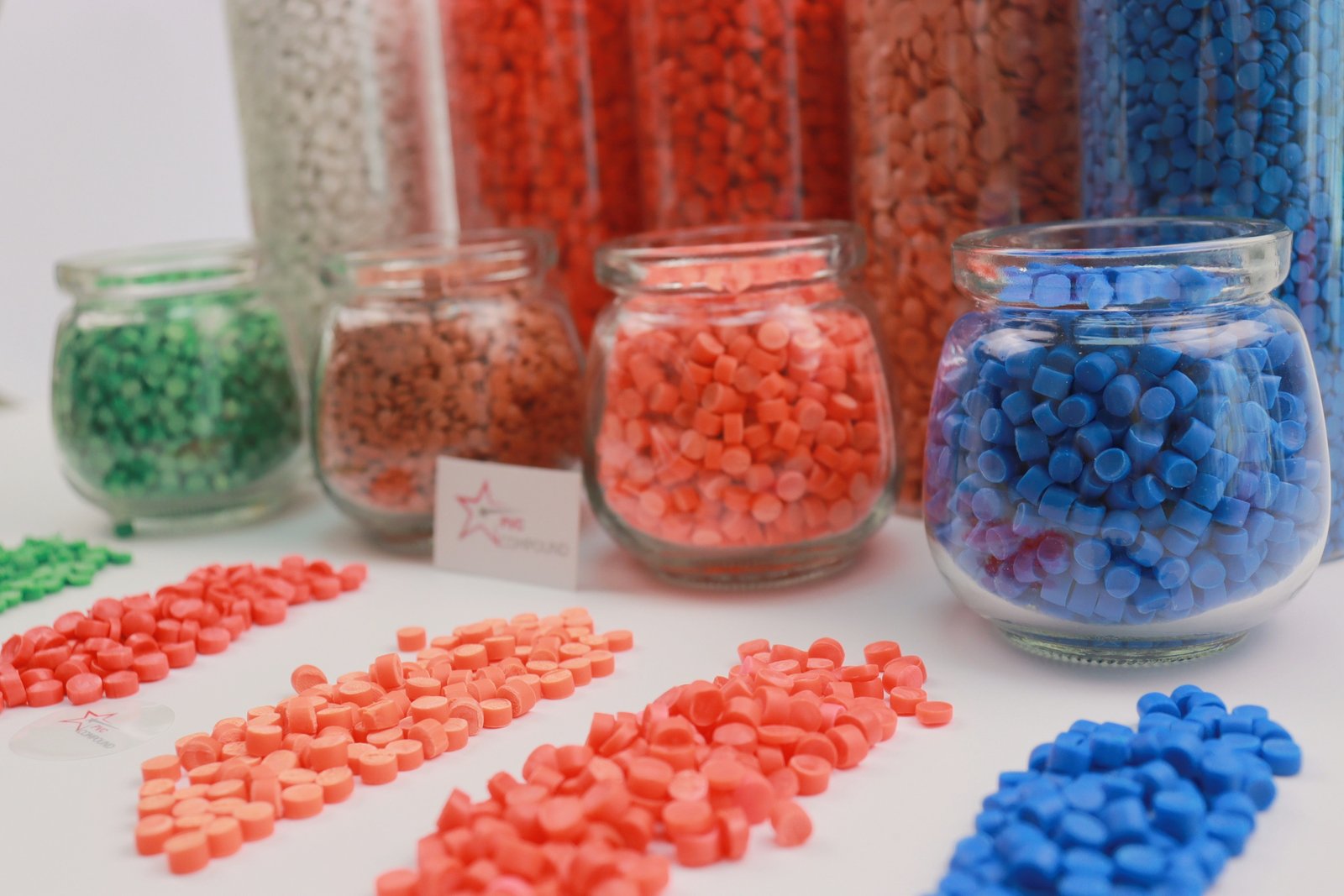
Have you ever noticed white cross-sections or uneven surfaces when producing PVC pipes or profiles? This frustrating problem affects product quality and wastes valuable materials.
Poor plasticization in rigid PVC granules typically stems from two main causes: imbalanced lubricant systems in the formulation and insufficient processing temperature or pressure during manufacturing.1
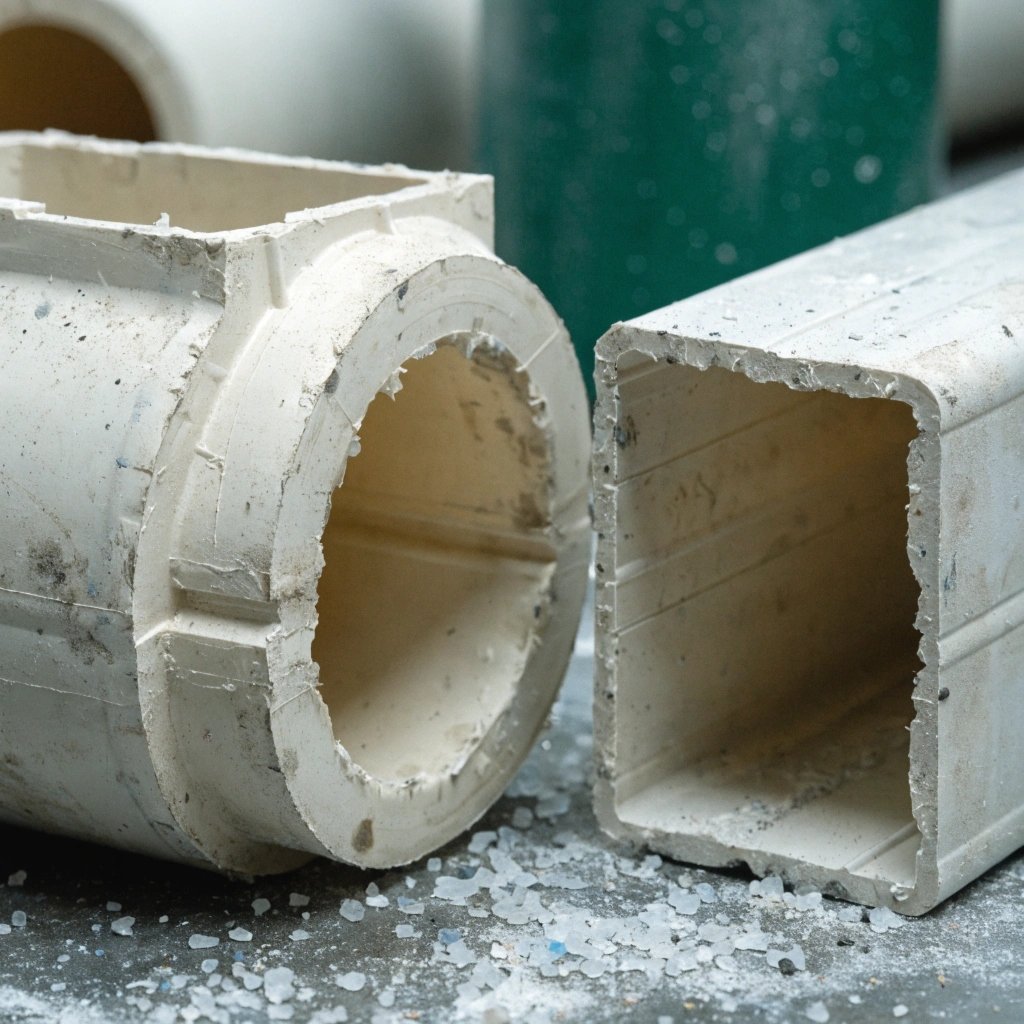
Understanding these root causes helps manufacturers identify solutions quickly. Let me share what I've learned from 15 years of PVC compound manufacturing experience.
What Causes Internal Lubricant Imbalance in PVC Formulations?
The lubricant system creates the foundation for proper PVC plasticization. When this system fails, processing becomes nearly impossible.
Internal and external lubricants must work together in precise ratios.2 Too much external lubricant prevents proper fusion, while insufficient internal lubricant causes poor flow and incomplete melting.3
I've seen countless cases where manufacturers struggle with white streaks and poor surface finish. The problem usually traces back to lubricant imbalance. Internal lubricants like stearic acid help PVC chains move freely during heating. External lubricants like PE wax prevent sticking to metal surfaces.
When external lubricant levels exceed optimal ranges, they create a barrier between PVC particles.4 This barrier prevents proper fusion at processing temperatures. The result? White, chalky areas in your final products that indicate incomplete plasticization.
The solution requires reducing external lubricant content while increasing internal lubricant levels. During compounding, we also increase screw speed and pressure to ensure better mixing. This creates more uniform distribution and improves particle-to-particle contact.
| Lubricant Type | Function | Typical Range (phr) | Effect When Excessive |
|---|---|---|---|
| Internal (Stearic Acid) | Promotes flow | 0.3-0.8 | Plate-out, poor fusion |
| External (PE Wax) | Metal release | 0.2-0.5 | Poor fusion, white streaks |
| Mixed Systems | Balanced performance | 0.5-1.2 | Depends on ratio |
How Do Processing Parameters Affect PVC Plasticization?
Machine settings directly impact how well PVC granules fuse together. Small adjustments can transform poor plasticization into excellent results.
Temperature, screw speed, and pressure work together to create the shear forces needed for proper PVC fusion.5 Insufficient levels in any parameter leads to incomplete plasticization.
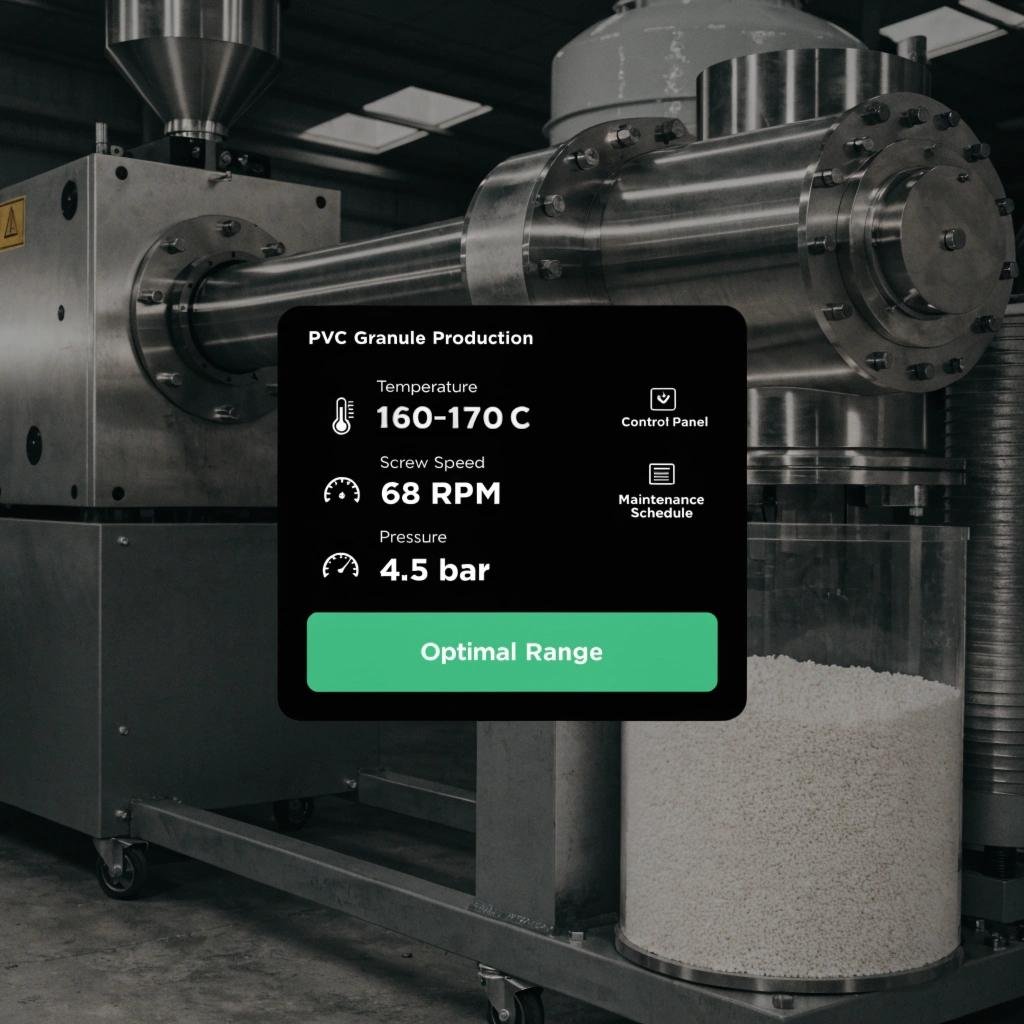
Temperature plays the most critical role in PVC processing. Rigid PVC requires specific temperature ranges to achieve proper fusion without degradation. Too low, and particles don't melt completely. Too high, and thermal degradation begins.
I always recommend starting with manufacturer guidelines, then making small adjustments based on actual results. Increase barrel temperatures by 5-10°C increments until you see improvement. Monitor the melt temperature carefully to avoid overheating.
Screw speed creates mechanical energy that helps plasticization. Higher speeds generate more shear, which breaks down particle boundaries and promotes fusion.6 However, excessive speeds can cause overheating and degradation.
Pressure affects how tightly material packs in the barrel. Proper back pressure ensures consistent melting and mixing. Low pressure allows material to slip without adequate shear. High pressure can cause overheating in the compression zone.
The key lies in balancing all three parameters. Start with temperature adjustments, then fine-tune screw speed and pressure based on your specific equipment and material characteristics.
Why Does Screw Design Matter for PVC Plasticization?
The screw geometry determines how effectively your machine processes PVC compounds. Poor screw design makes good plasticization nearly impossible.
PVC processing screws need specific compression ratios and mixing sections to generate proper shear without overheating.7 General-purpose screws often fail with PVC materials.
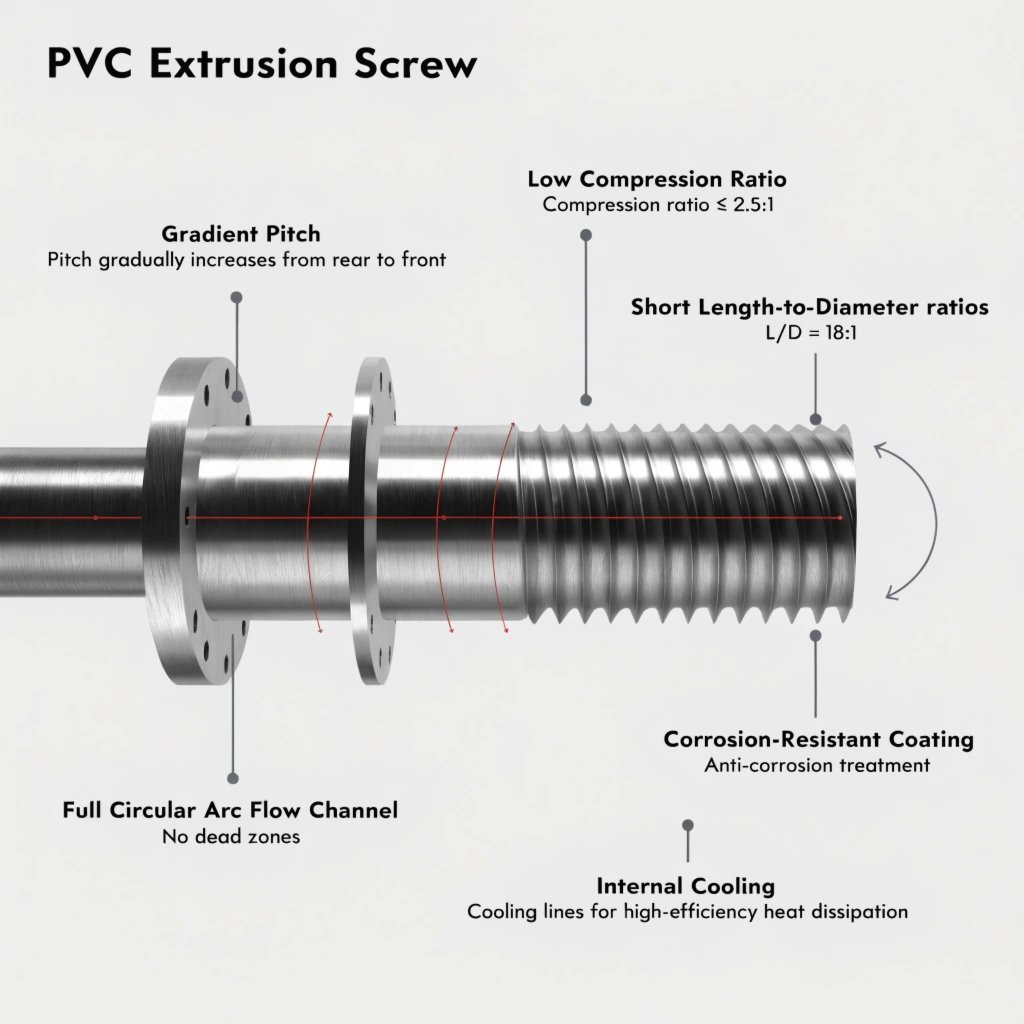
Standard screws designed for other plastics don't work well with PVC. PVC requires gradual heating and controlled shear to avoid thermal degradation. The compression ratio should typically range from 2.5:1 to 3.5:1 for rigid compounds.8
Mixing sections become crucial for breaking down agglomerates and ensuring uniform heating. Barrier screws with separate channels for solids and melt work exceptionally well for PVC. They provide controlled melting while maintaining consistent output.
I've worked with customers who struggled for months with plasticization issues. The solution often involved upgrading to PVC-specific screw designs. The investment pays for itself through improved quality and reduced waste.
Screw wear also affects performance over time.9 Worn flights reduce compression and shear, leading to poor plasticization. Regular inspection and maintenance prevent gradual quality decline.
Temperature control becomes easier with proper screw design. The gradual compression and mixing prevent hot spots that cause degradation. This allows higher processing temperatures when needed for difficult compounds.
Particle shape also matters. Spherical granules flow better and heat more uniformly than irregular shapes. Good flow characteristics ensure consistent feeding and reduce pressure variations in the barrel.
Bulk density affects how material packs in the hopper and feed throat. Consistent density prevents bridging and ensures steady material flow. This stability helps maintain consistent plasticization throughout production runs.
We test every batch for particle size distribution using standardized sieves. Our quality control ensures 95% of particles fall within specified size ranges. This consistency helps our customers achieve reliable processing results.
How Can You Optimize Your Current PVC Compounds?
-Most plasticization problems can be solved through systematic troubleshooting and gradual adjustments. The key lies in identifying the root cause first.
Start by analyzing your current compound formulation, then adjust processing parameters systematically. Document all changes to track what works best for your specific application.
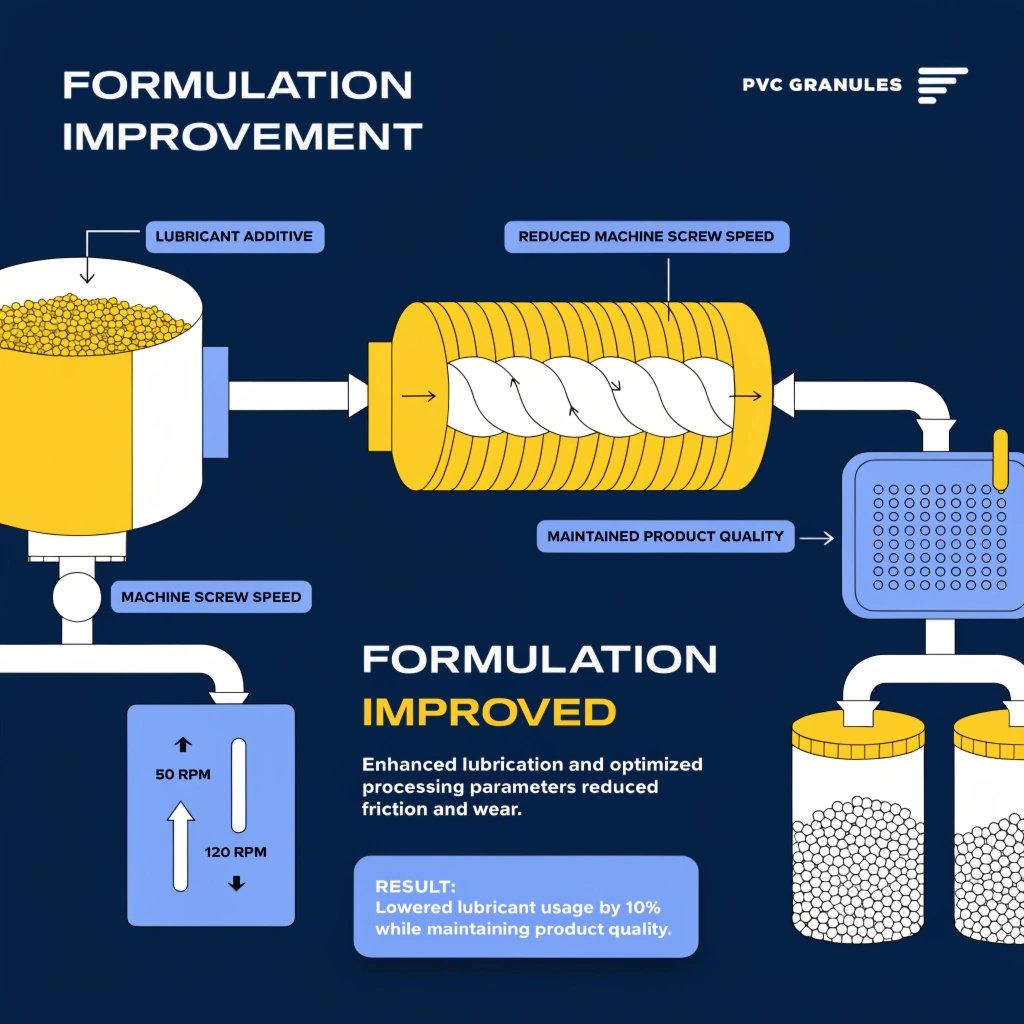
Begin with a thorough examination of your compound's lubricant system. Request detailed formulation information from your supplier. Look for external lubricant levels above 0.5 phr, which often cause fusion problems.
If formulation changes aren't possible immediately, focus on processing adjustments. Increase barrel temperatures gradually while monitoring melt temperature. Aim for complete fusion without exceeding degradation limits.
Screw speed optimization requires careful testing. Increase speed in small increments while watching for signs of overheating or degradation. The goal is maximum shear without thermal damage.
Quality testing should include cross-section analysis of your products. Cut samples and examine them under magnification. Well-plasticized PVC shows uniform structure without white areas or visible particle boundaries.
Keep detailed records of all adjustments and their effects. This data helps identify optimal processing windows for different compounds and conditions. Over time, you'll develop expertise specific to your equipment and applications.
Working with experienced compound suppliers provides additional support. We offer technical assistance to help customers optimize their processing conditions. Our 15 years of experience helps solve problems quickly and efficiently.
Conclusion
Poor PVC plasticization stems from lubricant imbalances and inadequate processing conditions, but systematic adjustments can restore quality and efficiency.
"The Studies of Rigid PVC Compounds: Morphology, ...", https://repository.lsu.edu/gradschool_disstheses/5784/. A technical source on PVC compounding and processing can support that rigid PVC fusion depends on both formulation variables, especially lubricants, and processing energy from temperature, pressure, and shear. Evidence role: expert_consensus; source type: education. Supports: Poor plasticization in rigid PVC granules is commonly caused by lubricant imbalance and inadequate processing temperature or pressure.. Scope note: This would support the general causal framework, not prove that these are the only causes in every production case. ↩
"Formulation of Flexible Polyvinyl Chloride Film and Its Effect ...", https://preserve.lehigh.edu/_flysystem/fedora/2023-11/preservebp-19566900.pdf. A PVC formulation reference can document that internal and external lubricants are balanced to regulate melt flow, wall slip, and fusion behavior in rigid PVC compounds. Evidence role: mechanism; source type: education. Supports: Internal and external lubricants must be balanced in PVC formulations for proper processing and fusion.. Scope note: The source may describe formulation principles rather than prescribe one universal ratio for all PVC grades and equipment. ↩
"Performance Mapping toward Optimal Addition Levels and Processing ...", https://pmc.ncbi.nlm.nih.gov/articles/PMC9260780/. A polymer-processing or PVC compounding source can support that excess external lubricant delays fusion by promoting slip, while inadequate internal lubrication can increase melt viscosity and impair flow. Evidence role: mechanism; source type: research. Supports: Excess external lubricant and insufficient internal lubricant can impair PVC fusion and flow.. Scope note: The exact threshold for 'too much' or 'insufficient' depends on resin K-value, stabilizer package, filler loading, and processing equipment. ↩
"Lubrication mechanism of poly(vinyl chloride) compounds", https://www.semanticscholar.org/paper/Lubrication-mechanism-of-poly(vinyl-chloride)-upon-Summers/bd06832172e6de74dc72e021ac53f66679ea70be. A study or technical reference on PVC fusion can support that excessive external lubrication increases particle slip and can delay particle coalescence during gelation or fusion. Evidence role: mechanism; source type: paper. Supports: Excess external lubricant can interfere with PVC particle contact and delay fusion.. Scope note: The 'barrier' description is a simplified explanation of slip and delayed fusion rather than a direct microscopic proof in every compound. ↩
"11.4Extrusion Problems and Troubleshooting", https://books.byui.edu/plastics_materials_a/extrusion_problems_a. A polymer extrusion source can support that PVC fusion is affected by thermal input and mechanical energy generated through screw rotation, pressure development, and shear in the extruder. Evidence role: mechanism; source type: education. Supports: Temperature, screw speed, and pressure jointly influence shear, melting, and fusion during PVC processing.. Scope note: Pressure itself is not identical to shear force; it is part of the processing conditions that influence residence time, compaction, and melting behavior. ↩
"Understanding the Effect of Extrusion Conditions on Melt ...", https://docs.lib.purdue.edu/cgi/viewcontent.cgi?article=2540&context=open_access_theses. A polymer extrusion reference can support that increasing screw speed raises mechanical energy input and shear rate, which can accelerate melting and fusion of particulate PVC compounds. Evidence role: mechanism; source type: education. Supports: Higher screw speed can increase shear and mechanical energy, promoting PVC particle fusion.. Scope note: The relationship is equipment- and formulation-dependent, and excessive screw speed may also increase melt temperature or degradation risk. ↩
"Extrusion Basics: The Taming of the Screw", https://www.plasticstoday.com/extrusion-pipe-profile/extrusion-basics-the-taming-of-the-screw. An extrusion design reference can support that PVC screws are commonly designed with controlled compression and mixing features to provide sufficient shear and distributive mixing while limiting thermal degradation. Evidence role: expert_consensus; source type: education. Supports: PVC processing screws require appropriate compression and mixing geometry to balance fusion, shear, and heat generation.. Scope note: The optimal screw design depends on whether the process is pipe, profile, sheet, or compounding extrusion and on the particular PVC formulation. ↩
"Extruder Screw Compression Ratio: Material Guide", https://extruder-parts.com/extruder-screw-compression-ratio-guide/. A plastics extrusion design handbook can provide contextual support for typical compression-ratio ranges used in screws for rigid PVC processing. Evidence role: statistic; source type: education. Supports: Rigid PVC screws are often specified with compression ratios in the approximate range of 2.5:1 to 3.5:1.. Scope note: Published ranges are guidance values, not universal specifications; the appropriate ratio depends on screw diameter, L/D ratio, output rate, and compound formulation. ↩
"Determination of Correlations between Melt Quality and the Screw ...", https://pmc.ncbi.nlm.nih.gov/articles/PMC10459947/. An extrusion maintenance or polymer-processing source can support that screw and barrel wear reduce conveying efficiency, pressure generation, and shear, which can change melt quality over time. Evidence role: mechanism; source type: education. Supports: Screw wear can degrade extrusion performance and contribute to poor plasticization over time.. Scope note: The source would support the general maintenance mechanism, while the severity of performance loss depends on wear pattern, material abrasiveness, and operating conditions. ↩
